Uncategorized

National Farm Safety Week

It is no coincidence that National Farm Safety and Health week falls in September. September marks a busy time for farmers as harvest begins. The busier we get, the increased chance for accidents to occur happens. A couple weeks ago, I provided roadway safety tips for not only farmers, but the general public. This week, I’ve decided to share more tips for farmers to keep safe this harvest season.
According to the National Education Center for Agricultural Safety, the theme for National Farm Safety and Health Week 2020 is “Every Farmer Counts”.  The theme is to acknowledge, celebrate, and uplift America’s farmers and ranchers who have encountered many challenges over the past couple of years, yet continue to work hard to provide the food, fiber, and fuel that we need.  According to the 2017 Census of Agriculture, there are about 3.4 million agricultural producers in America, which is only about one percent of our population.  These farmers and ranchers not only provide the essentials that we need, but they do wonderful things for their families and friends, their communities, and beyond.  That is why “Every Farmer Counts” and now is the time to prioritize their safety and health.

Nebraska is fortunate to have the University of Nebraska Medical Center, College of Public Health. UNMC works with the Central States Center for Agricultural Safety and Health and Risto Rautiainen, PhD provides the following farm machinery hazard reminders:

  • Protect grain augers to prevent cuts and laceration injuries.
  • Protect Power Take-Off shafts with guards to avoid entanglements.
  • Old tractors can have poor steps; if possible purchase improved steps to prevent slips and falls.
  • Old tractors have poor seats which lead to muscle and joint pain. Replace them to protect your muscles and joints.
  • Use good lighting and marking to increase visibility on the road.
  • Use protected ladders or (preferably) stairways with guardrails in grain bins to reduce falls.
  • Do not enter a bin when the sweep auger is running.
  • Oil leaks from worn hydraulic lines can penetrate the skin and enter the blood stream.
  • Sharing the road with all types of traffic can be a challenge, so be aware of your surroundings.
  • Safety around powerlines should always be front of mind when operating large farm equipment.

Other tips from UNMC, include wearing N95 masks to protect your lungs from dust and wear hearing protection to protect your lungs. Keep fire extinguishers maintained and easily accessible. Talk to your children or children who plan to visit the farm and make sure they are aware of the hazards of large equipment. Do not enter the grain bin alone and communicate with others where you are located.

One thing often not though about is how stress and fatigue can cause accidents. One strategy to prevent clouded thinking is to take time between each task to THINK!  Take 5 deep breathes before moving on; this helps your brain function better. During this unique time of uncertainty with low commodity prices, weather-related challenges and in a pandemic, you are an essential work, not only to feed the country but most importantly to your family and friends. Be sure to take care of yourself this harvest season. Get plenty of sleep, eat healthy meals and utilize your network of family and friends and ask for help if needed.

For more tips on farm safety, go to UNMC’s website or The National Education Center for Agricultural Safety’s site. Wishing you all a very successful and safe harvest!


Uncategorized

Youth, Science-based School Year Camps

Nebraska 4-H camps in partnership with Douglas-Sarpy County Extension is offering a handful of science-based school-year day camps this fall. Through these experiences, youth have the opportunity to explore the natural world at Schramm State Recreation Area. The sessions are open to all youth ages 6-14. Youth do not need to be enrolled in 4-H to participate. All of the sessions will follow CDC and ACA guidelines for in-person activities, with hand sanitizer, masks, and social distancing. Sessions below are at Schramm State Recreation Area, located midway between Lincoln and Omaha.  

Photo by Dominika Roseclay on Pexels.com

Upcoming camps include:

  • Crawly Critters Jamboree on Saturday, October 10, 2020 The regular session runs from 9:00 AM – 5:00 PM and is $80. You can do the “Add-On Nighttime Adventure” from 5:00 – 9:00 PM for $20 extra.

Let’s pull our magnifying glasses out and discover some of Nebraska’s crawling critters! Check out some cool insects, amphibians and reptiles with us at our Crawly Critters Jamboree! We will discover some crazy creatures as we investigate the ponds, play with pollinators, visit the Schramm aquarium and drink bug juice! But that’s not all – enjoy a campfire with s’mores and let your imagination run wild with our extended nighttime adventure option! Learn about bats, owls and the stars while exploring the night with all your camp friends!

  • Icky, Sticky STEAMY held onFriday, October 16, 2020 from 9:00 AM – 5:00 PM for $80.

No School? No problem! Get MESSY with us on Friday! Join us for an action-packed day of fun and exciting activities! Explore science-y adventures like crawfish dissection, catapults and fishing. Join us for a forest hike and an extreme game of ga-ga! Relax and enjoy science, camp and lots of fun at the Schramm State Recreation Area!

  • Blast off with STEAM! is held Saturday, October 17, 2020 from 9:00 AM – 5:00 PM for $80. You can do the “Add-On Nighttime Adventure” from 5:00 – 9:00 PM for $20 extra.

Join us Saturday for an explosive day of awesomeness. Blow off STEAM with rockets, egg drop, slime and more! Have a BLAST with your friends while enjoying a day of science, engineering, outdoor adventures and lots of FUN! But that’s not all – help us explore the night with our action-packed evening adventures as we discover what makes the dark so cool! We are going to look up at the creatures of the night and the bright stars beyond. Owls, bats, stars, campfire songs and gooey s’mores. See you there!

  • Spooktacular Halloween Bash is held on Saturday, October 31, 2020 from 9:00 AM – 5:00 PM for $80.

Grab your friends and join us for the spookiest adventure ever! The bats and owls are taking over! Bring your best costume to help scare them away. Dissect owl pellets and examine the skulls of forest creatures. Look out for the pumpkins with faces or maybe create your own! Complete a scavenger hunt around the Schramm trails for extra treats and lots of Halloween MAGIC! We’ll have a super sweet day including caramel apples and tons of camp fun!

Uncategorized

Training for ag professionals on crisis, suicidal behavior

An upcoming online training for agricultural professionals will teach individuals how to recognize and respond to potential signs of crisis and suicidal behavior.

Photo by Markus Winkler on Pexels.com

Farming and ranching can be stressful in the best of times. Financial worries, unpredictable weather, unpredictable commodity prices, plant pests, livestock diseases and isolation all contribute to a producer’s anxiety. And now Nebraska’s rural communities and families are coping with the unpredictability and imposed isolation produced by the COVID-19 pandemic.

In response to this uncertainty, Nebraska Extension and the Panhandle Public Health District will be offering an online “Question. Persuade. Refer.” training. QPR is a suicide prevention program that teaches participants three steps to help save a life from suicide.

Just as people trained in CPR and the Heimlich maneuver help save thousands of lives each year, people trained in QPR learn how to recognize the warning signs of a suicide crisis and how to question, persuade and refer someone to help.

This 90-minute training will be held online, via Zoom on Thursday Sept. 24, 2020, at 10 a.m. MT. There is no cost to attend the training, but registration is required.

The class is limited to 35 participants. To register, go to https://go.unl.edu/panqpr.

This material is based upon work supported by USDA/NIFA under Award Number 2019-77028-30436.

Source: Dave Ostdiek – Communications Specialist, Panhandle Research and Extension Center, Scottsbluff. You can reach him at 308-632-1230 or via email at dostdiek4@unl.edu.

Uncategorized

Harvest Safety

It is hard to believe that harvest will soon be starting and just as a reminder that with harvest comes more traffic on the county roads and other stresses for farmers. It never fails, that equipment can break, there can be delays at the elevator and those extra-long hours can all add extra stress to farmers. That being said, it is important to carefully slow down and realize the many hazards you are being exposed to during harvest.

An Iowa State Extension publication, Harvest Safety Yields Big Dividends points out that injuries can occur by taking shortcuts to perform routine tasks, not getting enough sleep or regular breaks, or failing to follow safety practices. Some injuries occur when operators are pulled into the intake area of harvesting machines, such as balers, combines, or corn pickers, and many injuries occur from slips or falls around these machines. Exposure to powerful machinery is highest during the harvest season. The equipment must be powerful to effectively handle large amounts of agricultural commodities. When equipment plugs, NEVER try to unplug it with live equipment, instead always disengage power and turn off the engine before trying to manually clear a plugged machine. Regular maintenance of these machines can also make harvest go smoother. Also, lots of accidents actually happen by the operator slipping and falling off equipment.

In the same publication listed above, there are several tips for reducing fall hazards: 

  • Always keep all platforms free of tools or other objects.
  • Frequently clean the steps and other areas where workers stand to service, mount and dismount, or operate the machine.
  • Wear well-fitting, comfortable shoes with non-slip soles.
  • Use grab bars when mounting or dismounting machinery.
  • Be sure your position is stable before you work on a machine.
  • Recognize that fatigue, stress, drugs or alcohol, and age may affect stability.

Other helpful tips during harvest are to keep kids away from machinery. Tell them the dangers that can occur and not to play near the equipment, even when it is shut off; you never know when they will be playing in hidden areas of the equipment. Operators should double check where kids are before moving the equipment. Too many accidents can occur when youth are in the path of equipment out of the operator’s view. Operators of all equipment should check in regularly and let someone know where you are. Keep all guards on equipment; it is there for a reason! 

It is also important for the public to understand the increased traffic on public roads and be patient. The greatest threat raised between farm equipment and passenger vehicles is the difference in speed. Farm equipment runs at an average speed of 20 miles per hour while passenger vehicles average 60 miles per hour. If the motor vehicle overtakes a tractor, the impact is comparable to a passenger vehicle hitting a brick wall at 40 miles per hour. If the tractor and a car, mini-van or pickup collides head on, the impact is the same as hitting a brick wall at 60 miles per hour.

Farmers can reduce the chances of an accident by using warning lights, reflectors and reflective tape on their machinery to keep passenger vehicle operators aware of their presence on roads. Some farmers may choose to install supplemental lights to increase visibility. It also is a good idea for producers to keep off heavily traveled roads as much as possible and avoid moving equipment during the busiest part of the day.

Some farm equipment, such as combines, can take up more than half of the road. Even so, it is up to both drivers to be aware of their own limitations and adjust accordingly. Farmers should not take up more space than is needed, but other drivers should try to provide as much room as possible. It is a good idea for passenger vehicles to turn off onto side or field roads until larger machinery has passed. Whenever possible, farmers should use an escort vehicle such as a pickup to precede or follow large machinery and equipment on public roads. More than one escort may be necessary. Ideally, the escort vehicle would have extra warning lights and a sign indicating oversized or slow equipment ahead or following.

Have a safe harvest!

Uncategorized

Nebraska State Fair Results

Extension staff and 4-H families put in many hours and hard work at the 2020 Nebraska State Fair. Although it was scaled down very much, it is very much appreciated that the State Fair Board allowed youth to compete and showcase their hard work. If you weren’t able to attend the state fair, 4-H results can be found at: https://nebraska4hresults.com/. On this page, you can also see the show programs, 4-H static exhibit division winners, county booth displays and more!

Best wishes to the FFA youth during the next weekend of state fair!

Uncategorized

Land Management Webinar

A very common question we receive every fall or as land leasing is negotiated, is, “What is cash rent in our area?” Fortunately, Nebraska Extension has a yearly publication to provide guidance for this question, however the question a lot of times is, “it depends.” Every person’s situation is different and many factors should be taken into consideration.

Photo by Flambo on Pexels.com

An upcoming Nebraska Extension webinar will focus on land management issues for landlords and tenants to consider in the coming year. Farmland Trends and Lease Considerations for 2021 will be held on Sept. 10, from noon to 1:30 p.m. The virtual workshop will offer information and analysis on cash rental rates, flexible leasing, land/tenant communication, farm succession, and utilizing USDA programs.

It will be presented by Extension educators and agricultural economists Jim Jansen and Austin Duerfeldt, along with Allan Vyhnalek, an extension educator for farm and ranch succession. 

The team will be presenting findings on current cash rental rates, innovative strategies for setting equitable lease, and strategic planning for uncertainty due to price volatility in the markets.

The discussion will also address programs and tools available from the USDA to help navigate the uncertainty faced by landowners and operators across the state. 

Austin, Allan and Jim have put together an excellent set of topics and have completely rewritten our land management curriculum to help landlords and tenants better manage risk. They encourage landowners, operators, and agribusiness professionals to join in on the live session and hear about new land management strategies as we look forward to the upcoming production year.

The webinar is being held in lieu of the in-person land management meetings that are traditionally held across the state in the summer and fall. Supplemental video presentations will be available and in-person workshops on the topic are intended to resume in late 2020.

It is being presented online as part of an ongoing weekly series produced by the extension Farm and Ranch Management team in the Department of Agricultural Economics. It will be held live on Zoom for approximately 90 minutes, including time for questions from participants. 

Registration is free and can be completed at farm.unl.edu/webinars For more information, contact Jim Jansen, Extension Agricultural Economist at 402.472.2560 or jjansen3@unl.edu.

Livestock, Programming

Nebraska Grazing Conference

Challenges from COVID-19 have required changes be made to many programs everywhere. This year’s 20th Nebraska Grazing Conference (NGC) will be held as a virtual event instead of the traditional in-person event.

close up photo of white and brown cattle
Photo by James Wheeler on Pexels.com

According to the website:
The online conference will be held from 11:30 AM to 5:00 PM on both Tuesday, August 11 and Wednesday, August 12. Organizers hope the online version of the conference will be a convenience to a broader audience who will be able to participate from their home or office. Opportunities for interaction among participants and to ask follow-up questions of speakers have been built in to the online event. Additionally, several watch parties have been organized around the state for groups of 25 or less to gather and participate in this virtual conference. This option may assist those who do not have stable Internet service in their area.

Watch party sites include:

  • Northeast Research & Extension Center, 1010 E Centre, Hartington, NE. Host, Ben Beckman, Beef Systems Assistant Extension Educator, Nebraska Extension, (402) 254-6821 or ben.beckman@unl.edu
  • Zion Lutheran Church, 318 E 4th Street, Ainsworth, NE. Host, Hanna Greenwell, Beef Systems Extension Educator, Nebraska Extension, (402) 387-2213 or hgreenwell2@unl.edu
  • Panhandle Research & Extension Center, 4502 Avenue I, Scottsbluff, NE. Host, Mitchell Stephenson, Panhandle, Forage Management Specialist/Extension Specialist, Nebraska Extension, (308) 632-1230 or mstephenson3@unl.edu
  • Fillmore County Fairgrounds, 641 N 5th Street, Geneva, NE. Host, Sydney O’Daniel, Beef Systems Extension Educator, Nebraska Extension, (402) 746-3417 or sydney.odaniel@unl.edu
  • Buffalo County Extension, 1400 E 34th Street, Kearney, NE. Host, Brent Plugge, Extension Educator, Nebraska Extension, (308) 236-1235 or brent.plugge@unl.edungc-schedule-2020.jpg


Programming, Youth

Collaboration and Teamwork

As we wrap up county fair related work and head back into other extension programming, I always reflect on the county fair experience. This year’s fair was definitely one that will go down in history.  This marks my fifteenth Fillmore County fair, although it definitely seemed like my first fair again. With the go and show livestock format and many modifications,  we started planning for many different versions of how the fair would look. Back in March, we weren’t even sure we’d be able to have county fairs. Then we had a virtual option and finally we were able to successfully have a face-to-face option.IMG_9669.jpeg

I’d like to give a huge “shout-out” to the Fair Boards for allowing us to have the youth component of the fair. This year, I relied heavily on 4-H Council members and superintendents to help us walk through a modified county fair to meet health department guidelines. This year’s fair went very well, mostly due to the amount of teamwork and collaboration observed. First of all, when it comes to putting together a fair, there are many small, behind the scenes tasks that occur. I’d like to give a lot of credit to the entire staff of Fillmore and Clay Counties. Weeks before the fair, data is entered into the computer system, stall assignments are created, awards ordered, reminders sent to exhibitors about completing quality assurance, registration deadlines, etc. All of this preparation allows for a much smoother fair during the actual week of fair.

Without the collaboration of staff, fair would not occur. Also, there is a lot of time spent from volunteers such as Council members and superintendents. From helping with winter weigh-ins to helping answer questions and attend meetings, volunteers are engaged year-round to make the program the best it can be.

An article adapted from Belgrad, W., Fisher, K., & Rayner, S. (1995) best summarizes that “collaboration and teamwork require a mix of interpersonal, problem-solving, and communication skills needed for a group to work together towards a common goal.” The best teams I have worked with put their own agenda aside and work towards the greater good for the team. This article also provides tips for how to develop a collaborative team environment. There are five themes that must be present.Screen Shot 2020-07-17 at 9.57.48 AM

The first is trust. Being honest with the team helps each other develop respect within a team. Give team members the benefit of the doubt and work to eliminate conflicts of interest. Secondly is to clarify roles. When teach team member knows their key roles, they are able to perform more effectively and can figure out ways to help each other. Next, it is important to communicate openly and effectively. Work to clear up misunderstandings quickly and accurately. Its best to over-communicate, rather than not communicate. Learn to be a good listener and recognize team member efforts. Fourth, is to appreciate diversity of ideas. Be open-minded and evaluate each new idea and remember that it is okay to disagree with one another, but learn how to reach consensus. Often times, much is learned from those who differ from you.  Finally, balance the team’s focus. Regularly review and evaluate effectiveness of the team. Assign team members specific tasks to evaluate and provide praise to other team members for achieving results.

I would certainly like to take some time this week to thank the entire Clay and Fillmore county staff for the hours of time spent. Without the entire staff working together, fair would be miserable.  Also, I’d like to thank the 4-H Council members who have so freely given of their time during the whole year with various tasks and take time away from their own family to help make the fair a success. Of course, livestock superintendents put in a large amount of time during the fair during check-in, the show, loading animals, etc. Special thanks to the fair board for their support of the 4-H program and the countless hours they spend setting up for events, etc. Businesses and financial donors help provide youth with incentives for their projects. There are so many other individuals and businesses who are helpful and do things without any recognition and to all of you, thank you!

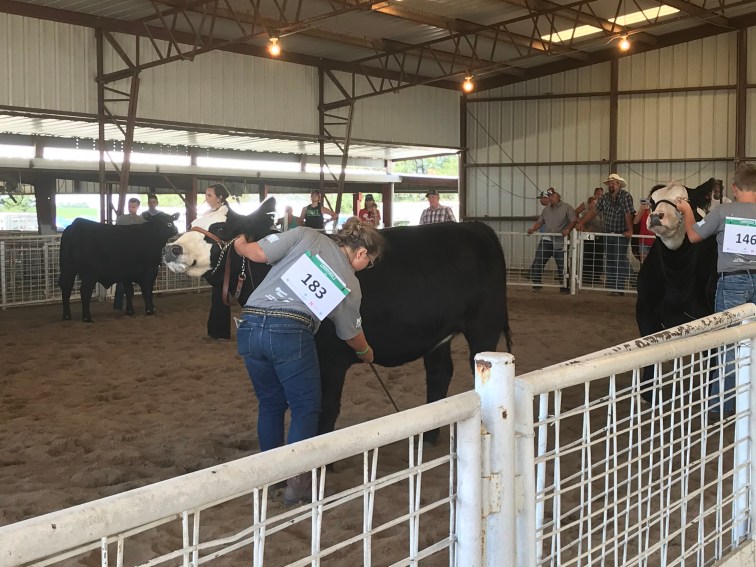
I’d also like to thank everyone for allowing me the chance to be a “mom” on Fillmore County beef show day and help McKenzie get her three calves ready.  It was valuable time I was able to spend teaching her and being able to create memories. One of the best quotes someone once told me has stuck with me: “It’s better to be a part of the solution, rather than a part of the problem.” I saw a lot of sportsmanship being conducted in a positive manner this year which is refreshing at a time when so many people in our country, find things that are wrong and focus on those. Congratulations Clay and Fillmore County 4-H and FFA programs on a great county fair!

Source: Belgrad, W., Fisher, K., & Rayner, S. (1995). Tips for Teams: a Ready Reference for Solving Common Team Problems. McGraw-Hill: New York.

Programming, Youth

2020 Youth Crop Scouting Competition Virtual Competition

Nebraska Extension is pleased to present the 6th Crop Scout Design (1)annual Crop Scouting Competition for Nebraska youth. Youth interested in crops have the opportunity to learn about crop growth & development and basic crop scouting principles.

Don’t know a lot about crops?  Ask a local agronomist to assist by providing a short lesson on crop production. You can have the agronomist meet with youth a little during each meeting or outside of the meeting. This is one way to engage those youth interested in crops.

This contest will be held virtually this year on July 28, 2020. Teams of middle school thru high school students (those completing 7-12th grades) from across Nebraska are invited to participate. With the virtual option, there will be a limited space to the first ten teams who register.  Teams will compete in a fun, group online game instead of the written individual test. The scouting exercises will enable teams to work together via zoom. They will be given a scenario or task to complete and communicate their answers to the Nebraska Extension judge.

Clubs or other organizations may enter a team composed of three to five participants. An adult team leader must guide students through the process. Team leaders could be FFA advisors, crop consultants, extension staff, coop employees, etc.

Top-scoring teams win prizes: $500 for first, $250 for second, $100 for third place.   Teams are expected to know the basics of scouting corn and soybean fields. This includes crop staging; looking for patterns of crop injury; disease, insect and weed seedling identification; etc. Other topics many include but are not limited to, pesticide safety, nutrient disorders, and herbicide injury.

Two New Opportunities For Youth This Year

Free package of study materials will be mailed to each team that registers by the deadline! When teams register, we will send one package to every team sponsor that provides an address. Study materials will include

    1. Weed, Disease & insect guide
    2. Corn and soybean field guide
    3. A magnifier for your phone camera (if funding allows)
    4. Additional promotional items

We are also providing, “Office hours with an Agronomist”. Join us for several office hours with an Agronomist. Starting soon, different Nebraska Extension agronomist/specialists will share some scouting information and answer your questions. The office hours are open to all youth in grades 7-12. No registration required. A link will be posted on this webpage on the day of the office hours that will direct you to a zoom meeting to participate.

More information about the crop scouting competition and instructions on how to register a team are available online at cropwatch.unl.edu/youth. Register at: https://go.unl.edu/cropscoutingreg.

Teams must be registered by July 15. This program is sponsored by Nebraska Independent Crop Consultant Association and Nebraska Extension.