Uncategorized

Farm Bill Education

Crop producers are faced with a complex Farm Bill and important decisions to make. My colleague in Hamilton County, Todd Whitney wrote a good article on this so I’ve decided to share it in this week’s column. Landowners and producers should verify that their FSA Farm Numbers are correct for 2014 base acres and 2014 CC (counter-cyclical) program yields. Then, one-time farm program option decisions will need to be determined which will last for the next five years; following sign-ups.FarmBillPic

As a result, Farm Bill informational & meetings will be conducted in every county across Nebraska with each educational session running about 2½ hours. Check with your local Farm Services Agency (FSA) or Nebraska Extension Service (UNL) office for more details. These sessions are not required but may be helpful regarding long-term decisions.

Close training dates are as follows: Nov. 21 – Saline county (Saline Center) – 9 am, Nov. 25 – Hamilton county – Leadership Center (Aurora) – 9:00 am; Dec. 8 – Hamilton county – Leadership Center (Aurora) – 1:30 pm; Dec. 9 – York County Fairgrounds (York) – 1:30 pm; Dec. 15 – Adams County Fairgrounds (Hastings) (time TBA); Dec. 16 – Fillmore County Fairgrounds (Geneva) – 9:00 am; and Dec. 16 – Clay County Fairgrounds (Clay Center) – 1:30 pm.

Although this farm bill has many details, there are several key points. First, this new farm bill requires that each FSA Farm have an unanimous decision regarding sign-up options for all landlord owners, tenants and producers involved in any share leases on the designated “FSA Farm Number.” (Note that “if” landowners are using cash leases or variable/flexible leases, then the sign-up options become the tenants’ decision). Therefore, unless landowners receive a “share” of the farm production, the one-time option decision(s) sign-up will be the responsibility of the cash-leasing tenants for the upcoming year; and their sign-up decisions will stay with the FSA farm for the next five years; even if the lease is terminated during the next five years.

Second, each FSA Farm will have the option to update payment yields and reallocate base acres prior to the February 27, 2015 sign-up deadline. This decision will allow landowners and tenants to either keep their current yields or update their yields based on 2008 – 2012 yields (90% of the average). Managers may choose not to update yields if these updated yields are less than their commodity current yield. They may also choose to use current yields if they may not be able to document their updated yields such as not owning the farm in 2008 & 2009; or if grain production was fed to livestock without documentation. FSA Farm base acre decisions will also need to be determined by the Feb. 27th deadline. The “total” current base acres can’t be increased, but the FSA Farm managers will have the freedom to choose their allocations based on previous years’ base acres. This one-time sign-up decision will then set the base commodity acres for the next five years for potential payment calculations regardless of what crops are grown on the FSA Farm(s) during the next five years.

The last sign-up is the “program choice” deadline prior to March 31, 2015; although there is a possibility that this deadline could be extended. Farm managers will need to choose among the Agricultural Risk Coverage – county (ARC-CO); Price Loss Coverage (PLC); and Agricultural Risk Coverage (ARC-IC) options for each FSA farm. These decisions may best be determined using a computer farm bill options comparison.

More information regarding the new farm bill options is also available through our UNL Extension website http://cropwatch.unl.edu. Locally, the Fillmore County Farm Bill workshop on December 16th is being sponsored by Heartland Bank, Walter Insurance, Cornerstone Bank and Generations Bank; a light meal will be provided following the Farm Bill program. This program is also in collaboration with the Fillmore County Farm Service Agency. To register for a meal, please call our office at (402) 759-3712.

Uncategorized

Halloween Safety Tips

Some safety tips in time for next week with Halloween to consider from the Progressive Agriculture Safety Day blog.

Progressive Agriculture Foundation's avatarSafety Day Corner

By: Jana L. Davidson, Education Content Specialist for the Progressive Agriculture Foundation

From dressing up like pirates and princesses to ghosts and goblins, Halloween is a fun and exciting time for many children. Each year, children look forward to parties, haunted houses & hayrides, and of course adventuring through the neighborhood, door-to-door in search of candy. Trick or treat dates and times may be different in each town, but one thing that should remain constant is making safety a priority!  Here are some safety tips to ensure your child continues to have good memories and enjoy Halloween for years to come.

  1. Young children should never go trick or treating alone! They should always be accompanied by a parent or a responsible and trusted adult.
  2. For older children, they should always go trick or treating in groups and stick together at all times. If your child would happen to get lost…

View original post 439 more words

Uncategorized

Farmers & Ranchers College 2014-15 Programming Year

The Farmers & Ranchers College was formed in January, 2000 with the purpose of providing high quality, dynamic, up to date educational workshops for area agricultural producers in south central Nebraska Logothrough a collaborative effort between business, industry and higher education leaders. Furthermore, the Farmers & Ranchers College will provide the tools necessary so that agricultural producers will be able to respond positively to these changes using a profitable decision making process.

The Farmers and Ranchers College is a unique opportunity to educate agricultural producers in south central Nebraska. Approximately three hundred producers from fourteen counties and three states participated in the 2013-2014 Farmers & Ranchers College programs. Producers attending these workshops managed over 184,000 acres. Participants (21%) surveyed indicated an average of $11.00/acre of knowledge gained from participating for a potential impact of $2 million.

The thirteenth annual Partners in Progress- Beef Seminar featured a variety of industry, University and agricultural organization presenters. Participants managed over 32,000 head of cattle and indicated that on average the information presented will increase their profitability $12.25/head with a total potential impact of over $500,000.

Contributions and support of area businesses allow participants to attend at no cost, however for programs that have meals, it is requested that people RSVP at least a week in advance for an accurate meal count by calling Fillmore County Extension at (402) 759-3712.

The Farmers and Ranchers College Committee consists of Fred Bruning of Bruning, Bryan Dohrman of Grafton, Sarah Miller of Carleton, Jennifer Engle of Fairmont, Ryne Norton of York, Jim Donovan of Geneva, Bryce Kassik of Geneva, Eric Kamler of Geneva, and Brandy VanDeWalle of Ohiowa.

2014 -2015 Farmers & Ranchers College Programming

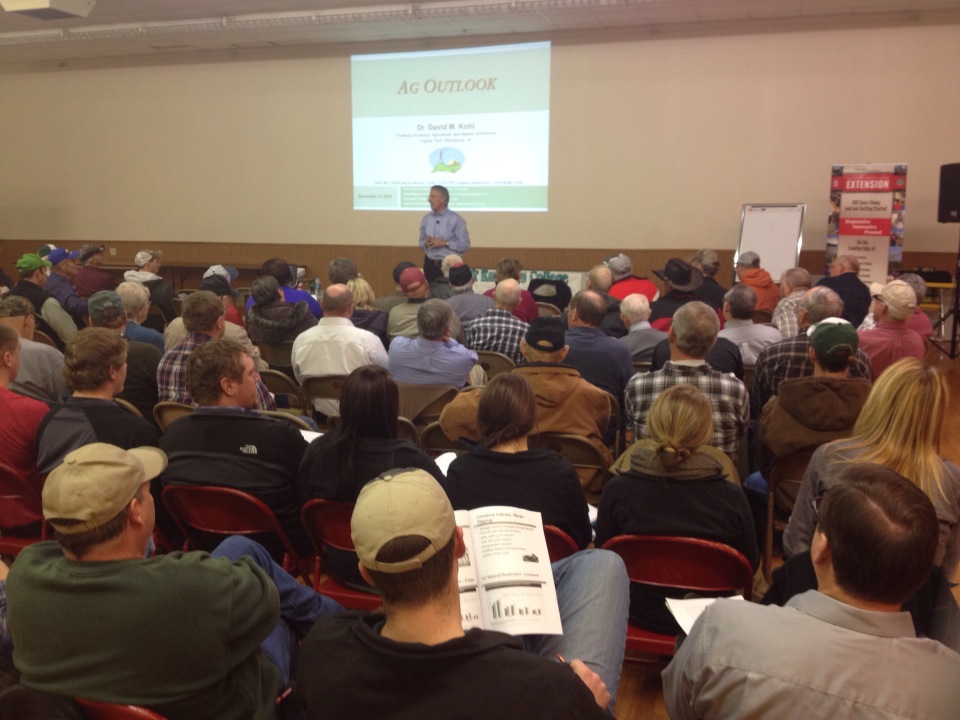
  • December 11, 2014 – “Ag OutlookFeaturing Dr. David Kohl Professor Emeritus, Dept. of AAEC, VA TECH at the Bruning Opera House – Bruning, NE at 1:00 p.m.
  • January 27, 2015 – “Partners In Progress – Beef Seminar”* at the U.S. Meat Animal Research Center near Clay Center from 10:00 a.m. to 3:30 p.m., registration at 9:30 a.m.
  • February 4, 2015 – Ag: Trends, Topics & Tomorrow (High Content & Very Entertaining) with Damian Mason: “Agriculture’s Professional Funny Man”* at the Fillmore County Fairgrounds in Geneva with meal starting at 6:00 p.m. and program to follow. Registration starting at 5:30 p.m.

Programs are provided at no cost to the public, but registration is appreciated for a meal count. Please call the Fillmore Co. Extension Office at (402) 759-3712 one week prior to the program.

Uncategorized

Chemical safety activities for you! – That’s right, YOU!

I work with a local Progressive Agriculture Safety Day each year and therefore am passionate about getting the word out to people about being safe on the farm or in rural communities. Take a look at this Farm Safety For Just Kids blog post with some safety activities.

Farm Safety For Just Kids's avatarThe Next Generation: Farm Safety and Health

Extra, extra read all about it! We have plenty of chemical safety activities for the kids in your life. Teach them to be safe around chemicals. Download and print today, at no cost to you.

View original post

Crops, Programming

Returning to the Farm

Each year UNL offers a workshop held over two weekends for students, beginning farmers, and established operations. This year the first weekend sessions are planned for Dec. 12 & 13th and the second are planned for Jan. 9 & 10th.

Bringing a young person into a farm/ranch operation presents challenges. FarmHowever, the business operation can accomplish numerous goals by helping the young person get a solid start in the operation, keeping the farm/ranch in the family, and ensuring a comfortable retirement for all involved.

Success does not come automatically; it requires effort. Blending a variety of talents and personalities into

one farming or ranching operation takes planning, communication, and management. The Returning to the Farm program is designed to assist families and operations in developing a financial plan and successful working arrangements that will meet the needs of multiple families.

During the program participants will:

  • Review financial feasibility, balance sheets and trend sheets
  • Identify estate planning issues
  • Develop a farm/ranch transition plan
  • Set both personal and professional goals
  • Look at the communication process between family members

Returning to the farm is sponsored by the University of Nebraska – Ag Economics Department. Presenters will include: Dave Aiken, Tina Barrett, Kate Brooks, Dave Goeller, Cheryl Griffith, Brad Lubben, Jay Parsons, Cory Walter and Roger Wilson.

For more information about this great program, go to Ag Econ website. I know there are local families who have particiapted and came back with great reviews on it. Let me know if you have any questions about this workshop.

Uncategorized

Take Notes While in the Combine

Combining2011 002During harvest, many farmers are probably reflecting on the season, but might not be taking notes for next year. This is the time to start planning for next year’s crops. While in the combine, look for weed and insect problems to fix for next year. Harvest provides an opportunity for a final evaluation of your weed management program and to a lesser extent, your insect management program. As you travel over all of your fields, take a minute to record observations such as where weeds are present. Be sure to note the exact locations and details so you know how to correct it for next year.

The next step of being a “crop scene investigator” of CSI is to make the linkages and relate weed or insect problems with management decisions that were made. Use your yield monitor to help you adjust your problem areas.

Uncategorized

“Worm” Invasion (Millipedes)

During this time of year I receive calls about worm-like, dark brown to black creatures that are invading people’s houses or garages. Most likely these are millipedes. Millipedes are not harmful in the yard, but can be a nuisance with the first spell of cool temperatures in fall. Millipedes will millipedex450invade houses (sometimes in large numbers) to find warmth on concrete in and around garages and houses. At times, millipedes can become so abundant; they may constitute a “millipede invasion” entering homes and other buildings. Once they reach indoors, millipedes will die – no sprays are necessary.

Millipedes (sometimes called “wireworms” which are the larval stage of a beetle that feeds on plants in farm fields) have two pairs of legs per body segment. They are usually brown to black in color with an elongated body that is round. Millipedes have no poison claws or legs. Once disturbed, they usually coil up to protect themselves. Once found in the home they usually die due to desiccation, although in moist basements they survive longer.

Millipedes live in organic matter such as leaves, mulch, and piles of wood or wood chips. Over mulching and/or watering in the garden can cause millipedes to attack vegetable plants. Reducing mulch thickness, reducing watering schedules, or pulling mulch away from plants and allowing them to dry will help reduce the potential for invading millipedes. To prevent millipedes from entering the home, be sure that screens are tight, that moisture-holding material in window wells is eliminated, and that mulches are at least 6-8 inches away from the foundation. Outdoors, you may wish to treat a 10-15 foot wide barrier strip with carbamate insecticide (Baygon, Ficam, Seven) because they are fast-acting. People and pets should stay off wet insecticides, but can safely walk on the yard once the insecticide is dry.

Once millipedes have entered the house, the safest way to control them is to vacuum or sweep them up. In damp hiding places, an indoor insecticide labeled for this use can be applied. As with any chemical, be sure to read and follow label directions when using any insecticides.  More information can be found on UNL Extension’s resource pages.

Uncategorized

Uninvited House Guests (Mice)

You are sitting at home and all of a sudden a little gray rodent with relatively large ears and small black eyes scurries across the room!   It is about 1/2 ounce in weight and if an adult 5 1/2 to 7 1/2 inches long, including its 3 – 4 inch tail. Of course, you must know by now that I am describing a house mouse. The house mouse is considered one of the most troublesome and economically important rodents in the United States. They can cause damage to property and transmit diseases such as salmonellosis and swine dysentery. You will know you have mice if you see small droppings, fresh gnaw marks and mouse nests made from fine shredded paper or other fibrous material. They are active mostly at night, but can occasionally be seen during daylight hours. Mice are excellent climbers and can jump up 12 inches from the floor to a flat surface; they can squeeze through openings slightly larger than 1/4 inch in diameter.

Sanitation, mouse-proof construction, and population reduction allow for effective control of mice. Mice cannot survive in large numbers if they have few places to rest, hide, or build nests; however a few mice can survive with limited amounts of food and shelter. Proper sanitation is an important step to control mice. Most buildings that handle food will have problems with mice not matter how clean they are, but the house should be mouse-proofed.   To mouse-proof a house, eliminate all openings larger than 1/4 inch. Steel wool can be used as a temporary plug; cracks in building foundations and openings for water pipes, vents, etc. can be sealed with metal or concrete. Doors and windows should fit tightly. Cover doors and windows with metal to prevent gnawing. Latex, plastic, rubber, and wood are unsuitable for plugging holes.

Once you find mice in your house, traps can be used to control the population. The advantages of traps are 1) it does not rely on hazardous rodenticides, 2) it permits the user to view his/her success, and 3) it allows for disposal of trapped mice therefore eliminating dead mouse odors that may occur when poisoning is done. Peanut butter works great to put on traps because it is easy to use and very attractive to mice. Simple inexpensive wood-based snap traps are effective, as well as glue traps. Glue traps must not be in extreme temperatures and can lose their effectiveness over time with dust collecting on them. Whatever traps, you decide to use, be sure to set them behind objects, in dark corners, and in places where evidence of mouse activity is seen.

For more information on mouse control, refer to NebGuide, Controlling House Mice which can be accessed online or through your local extension office.

Uncategorized

Harvest Safety

It is hard to believe that harvest will soon be in full swing! With harvest comes more traffic on the county roads and other stresses for farmers. It never fails, that equipment can break, there can be delays at the elevator and those extra-long hours can all add extra stress to farmers. That being said, it is important to carefully slow down and realize the many hazards you are being exposed to during harvest.Harvestweb

An Iowa State Extension publication, Harvest Safety Yields Big Dividends points out that injuries can occur by taking shortcuts to perform routine tasks, not getting enough sleep or regular breaks, or failing to follow safety practices. Some injuries occur when operators are pulled into the intake area of harvesting machines, such as balers, combines, or corn pickers, and many injuries occur from slips or falls around these machines. Exposure to powerful machinery is highest during the harvest season. The equipment must be powerful to effectively handle large amounts of agricultural commodities. When equipment plugs, NEVER try to unplug it with live equipment, instead always disengage power and turn off the engine before trying to manually clear a plugged machine. Regular maintenance of these machines can also make harvest go smoother. Also, lots of accidents actually happen by the operator slipping and falling off equipment.

In the same publication listed above, there are several tips for reducing fall hazards:

  • Always keep all platforms free of tools or other objects.
  • Frequently clean the steps and other areas where workers stand to service, mount and dismount, or operate the machine.
  • Wear well-fitting, comfortable shoes with non-slip soles.
  • Use grab bars when mounting or dismounting machinery.
  • Be sure your position is stable before you work on a machine.
  • Recognize that fatigue, stress, drugs or alcohol, and age may affect stability.

Other helpful tips during harvest are to keep kids away from machinery. Tell them the dangers that can occur and not to play near the equipment, even when it is shut off; you never know when they will be playing in hidden areas of the equipment. Operators should double check where kids are before moving the equipment. Too many accidents can occur when youth are in the path of equipment out of the operator’s view. Operators of all equipment should check in regularly and let someone know where you are. Keep all guards on equipment; it is there for a reason!

It is also important for the public to understand the increased traffic on public roads and be patient. The greatest threat raised between farm equipment and passenger vehicles is the difference in speed. Farm equipment runs at an average speed of 20 miles per hour while passenger vehicles average 60 miles per hour. If the motor vehicle overtakes a tractor, the impact is comparable to a passenger vehicle hitting a brick wall at 40 miles per hour. If the tractor and a car, mini-van or pickup collides head on, the impact is the same as hitting a brick wall at 60 miles per hour.

Farmers can reduce the chances of an accident by using warning lights, reflectors and reflective tape on their machinery to keep passenger vehicle operators aware of their presence on roads. Some farmers may choose to install supplemental lights to increase visibility. It also is a good idea for producers to keep off heavily traveled roads as much as possible and avoid moving equipment during the busiest part of the day.

Some farm equipment, such as combines, can take up more than half of the road. Even so, it is up to both drivers to be aware of their own limitations and adjust accordingly. Farmers should not take up more space than is needed, but other drivers should try to provide as much room as possible. It is a good idea for passenger vehicles to turn off onto side or field roads until larger machinery has passed. Whenever possible, farmers should use an escort vehicle such as a pickup to precede or follow large machinery and equipment on public roads. More than one escort may be necessary. Ideally, the escort vehicle would have extra warning lights and a sign indicating oversized or slow equipment ahead or following.

Have a safe harvest!

Crops, Programming

Nebraska Veteran Opportunity

We are so blessed to live in the United States of America for numerous reasons and I give my gratitude to those who are serving in the military or have served. Both of my grandpas served and I have three cousins who have or are serving. Thank you so much to all of the servicemen and women for the sacrifices they have made. This week’s column will focus on a national organization that helps veterans who are in agriculture or are interested in pursing a career or business in agriculture. Eric WilliamsFVClogo, Fillmore County Veterans’ Service Officer provided the following information about the Farmer Veteran Coalition (FVC), which helps place veterans in agriculture.

According to the FVC website, the mission of the Farmer Veteran Coalition is “to mobilize veterans to feed America. We cultivate a new generation of farmers and food leaders, and develop viable employment and meaningful careers through the collaboration of the farming and military communities. We believe that veterans possess the unique skills and character needed to strengthen rural communities and create sustainable food systems for all. We believe that food production offers purpose, opportunity, as well as physical and psychological benefits.”

There are 3,000+ members of the FVC in the country, and 48 are in Nebraska. As an ag state, there is an opportunity for many more Nebraska veterans to participate in this program. To bring awareness of FVC in Nebraska, an event is being held on September 18 in Seward, NE. The event features an educational session open to veterans and anyone interested in exciting, new, innovative, niche agricultural opportunities. That night there will be an amazing celebration of NE Ag Vets at the Seward Ag Pavilion. 

Space is limited so reserve your spot today by calling Del Ficke at (402) 499-0329 or email fickecattle@outlook.com. If you are a veteran and cannot afford to attend, but are still interested, let Del know as there are some funds available for cases such as this. If you purchase a $30 ticket to the evening celebration, your entry is free to the day seminars. If you would like to attend the day portion only, the cost is $10.

The evening event is a fundraiser so services can be expanded to NE veterans. Here is a link to the event registration.