Programming, Youth

Progressive Agriculture Safety Days Celebrates Twenty Years!

Nebraska Extension in Fillmore County, Fillmore Central & Shickley FFA and the Fillmore County WIFE organizations are proud to help the Progressive Agriculture Safety Day® program celebrate its 20th Anniversary by conducting a Safety Day on May 28th at the Fillmore County Fairgrounds in Geneva, NE. This Safety Day is being planned for children currently in grades 1-5 and interested youth in older grades. This year’s program will focus on bike safety & helmets, pinch point demo, drug dog demo, medical helicopter visit, combine safety, hearing safety, train safety, lawn mower safety, electrical safety and more!Safety_DayFor the past 20 years, the Progressive Agriculture Safety Day® program has continued the mission of providing education and training to make farm, ranch and rural life safer and healthier for children and their communities. Nebraska Extension has been helping the program achieve this mission for years. In 2015, ADULT safety sessions have been added with sessions that include: fire safety & extinguisher demo, grain bin excavation demo, electrical safety and hearing awareness for $10/person which includes a t-shirt, lunch, refreshments and over $50 of FREE safety items (guaranteed to the first 25 who RSVP).
Current 1st through 5th graders are invited to attend Progressive Agriculture Safety Day on Thursday, May 28, 2015 at the Fillmore County Fairgrounds. Youth will participate in a variety of events designed to help them be aware of safety in potentially hazardous situations such as bike riding, agricultural settings, electrical safety and others.   A registration and consent form is required by all youth who participate.

From humble beginnings in 1995 with the introduction of 19 Safety Day Camps to achieving international recognition in present day with more than 400 Safety Days annually, the Progressive Agriculture Safety Day® program is now recognized as the largest rural safety and health program for children in North America. During the program’s first year, a total of 2,800 participants and volunteers were reached throughout the South and Midwest and now the program impacts close to 110,000 annually. To date, more than 1.3 million children and adults have been impacted by the program.

In recognition of the 20 year milestone, the Progressive Agriculture Foundation has encouraged coordinators of Progressive Agriculture Safety Days to incorporate this achievement into their locaSunSafetyWEBl programs in a variety of ways from participation in a 20th anniversary t-shirt design contest to sharing past success stories.

The success of Progressive Agriculture Safety Day® program has been made possible thanks to the generous and continued support of international sponsors including as well as local sponsors. Dedicated community volunteers are at the heart of the Safety Day program fulfilling a variety of roles and assuring children receive hands-on experiences in a variety of safety-related topics including ATV, electricity, fire, animal, and farm equipment safety.

For more information about the Fillmore County Progressive Agriculture Safety Day®, please contact Brandy VanDeWalle at 402-759-3712 or brandy.vandewalle@unl.edu. Additional information can be found at http://www.progressiveag.org/
Programming

Household Hazardous Waste Collection

Several times throughout the year I receive calls asking, “What can I do with my old paint, cleaning products and lawn chemicals, etc.?” Coming up soon, is the opportunity to properly dispose of those products. On Saturday, April 25th from 7:30 to 10:30 a.m. at the Fillmore County Shop located at 615 F Street in Geneva there will be a Household Hazardous Waste Collection which is free of charge with financial support provided through a grant by the Trailblazer RC & D from the NE Dept of Environmental Quality Litter Reduction & Recycling Grant Program and other assistance provided by the Fillmore County Supervisors and Fillmore County Development Corporation.

Items accepted include: all paint, cleaning products, lawn & garden chemicals, pesticides, herbicides, used oil, antifreeze, batteries, florescent bulbs and mercury items (such as thermometers & thermostats) in household quantities only! Items NOT accepted include: tires, electronic equipment, appliances, PCBs, Picric Acid, science lab materials, radioactive materials, biological hazards, pharmaceuticals, items containing asbestos, wood preservatives, explosives or commercial quantities. For more information, contact the Fillmore County Development Corporation at (402) 7569-4910 or Larry Cerny at (402) 759-4369.

Resources available in Nebraska include:

NE NDA Hazardous Waste Directory

Keep Nebraska Beautiful

Programming, Youth

Big Red Crops Camp: Youth Discover Crop Science

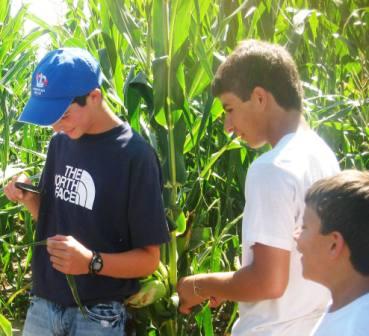
Are you interested in science, agriculture, plants, crops, insects, or diseases? If so, join our team of detectives to solve crop-related problems in the Crop Science Investigation (CSI) Big Red Camp! Become a detective while participating in hands-on sessions to learn about and increase your knowledge of crops, science, and agricultural careers. Youth detectives will interact with agronomic professionals across Nebraska to solve experiments in: nutrient management; managing disease, insect and weed problems; water management; crop production, and much more! Do you have what it takes to become a CSI detective?

Youth in Crop Sciences Investigation (CSI) workshops learn about crop production and have the opportunity in investiage what pests might be present in the field.
Youth who attend Big Red Camp – Crop Science learn about crop production and have the opportunity in investigate what pests might be present in the field.

There are a variety of careers related to plant sciences such as: Agricultural Communicator; Agronomist; Crop Consultant; Crop Insurance Adjuster; Educator; Co-op Manager; Farmer or Rancher; Farm Credit Banker; Field or Lab Researcher; Plant Breeder; Soil or Water Conservationist; Seed, Fertilizer, or Chemical Sales; or Technical Representative.

This program was held two years and one participant said, “It (the camp) let me see all of what an agronomy career is made up of.” All youth said they would recommend this camp to their friends. As I write this, there are several spots already taken, so be sure and get your registration form in soon to ensure a spot at this year’s camp.

To register or download a camp brochure, visit BIGREDCAMPS.UNL.EDU. Final registration deadline of May 1st! Scholarships are available for crops camp. If you have questions about the camp or the required essays, please feel free to contact me at brandy.vandewalle@unl.edu or 402-759-3712.

Crops, Programming

National Agriculture Day

National Agriculture Day, March 18, spotlights American agriculture and serves as a reminder that agriculture is part of us all. The U.S. Agricultural Safety and Health Centers join producers, agricultural associations, corporations, students and government organizations in marking this occasion.AgDayLogo

“National Agriculture Day is an opportunity for us to acknowledge the importance of the people who provide our food,” said Scott Heiberger, spokesman for the National Children’s Center for Rural and Agricultural Health and Safety, one of the 10 U.S. Ag Centers. “We want to highlight how important the health and wellbeing of the people in agriculture is to our whole society.”

The U.S. Ag Centers are promoting the theme, “Celebrating Safe and Healthy Ag Workers,” on this 42nd anniversary of National Agriculture Day. #AgDay2015 #farmsafety #USAGCenters

The Centers (www.cdc.gov/niosh/oep/agctrhom.html) are funded by the National Institute for Occupational Safety and Health (NIOSH). Visit the Centers’ YouTube channel (www.youtube.com/user/USagCenters) for new content and fresh ideas about how to stay safe while working in agriculture, forestry and fishing. Topics include: personal protective equipment, livestock safety, tractor and machinery safety, child development, emergency response, grain safety, pesticide safety, heat illness prevention, ladder safety and hearing protection.

National Agriculture Day is being hosted by the Agriculture Council of America (ACA). National Ag Day is celebrated in classrooms and communities across the country.

The National Ag Day program encourages every American to:

  • Understand how food and fiber products are produced.
  • Appreciate the role agriculture plays in providing safe, abundant and affordable products.
  • Value the essential role of agriculture in maintaining a strong economy.
  • Acknowledge and consider career opportunities in the agriculture, food and fiber industry.

Source: Scott Heiberger, U.S. Agricultural Safety and Health Centers

Programming

Women in Agriculture

Last week I had the opportunity to participate in the 30th Annual Nebraska Women in Agriculture conference. This was only the second year I have participated and well worth the time! Discussions around advocating for agriculture were very powerful. Rebecca Long-Chaney was very inspirational and reminded us that no matter how busy we are in life; make time for family and friends. Her message and involvement with “agvocacy” is to be commended and wia-01her twin daughters also have shared their experiences in agriculture through children’s stories. With all of the anti-ag Chipotle ads, Meatrix videos and other false information out there, it is good to know there are some people sharing the factual information about modern agriculture. The bottom line is that even though farmers and ranchers shouldn’t have to defend their way of life and jobs, we need to because of the increasing disconnect consumers have with agriculture.

Simple ways of communicating the facts about modern agriculture include writing letters to the editor, educating youth in classrooms or programs, buying factual agricultural library books for your child’s schools/communities, having a 30 second elevator speech on agriculture ready and sharing it every opportunity you have (especially in urban areas), engaging in social media and inviting people to your farm or ranch to show them the great job you do!

There were so many other great sessions from crop insurance and marketing updates to emergency preparedness and water updates. One of the things that were emphasized was how women involved in agriculture (especially spouses of farmers/ranchers) are truly the “heart of agriculture”. Women play a key role in supporting agriculture through a variety of ways and it made me hope that someday, not only will I be able to work with ag producers and youth, but my husband and I will be able to have a small ag operation of our own so we can instill the hard work ethic and values into our daughters which were instilled in my husband and I.

If you are a female and involved in agriculture, I highly recommend you take time out of your busy schedules to participate in the Nebraska Women in Agriculture Conference next year!

Programming

Precision Ag Workshops

Learn how to extract more information from your precision ag data at one of several Nebraska Extension workshops this winter. Yield monitor data is one of the most valuable pieces of farm information that is gathered each year. Utilizing yield, soil, and input data to its fullest potential is the objective in developing an integrated agronomic management system. This workshop will help drive informed decisions and make the most of data you already have to drive future profitability.IMG_2639

The Precision Ag Data Management Workshops will offer lectures and hands-on activities using Ag Leaders SMS Advanced software.  (Laptops and data will be supplied.) Each site will be limited to 25 registrants.

Session topics will demonstrate strategies to: conduct multi-year yield data normalization analyses; analyze yield monitor data versus as-applied split planter hybrid data; quantify yield monitor data versus NRCS soil survey boundaries and soil electrical conductivity (EC) maps generated from Veris data; develop prescription maps for crop inputs under irrigated and dryland conditions and export to an in-cab monitor; and develop and evaluate the performance of management plans for corn seeding rates using on-farm research strategies.

Schedule

Programs are the same at each site and begin at 8:30 a.m. and end at 5 p.m.

  • Tuesday, Feb. 24 — York, 4-H Bldg., 2400 Nebraska Ave.; register by Feb. 20
    Contact: Gary Zoubek, (402) 362-5508 or zoubek@unl.edu
  • Wednesday, Feb. 25 — Clay Center, Clay County Activities Bldg.; register by Feb. 20   Contact: Jenny Rees, (402) 762-3644 or rees@unl.edu
  • Thursday, March 5 — Geneva, Public Library; register by Feb. 27
    Contact: Brandy VanDeWalle, (402) 759-3712 or vandewalle@unl.edu

Registration is $50. Add $15 for an additional registrant from the same farm operation who will share a computer and add $20 for anyone requesting CCA CEUs. CCA CEUs are currently pending approval. Six credits are anticipated for the successful completion of the workshop (one credit each for soil and water, soil fertility, and professional development and three credits for crop management). Registration includes learning guides, a jump drive with similar information, and lunch.

To register, contact the Extension office indicated in the schedule by the deadline listed. To contact our office, call 402-759-3712 or email me at brandy.vandewalle@unl.edu.

Programming

Damian Mason Coming to Fillmore County!

The last Farmers & Ranchers College workshop for the 2014-15 programming year will be held Wednesday, February 4, 2015 at the Fillmore County Fairgrounds in Geneva, NE with registration starting at 5:30 p.m., a meal at 6:00 p.m. and the program to follow. The program, “Ag: Trends, Topics & Tomorrow” will be high on content and very entertaining with “Agriculture’s Funny Man”, Damian Mason.Damian Mason headshot

Damian Mason is a professional speaker, entertainer, writer, businessman and farm owner. Long before Damian enjoyed professional success in business or on the speaking circuit, he was a farm boy. At age 8 he had his first job, bottle -feeding calves on the Indiana dairy farm where he was raised. Like many children of agriculture, he was involved in FFA and was a ten-year 4-H member. Damian has a degree in Agricultural Economics from Purdue University. He has also studied comedy writing and improvisation at The Second City in Chicago.

Few people are hilariously funny and farm knowledgeable. Damian is! He’s delivered his hit program “Humor for the Heart of Agriculture” to the most recognizable names and organizations in the agricultural industry. Since 1994, he’s made over 1400 appearances, entertaining crowds in 50 states and 7 foreign countries. Damian is passionate about the industry of feeding, fueling and clothing the world. His presentations are funny, smart, professional and, above all, respectful to the people of agriculture.

Damian is a member of the National Speakers Association, the Screen Actors Guild and the Indiana Farm Bureau.   He and his wife Lori live (and work!) on a 200-acre beef, grain and timber farm in Huntington, Indiana.

We are extremely fortunate to have Damian Mason come to Fillmore County as he will provide an informative but also hilarious presentation, perfect for any audience involved in the business of food, fuel & fiber. “Agriculture: Trends, Topics and Tomorrow” will provide a provocative, yet positive look at the issues impacting contemporary agriculture.

Contributions and support of area businesses allow participants to attend at no cost, however it is requested that people RSVP at least a week in advance for an accurate meal count by calling Fillmore County Extension at (402) 759-3712.

The Farmers and Ranchers College Committee consists of Fred Bruning of Bruning, Bryan Dohrman of Grafton, Sarah Miller of Carleton, Jennifer Engle of Fairmont, Ryne Norton of York, Jim Donovan of Geneva, Bryce Kassik of Geneva, Eric Kamler of Geneva, and Brandy VanDeWalle of Ohiowa.

Programming

Consider “LEAD”ing Others

As we close out other year and set new goals for 2015, remember it is important to “agvocate” for agriculture, even if its simply informing others what you do and how you are an environmental steward of the land, etc. One program which empowers individuals to become more educated on agricultural issues and improve their leadership skills is the Nebraska LEAD program.

My LEAD group XXVII went to China, South Korea and Hong Kong for our International Study Travel Seminar.

Several years ago I met twenty-nine talented individuals with a passion of agriculture through the Nebraska LEAD program. To date, I remain friends with many of them and the networking opportunities have been tremendous. The in-state seminars challenged me to think outside of the box and remain an advocate for agriculture. I could go on and on about the excellent opportunities the LEAD program has provided, but I challenge you to experience it yourself!

Today’s pressing issues demand strong, able, informed leaders who not only excel in their chosen professions, but also in the areas of communications, political savvy and issues management. The Nebraska LEAD Program prepares leaders to face challenges with confidence. If you would like to be a part of the leadership necessary to chart the course now and in the future, and you are presently involved in production agriculture or agribusiness, there will never be a better time to apply to participate in the Nebraska LEAD Program.

Fellowship applications for Nebraska LEAD (Leadership Education/Action Development) Group 35 are now available for men and women involved in production agriculture or agribusiness and will be accepted until June 15. “Up to 30 motivated men and women with demonstrated leadership potential will be selected from five geographic regions across our state,” said Terry Hejny, Nebraska LEAD Program director.

In addition to monthly three-day seminars throughout Nebraska from mid-September through late March each year, Nebraska LEAD Fellows also participate in a 10-day National Study/Travel Seminar during the first year and a two week International Study/Travel Seminar during the second year. Content essential to leadership focuses on public policy, natural resources, community and economic development, communications, education, economics, and social and cultural understanding.

Soon beginning its 35th year, the program is operated by the Nebraska Agricultural Leadership Council, a nonprofit organization in collaboration with the University of Nebraska-Lincoln’s Institute of Agriculture and Natural Resources and in cooperation with Nebraska colleges and universities, business and industry, and individuals throughout the state.

Applications will be accepted until June 15 and are available via e-mail from the Nebraska LEAD Program office by contacting Lauren at lszalkiewicz2@unl.edu   You may also request application materials by writing to Room 318 Biochemistry Hall, University of Nebraska-Lincoln, 68583-0763 or by calling (402) 472-6810.

Nebraska LEAD Program offices are in the Institute of Agriculture and Natural Resources at the University of Nebraska-Lincoln.

Programming

Agriculture Outlook

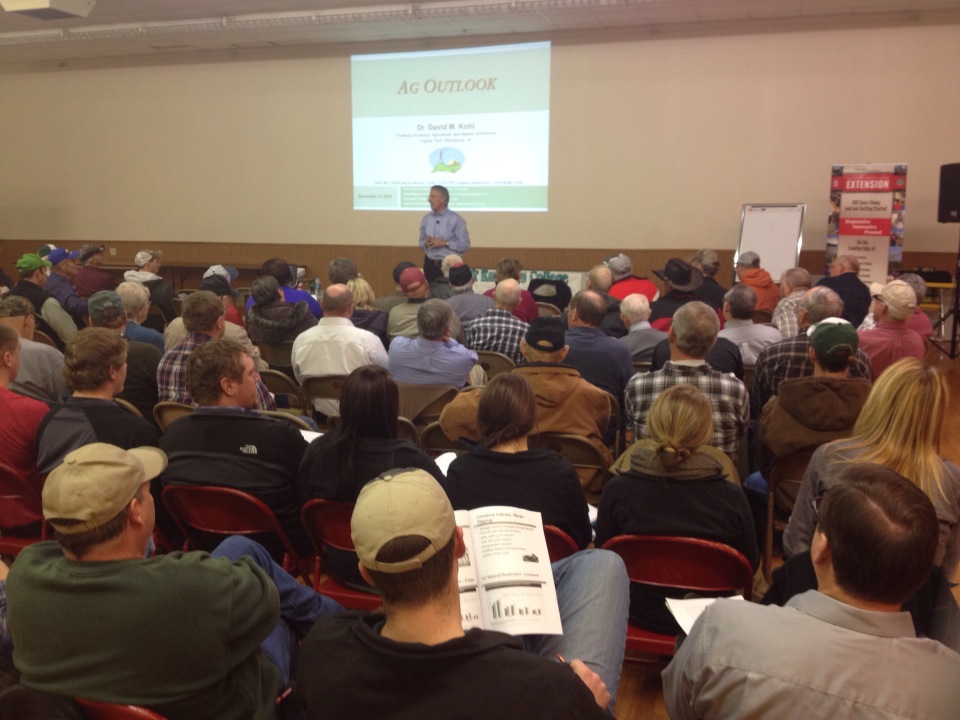
Those of us in agriculture are no stranger to risks involved with agriculture that are taken every day, whether it is financial, production, legal, price/market or human resource risks. While we can’t control everything, there are measures that can be taken to protect one’s operation and reduce risk. Each year the Farmers & Ranchers College hosts Dr. David Kohl, Professor Emeritus from Virginia Tech who does an excellent job describing global risks which affect us locally and how those risks will affect the agricultural industry.

Approximately 130-140 participants gathered for the first Farmers & Ranchers College program for the 2014-15 season.

Kohl reminded those in attendance that in order for there to be an economically viable crop industry, there must be an economically viable livestock industry. With lower crop commodity prices, producers must find ways to reduce their cost of production. The top farm managers will still earn a profit because they are aware of their costs and are resilient and agile. While prices are “hotter than a pepper sprout” for cattle producers, usually when a cattle cycle changes, it happens abruptly and warns on complacency.

Four factors globally to watch that will affect commodity prices are geopolitical factors, trade tensions, natural resources availability and economic reform. Back home in the U.S. concerns for higher interest rates will have an impact on operations based on the unemployment state, GDP growth and inflation. Kohl predicts that by spring or mid-summer interest rates will rise, so producers should be prepared.

In a survey Kohl conducted, he found that 72% of producers are complacent and either don’t use measurements to improve their farm or decision making or only track records to “get by” for taxes and crop yields. This is troubling, especially with lower commodity prices since cost of production has remained constant or higher. Producers need to have a solid handle on their cost of production and have some grain marketed. Land leases will be important and knowing your landlord beyond the finances can help when communicating with them. Those tenants who were fair to their landlords when prices were high will likely fare better than those who were not.

Those producers who surround themselves with “good people” will be successful. This includes a producer’s lender, supplier, etc. Have an advisory board to coach you along and help you make tough decisions and evaluate your financials. Ensure you have the right person “driving the bus” who helps you go the right direction, even though there might be an occasional detour. A well-organized plan with goals is essential. The increase in cost of living is also a huge concern, as it is very hard to cut the cost of living when a family has grown accustomed to certain things.

Tina Barrett with the Nebraska Farm Business, Inc. recently documented that the average cost of living in 1994 was $34,000 and held pretty steady through 2004. Since then, there has been a persistent increase each year. Not surprising that 2004 was the first of 10 years of a record high net farm income. When farm income went up, family living followed right behind. So as farm income declines, what will happen with family living costs? Also interesting to note that recreation was the largest increase, rising from $1,776 in 2004 to $9,081 in 2013, or a $7,305 increase, followed by a $5,550 increase in personal care and $5,339 increase in household supplies. Barrett says clients often bring up what their neighbors are doing and want to be able to afford that. For example, “The Jones went on a 3 week cruise and the Smiths built a new house and the Andersons bought a lake house and the Johnsons have a new Escalade.” The truth is sometimes we don’t know if those families were saving up for years to do some of those extra things. We can only control our own costs and allocate what we can afford for our own situation. This is very similar to Dr. Kohl mentioning that family living costs nationally have grown well over $100,00 and in some cases to $200,000, while the modest producers have only grown to $50-75,000. There will need to be a lot of belt tightening.

In summary, Kohl reminds us that goal setting, record keeping, an advisory board, having working capital and good relationships with those whom influence your management decisions are important golden rules for producers to follow. My next post will feature great information for millennials wanting to return to the farm or rural communities.

Crops, Programming

Extension Programming

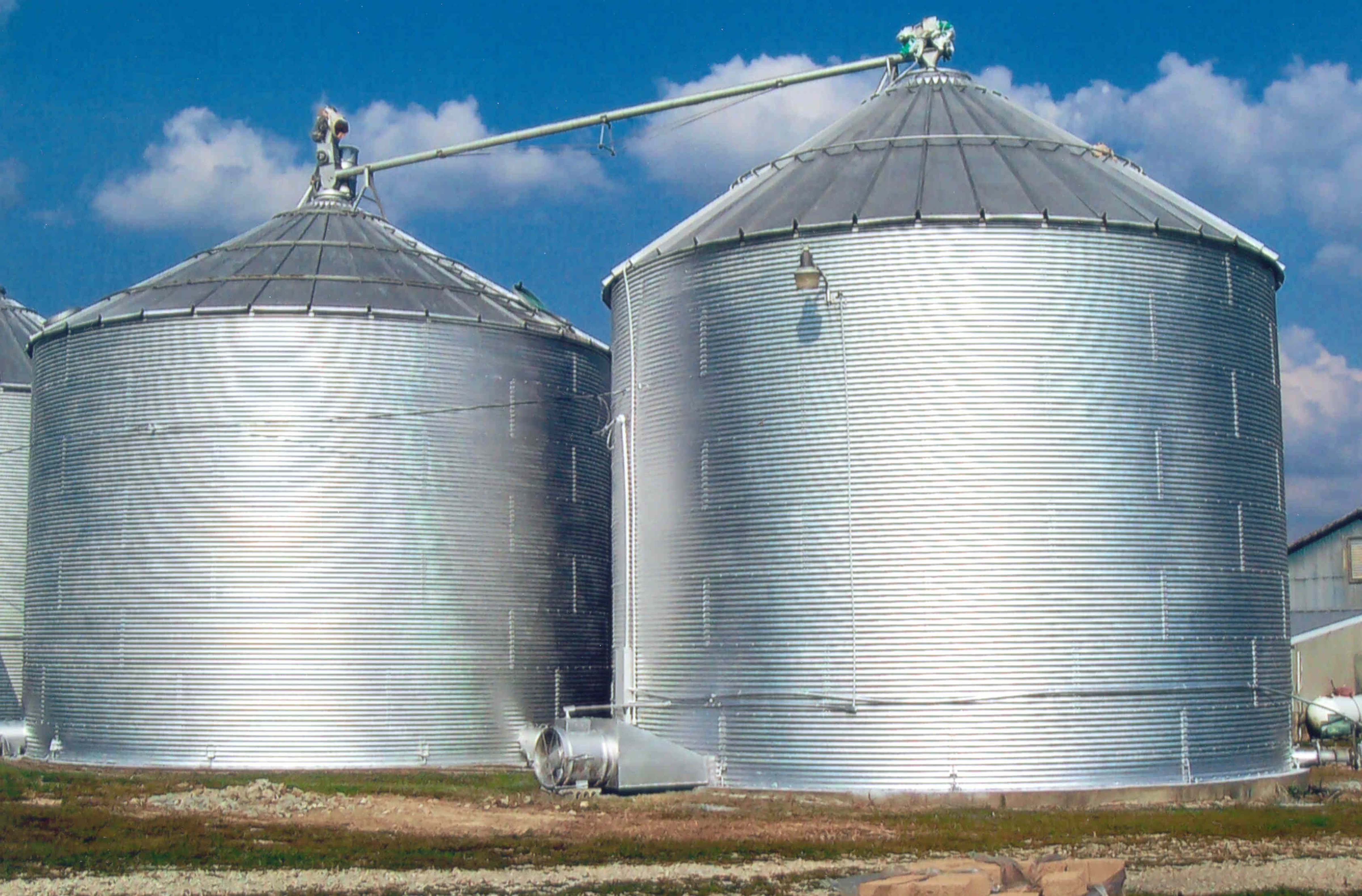
This is the time of year for agricultural programs for agricultural producers and if one wanted, they could go to a program almost every day of the week! For the most current or up-to-date information, go to our website, call our office at (402) 759-3712 or email me at brandy.vandewalle@unl.edu and if we don’t have all of the details, we’ll look them up for you! In light of all the excellence UNL Extension, NRD and industry programs, I decided to give a brief recap of them.grainbin2.jpg

Field Assessments to Improve Efficiency – December 8th
This program seeks to enhance the knowledge of Nebraska corn, soybean and wheat producers on their sustainability and operational efficiency measures. Workshop participants will use a web based tool called Fieldprint® Calculator. We want growers in Nebraska to be better able to understand and communicate how management choices affect overall sustainability performance and operational efficiency of their farm operations. Locally, it will be held Monday, December 8th from 5:30 to 9:00 p.m. at the Geneva Public Library. My colleague in Saline County, Randy Pryor is the program coordinator and is offering this free program, sponsored by Nebraska Extension to 5-10 producers.

Farmers & Ranchers College– December 11th (1-4:00 p.m.) – Bruning Opera House
Ag Outlook will feature Dr. David Kohl, Professor Emeritus with the Dept. of AAEC, VA TECH and will discuss the wild world of global and domestic economics.  Dr. Kohl will discuss the major game changers influencing the agriculture landscape along with a quick tour of global economics and how it is influencing land values, commodities, and input costs.  Is agriculture in an asset or credit bubble?  What can you do financially in this business environment to capitalize on the economic volatility?  Dr. Kohl will give tips on management practices that will help you think globally but act locally in strategic and everyday decision-making.

Farm Bill Workshops – December 16th 9-Noon, Fillmore Co. Fairgrounds, Geneva
Farm Bill informational & meetings will be conducted in every county across Nebraska with each educational session running about 2-3 hours. Check with your local Farm Services Agency (FSA) or Nebraska Extension Service office for more details. These sessions are not required but may be helpful regarding long-term decisions.