Crops, Programming

Field Assessments To Improve Efficiency Workshops

This week I’m including a press release on an educational program coming to Geneva on Monday, December 8th from 5:30 to 9:00 p.m. at the Geneva Public Library. My colleague in Saline County, Randy Pryor is the program coordinator and is offering this free program, sponsored by Nebraska Extension to 5-10 producers.FieldtoMarket

This new educational effort by University of Nebraska-Lincoln Extension seeks to enhance the knowledge of Nebraska corn, soybean and wheat producers on their sustainability and operational efficiency measures. Workshop participants will use a web based tool called Fieldprint® Calculator. We want growers in Nebraska to be better able to understand and communicate how management choices affect overall sustainability performance and operational efficiency of their farm operations said Extension Educator Randy Pryor.

Pryor said the inspiration of the new workshops came from a similar effort in 2011 led by Bunge and Kellogg with assistance from UNL Extension and other partners at Crete, NE. The project included 23 corn producers that delivered grain to the Crete Mill. As a result, growers could compare efficiency measures. Farmers were excited to see their efficiency and sustainability in this manner and lessons learned led to an updated version of the Fieldprint® Calculator.

Calculating “Fieldprints” can help growers to establish benchmark data on a field and track improvements over time, set energy saving and efficiency goals and compare performance against local, state and national benchmarks.

The new Field Assessment workshops in Nebraska are hands-on and will show growers how to document eight sustainability and efficiency indicators. They are Land Use, Conservation, Soil Carbon, Irrigation Water Use, Water Quality, Energy Use, Greenhouse Gas Emissions and Water Quality.

Participants will select a representative crop field for 2014 and complete a data input sheet in advance of the Fieldprint® Calculator workshops. Meals and workshop materials are sponsored through a Nebraska Extension Innovation grant. Computer laptops are provided or bring your own. Pre-registration is required by Friday, December 5, 2014, by contacting a host Extension office.

Workshop Times And Locations:

  • CLAY CENTER: Monday, December 8, 9:00 AM – 1:00 PM, UNL Extension in Clay County, 111 West Fairfield, Clay Center
  • GENEVA: Monday, December 8, 5:30 PM – 9:00 PM, Geneva Public Library, 1043 G Street, Geneva (Call our office at 402-759-3712 to register.)
  • AUBURN: Tuesday, December 9, 9:00 AM – 1:00 PM, Nemaha County Hospital Meeting Room, 2022 13th Street, Auburn
  • FAIRBURY: Tuesday, December 9, 5:30 PM – 9:00 PM, UNL Extension in Jefferson County, 517 F Street, Fairbury
  • CENTRAL CITY: Wednesday, December 10, 9:00 AM – 1:00 PM, UNL Extension in Merrick County, 1510 18th Street, Central City
  • AURORA: Wednesday, December 10, 5:30 PM – 9:00 PM, Leadership Center, 2211 Q Street, Aurora
  • FREMONT: Thursday, December 11, 9:00 AM – 1:00 PM, UNL Extension in Dodge County, 1206 West 23rd, Fremont
  • SCHUYLER: Thursday, December 11, 5:30 PM – 9:00 PM, UNL Extension in Colfax County, 466 Road 10, Schuyler
Crops, Programming

Returning to the Farm

Each year UNL offers a workshop held over two weekends for students, beginning farmers, and established operations. This year the first weekend sessions are planned for Dec. 12 & 13th and the second are planned for Jan. 9 & 10th.

Bringing a young person into a farm/ranch operation presents challenges. FarmHowever, the business operation can accomplish numerous goals by helping the young person get a solid start in the operation, keeping the farm/ranch in the family, and ensuring a comfortable retirement for all involved.

Success does not come automatically; it requires effort. Blending a variety of talents and personalities into

one farming or ranching operation takes planning, communication, and management. The Returning to the Farm program is designed to assist families and operations in developing a financial plan and successful working arrangements that will meet the needs of multiple families.

During the program participants will:

  • Review financial feasibility, balance sheets and trend sheets
  • Identify estate planning issues
  • Develop a farm/ranch transition plan
  • Set both personal and professional goals
  • Look at the communication process between family members

Returning to the farm is sponsored by the University of Nebraska – Ag Economics Department. Presenters will include: Dave Aiken, Tina Barrett, Kate Brooks, Dave Goeller, Cheryl Griffith, Brad Lubben, Jay Parsons, Cory Walter and Roger Wilson.

For more information about this great program, go to Ag Econ website. I know there are local families who have particiapted and came back with great reviews on it. Let me know if you have any questions about this workshop.

Crops, Programming

Nebraska Veteran Opportunity

We are so blessed to live in the United States of America for numerous reasons and I give my gratitude to those who are serving in the military or have served. Both of my grandpas served and I have three cousins who have or are serving. Thank you so much to all of the servicemen and women for the sacrifices they have made. This week’s column will focus on a national organization that helps veterans who are in agriculture or are interested in pursing a career or business in agriculture. Eric WilliamsFVClogo, Fillmore County Veterans’ Service Officer provided the following information about the Farmer Veteran Coalition (FVC), which helps place veterans in agriculture.

According to the FVC website, the mission of the Farmer Veteran Coalition is “to mobilize veterans to feed America. We cultivate a new generation of farmers and food leaders, and develop viable employment and meaningful careers through the collaboration of the farming and military communities. We believe that veterans possess the unique skills and character needed to strengthen rural communities and create sustainable food systems for all. We believe that food production offers purpose, opportunity, as well as physical and psychological benefits.”

There are 3,000+ members of the FVC in the country, and 48 are in Nebraska. As an ag state, there is an opportunity for many more Nebraska veterans to participate in this program. To bring awareness of FVC in Nebraska, an event is being held on September 18 in Seward, NE. The event features an educational session open to veterans and anyone interested in exciting, new, innovative, niche agricultural opportunities. That night there will be an amazing celebration of NE Ag Vets at the Seward Ag Pavilion. 

Space is limited so reserve your spot today by calling Del Ficke at (402) 499-0329 or email fickecattle@outlook.com. If you are a veteran and cannot afford to attend, but are still interested, let Del know as there are some funds available for cases such as this. If you purchase a $30 ticket to the evening celebration, your entry is free to the day seminars. If you would like to attend the day portion only, the cost is $10.

The evening event is a fundraiser so services can be expanded to NE veterans. Here is a link to the event registration.

Programming

“Agvocacy”

Last week I had the opportunity to present at the AgChat Foundation Conference held in Austin, Texas. Along with 3 other colleagues, we shared with the other 140 people in attendance on how UNL Extension is able to reach a large audience through collaboration and reaching beyond our own areas of expertise and programming. Through the use of Facebook, Twitter, LinkedIn, Pinterest, YouTube, blogs and websites, we reached nearly 3 million people!
AgChatGroupPic

Extension educators, Lindsay Chichester, Alice Henneman, Jenny Rees and myself shared some tips on how to manage social media so it doesn’t become burdensome on one’s time, but rather enhance or create personal relationships and networking opportunities. For those unaware of AgChat, the mission is “empowering farmers & ranchers to connect communities through social media platforms”. The AgChat Foundation is a non-profit organization designed to empower farmers and ranchers to leverage social media as a tool to tell agriculture’s story. It equips and educations farmers with skills needed to effectively engage on social media and is a grassroots effort led by farmers & ranchers. AgChat has Tuesday night “chats” which discuss agricultural issues or current events.

This was one of the best conferences I’ve had the opportunity to attend! It not only helped make personal connections with others from across the U.S. who have a passion for agriculture, but opened my eyes on the best ways to communicate with people who have different views on agriculture than me. Speakers were dynamic and had an overall message, “engage with people first, and then educate”. In Extension, our role is to provide research-based information and educate people so when people are passionate about something based on misinformation, I want to educate them instantly. After hearing from a mom in favor of “organic, local & natural” type foods, a chef who purchases from “sustainable and local” farmers and another blogger against GMO’s, it made me realize that when we go into “educate mode” and tell them they have misinformation, what we are implying to them is that they are uneducated and forcing them to conform to our views. While they might not have the right information, we need to engage them in a conversation first and seek to understand where they are coming from. They just want their voices and concerns heard. After engaging in a conversation in a non-confrontational manner we can explain our thoughts and educate on the facts and research. Ultimately it is up to each individual to make up their own mind how they feel about various types of foods.

The great thing about the United States is that we have the option to choose! If people want to pay more for organic food, they have that right, but in order to feed the growing population, conventional agricultural practices must continue in order to prevent famine and starvation. One thing I encourage farmers and ranchers to do is invite people to their farms or ranches so people can see the excellent job you do to provide people with a safe, wholesome and nutritious product. Some of the farmers at the conference agreed that is one of the best ways to engage people in the agriculture and food discussions. By showing others the efficient, humane, and sustainable practices you do everyday, others can see the great work you do and then make an informed decision on their food choices.

One thing is clear, we live in the best nation in the world because we have an abundance of food and the ability to make decisions for ourselves.

Crops, Programming

Extension Field Days – Precision Ag & Water/Soils Clinic

Precision Ag Clinic

     UNL Extension is hosting a precision ag clinic Aug.27 and a clinic on the physical, chemical, and biological properties of soil and water Aug. 28, both at the UNL’s Agricultural Research and Development Center near Mead. A Precision Ag Clinic will be held on August 27th at the ARDC near Mead aimed at providing a clearer understanding of how technologies such as unmanned aerial vehicles (UAVs), crop canopy sensors, soil mapping systems and spraying technology can be utilized and their value in crop production.FieldDay14

Topics will include:

  • Evaluating Crop Stress with Aerial Sensing Platforms;
  • Crop Canopy Sensors for In-Season Nitrogen Management;
  • Soil Conductivity, pH, and Organic Matter Mapping;
  • Overlap and Turn Compensation Control for Sprayers and Ammonia Application with Capstan’s PinPoint® Technology; and
  • Improving Farm Productivity with Agricultural Technologies.

     Certified Crop Adviser credits (6.5) have been applied for and are pending approval for this clinic. Check-in begins at 8 a.m. Training begins at 8:45 a.m.

 Soil and Water Clinic Aug. 28

     Improving and maintaining soil quality is essential to the productivity of land for current and future use. UNL Extension’s physical, chemical and biological properties of soil and water clinic on Aug. 28 will provide hands-on training. The in-field training is ideal for agribusiness professionals and those who work with soil and water management.

Topics will include:

  • Physical, Chemical and Biological Properties of Soil and Water: The Cornerstone of the Human Race;
  • Cover Crops for Improving the Soil;
  • Infiltration Test and Organic Matter;
  • Soil Health’s Impact on Soil Water;
  • Using Laboratory Tests to Determine Soil Health;
  • Soil Characteristics, Productivity and Landscape Position; and
  • Management Considerations to Improve the Physical, Chemical and Biological Properties of Soil.

     Certified Crop Adviser credits (7.5) have been applied for and are pending approval for this clinic. Check-in begins at 8 a.m. Training begins at 8:45 a.m.
     Pre-registration is required for these clinics. All registrants will be sent a confirmation letter, receipt, and finalized schedule. Space is limited; your registration is not guaranteed unless payment is received.
     Registration for a single day is $160 before Aug. 21 and $210 after that date.  Registration fee for both days is $280 by Aug. 21 and $320 after that date. Fees include training, lunch, and reference materials.

For more information or to register, call 800-529-8030, email cdunbar2@unl.edu or visit the web.

Crops, Programming

Soybean Management Field Day

Each year Soybean Management Field Days is held at 4 different locations across Nebraska. This year, Fillmore County is fortunate to host one of these programs. On August 13, 2014 at the Stengel farm near Shickley, with registration at 9:00 a.m. and the program running from 9:30 – 2:30 p.m. this educational event will occur. One hour presentations will occur aimed at providing important research based data to soybean producers.MussmanField 003

Specifically, topics will include:

  • Herbicide applications, water quality and resistance management (demonstrations of herbicide drift with discussion on how to mitigate drift with new herbicide-resistant traits, how weed growth affects herbicide performance, etc.)
  • Growth development and growth enhancement products (soybean growth and development, how yield is made and soybean responses to plant density and planting date)
  • Multiple soybean input study that includes row spacing, fungicides, insecticides and nutrient management (soil fertility management for soybeans, seed treatment products, risks associated with application of “insurance” application of insecticides, etc.)
  • Irrigation management for soybeans (scheduling based on soil moisture and crop water use, variety impact on water use efficiency and irrigation timing impact on yields)
  • Grain marketing/ag policy/risk management (understanding the global soybean market, farm program decisions, fine tuning your marketing plan, etc.)
  • Your soybean checkoff investment
  • How to handle, store and use biodiesel in your farming operation

This program is sponsored by the Nebraska Soybean Board in partnership with the University of Nebraska-Lincoln Extension. The Fillmore County program will be held at the Stengel farm northwest of Shickley (from Shickley, go west on hwy. 74 for 4 miles, go north on county road 2 for 2 miles; it is located just west of of intersection of county roads 2 & R).

If you are unable to attend August 13th, the program will be held near Auburn on August 12th, near Belgrade on August 14th and near Synder on August 15th.  For more information go to ardc.unl.edu/soydays or call 1-800-852-BEAN. Hope to see you there!

Programming

FSA County Committee Nomination Deadline

It is important for one to stand for what they believe in and takes an active role in one’s community. Effective leadership is crucial to any community or organization.  An effective leader understands the issues at-hand, is knowledgeable in his/her area, knows the proper ways to motivate others, embraces change, can work in a variety of settings and with a variety of personalities, and involves the group or followers in important decision-making. That being said, remember that a leader is not only a political figure or someone that is well known, but a leader can be a farmer, local businessmen/women, or anyone in a community or organization.  For those individuals desiring to take on leadership roles, consider serving on the FSA County Committee. Details for how to step into this role follow.

Committee members are a critical component of the day-to-day operations of FSA. They help deliver FSA farm programs at the local level. Farmers who serve on committees help decide the kind of programs their counties will offer. They work to make FSA agricultural programs serve the needs of local producers.  Committee members are local agricultural producers responsible for the fair and equitable administration of FSA farm programs in their counties and are accountable to the Secretary of Agriculture.  If elected, you become part of local decision-making that helps deliver many FSA programs.  Nominations begin June 15, 2014 and must be submitted by August 1, 2014.  Committee members serve a 3-year term for their county committee.  Nominating forms can be obtained from the Fillmore County FSA Office or online.  If you need further information about the Committee system please contact Ryne Norton CED Fillmore County FSA, Geneva Nebraska, (402) 759-4463.

Programming, Youth

Keeping Youth Safe in Rural Communities

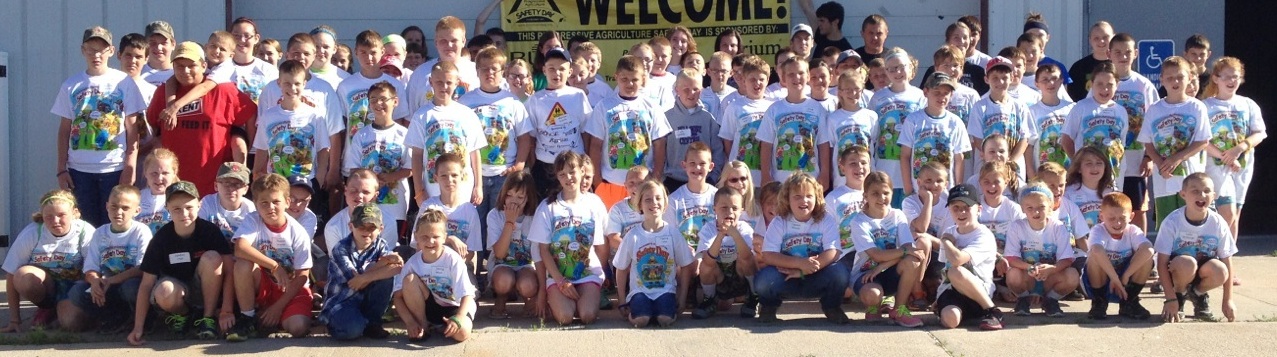
Each year Nebraska’s farmers and ranchers come close to an accident – in the field, in livestock pens, in grain piles. Youth in rural areas are not excluded from this. To help teach youth safe on farms and rural communities, a Progressive Agriculture Safety Day was held in Geneva on May 29th, 2014 for area 2-6th grade youth. The program was coordinated by the local WIFE (Women Involved in Farm Economics ), Fillmore Central and Shickley FFA Chapters, the University of Nebraska-Lincoln Extension in Fillmore County, with several other local businesses and organizations provided funding.

Eight-two youth participated in this year's program.
Eight-two youth participated in this year’s program.

Nearly three hundred volunteer hours were spent preparing for this event! Topics taught included animal safety, weather safety, citizen safety, food safety, electrical safety, ATV safety, mower safety, roll over demonstration, water safety and tractor safety. Nearly 50 older youth and adults volunteered their time to make the event happen. Presenters were from the NE State Patrol, UNL Extension, Fillmore Central FFA, Shickley FFA, Plains Power, Nick’s Farm Store, National Weather Service, Fillmore Co. Emergency Management, Geneva Activity & Education Dept., Farm Safety For Just Kids and Extension’s Master Naturalist program. A special thanks goes to the Fillmore County Ag Society for use of excellent facilities.

One session taught youth that their reaction time isn’t quick enough to save them if they had to make a split decision in addition to other tractor safety tips.

In addition to these hands-on sessions, youth received a headgear flashlight to take home and a “goodie bag” with educational safety materials reminding them and their parents what was learned. Progressive Agriculture Safety Day was conducted through the Progressive Agriculture Foundation, so each participant and volunteer received a t-shirt from Progressive Agriculture sponsors. Special thanks to sponsors for making this event happen at low cost to the youth!

At the conclusion of the day, youth expressed that they had a great time and learned safety tips that may someday save their or someone else’s life.

Crops, Programming

Celebrating the Past, Looking to the Future

As I write this, we just celebrated the Centennial of Cooperative Extension yesterday. On May 8, 2014 the Smith-Lever Act was passed which was introduced by Senator Hoke Smith of Georgia and Representative A. F. Lever of South Carolina to expand the vocational, agricultural, and home demonstration programs in rural America. It was designed to disseminate information from the land grant universities to the people. One hundred years later, we are still doing this, only through different methods and delivery systems.

In 2014, we celebrate the Smith-Lever Act, which established the Cooperative Extension Service, a unique educational partnership between the U.S. Department of Agriculture and the nation’s land-grant universities that extends research-based knowledge through a state-by-state network of extension educators.

All of this got me wondering what was extension like in Fillmore County

Snow storm from 1918 proved to make extension work difficult!

in the beginning so I looked at our archives and found some interesting information. The first reports I found were from 1918 with the first county agricultural agent being J.L. Thomas. Some of the projects he worked on were wheat smut control, soybean inoculation, poultry judging, hog cholera control and black leg control. April 1, 1918 was when the “Fillmore County Farm Bureau” (now known as Fillmore County Extension Board) began active work in Fillmore County.

An excerpt had the following:
“The county board of supervisors assigned to J.L. Thomas a large well lighted, well heated and well ventilated, as well as a well located room on the first floor of the court house, for his office. The farm bureau board at the time Mr. Thomas was selected made arrangements with him to employ his wife, Mary E. Hall Thomas, on half time as office assistant. At the first meeting of the board held on Monday night, April 8th, 1918 the agent was instructed to purchase needed office supplies and equipment.” Some of the emergency projects assigned to him were “testing of seed corn and finding a substitute for sugar which included, keeping of bees, catching of all new swarms, production of sugar cane, location of sorghum mills in the county and making and use of sorghum.”

Thinking back to what was happening in 1918, World War I ended in November 1918. When the U.S. entered WWI, food had become a weapon and no other country produced more food than the U.S. In order to have enough food to feed the allies, Americans were urged to conserve food and eliminate waste, thus the importance of finding sugar substitutes, etc. Also, life on most farms consisted of no electricity or indoor plumbing. Each family member had chores such as milking cows, harnessing horses, gathering eggs, etc. Farm families looked forward to the fun of school programs, trips to town, church gatherings and other social events.

Extension demonstration showing the use of tractors in farming.

In the 1918 narrative it describes that work began at a very busy time of year (planting) and continued until October when it was planned to hold meetings for the community, but at that time the Spanish Influenza caused public schools to be closed and all public gatherings be postponed for five weeks. Organizational work was one of the first things to occupy the county agent in the next year. Some of the first youth programs focused on pig, chicken and garden projects. Canning teams and a war bread team were organized.
Also interesting in the narrative was that “the domestic science department of the Milligan school canned ten bushels of peaches and three bushels of tomatoes and did not lose a quart of the peaches or tomatoes.” It was a dry year as many members appeared to have lost their gardens completely and the pig projects didn’t do as well as some died and some youth were too busy with work in the fields. “Fifty dollars in prizes was given to the project members by the County Fair Board. Six pigs, one calf, one crate of chicks and some garden products were entered by club members.”

As I found some of these interesting points, trying to imagine what it would have been like in 1918 intrigues me. Thinking of how much more travel time across the county was required to reach people and the difficulty of getting things organized and promoted compared to the ease of the Internet we now take for granted. While there were definitely many challenges, extension managed to overcome them, just as our current extension system evolves with new delivery modes and remains strongly committed to “the people”. For 100 years, the Smith-Lever Act has stimulated innovative research and vital educational programs for youth and adults through progressive information delivery systems that improved lives and shaped a nation.

Crops, Programming

Farm Bill Webinar

The 2014 Farm Bill provides agricultural producers with a variety of different programs and opportunities to participate; however, the decisions facing them have never been more complex. This bill is designed to offer more of a risk management approach to the federal farm safety net as opposed to the more traditional price and yield support. It is important participants understand how the 2014 Farm Bill works and how these programs may affect their operations. Nebraska offers some unique challenges relative to variability in the type of commodities and the practices in which they grown. In the Spring and Summer of 2014, agricultural producers will be offered an opportunity to update their base acres and program yields. It is important that they understand how these decisions work, to make a well-informed decision.

UNL Extension will be hosting a public webinar open to any interested party, to assist the producer with these decisions. The following are details on how to participate:

Name: Farm Bill Public Webinar
URL: https://connect.unl.edu/publicfarmbill/
Start Time: 10:00 am Central Time Zone
Start Date: May 21, 2014
Duration: 2 hours

Participants will need to have adequate speakers with their computer to hear the presentation. This meeting will also be archived for later viewing; however those connecting live will have an opportunity to ask questions of the speaker. Any additional questions may be directed to Tim Lemmons, Ext. Educator, at tlemmons2@unl.edu.