Livestock, Youth

Poultry Events Cancelled Across Nebraska

On June 4, 2015 the Nebraska Department of Agriculture cancelled ALL poultry events across AvianInfluenzaNebraska through January 1, 2016. This cancellation comes as an effort to prevent the spread of highly pathogenic H5N2 avian influenza. The ban will include all events where birds are co-mingled including: local and county fairs and festivals, the Nebraska State Fair, Ak-Sar-Ben, swap meets, exotic sales and live bird auctions. Protecting the physical and economic health of Nebraska’s poultry sector is a priority as the virus spreads. Nebraska joins more than 10 states that have taken similar steps to protect their poultry flock.

While the ban will prevent Nebraska 4-H members from taking their birds to the Nebraska county and state fairs this season, youth are still AvianFluContactsencouraged to complete their projects. Nebraska Extension is working to identify options for youth enrolled in poultry projects to showcase their learning and participate in fairs in other ways than having their birds present. “We know 4-H’ers statewide have been learning about the science of animals through their poultry projects; we will help them showcase that work and celebrate their successes in other ways,” says Nebraska Extension associate dean Kathleen Lodl. More information will be available at 4h.unl.edu.

All bird owners, whether commercial producers or backyard enthusiasts, should prevent contact between their birds including wild birds, and report sick birds or unusual bird deaths to state/federal officials. Additional information about H5N2 avian influenza can be found online at www.nda.nebraska.gov.

Programming, Youth

Progressive Agriculture Safety Days Celebrates Twenty Years!

Nebraska Extension in Fillmore County, Fillmore Central & Shickley FFA and the Fillmore County WIFE organizations are proud to help the Progressive Agriculture Safety Day® program celebrate its 20th Anniversary by conducting a Safety Day on May 28th at the Fillmore County Fairgrounds in Geneva, NE. This Safety Day is being planned for children currently in grades 1-5 and interested youth in older grades. This year’s program will focus on bike safety & helmets, pinch point demo, drug dog demo, medical helicopter visit, combine safety, hearing safety, train safety, lawn mower safety, electrical safety and more!Safety_DayFor the past 20 years, the Progressive Agriculture Safety Day® program has continued the mission of providing education and training to make farm, ranch and rural life safer and healthier for children and their communities. Nebraska Extension has been helping the program achieve this mission for years. In 2015, ADULT safety sessions have been added with sessions that include: fire safety & extinguisher demo, grain bin excavation demo, electrical safety and hearing awareness for $10/person which includes a t-shirt, lunch, refreshments and over $50 of FREE safety items (guaranteed to the first 25 who RSVP).

Current 1st through 5th graders are invited to attend Progressive Agriculture Safety Day on Thursday, May 28, 2015 at the Fillmore County Fairgrounds. Youth will participate in a variety of events designed to help them be aware of safety in potentially hazardous situations such as bike riding, agricultural settings, electrical safety and others.   A registration and consent form is required by all youth who participate.

From humble beginnings in 1995 with the introduction of 19 Safety Day Camps to achieving international recognition in present day with more than 400 Safety Days annually, the Progressive Agriculture Safety Day® program is now recognized as the largest rural safety and health program for children in North America. During the program’s first year, a total of 2,800 participants and volunteers were reached throughout the South and Midwest and now the program impacts close to 110,000 annually. To date, more than 1.3 million children and adults have been impacted by the program.

In recognition of the 20 year milestone, the Progressive Agriculture Foundation has encouraged coordinators of Progressive Agriculture Safety Days to incorporate this achievement into their locaSunSafetyWEBl programs in a variety of ways from participation in a 20th anniversary t-shirt design contest to sharing past success stories.

The success of Progressive Agriculture Safety Day® program has been made possible thanks to the generous and continued support of international sponsors including as well as local sponsors. Dedicated community volunteers are at the heart of the Safety Day program fulfilling a variety of roles and assuring children receive hands-on experiences in a variety of safety-related topics including ATV, electricity, fire, animal, and farm equipment safety.

For more information about the Fillmore County Progressive Agriculture Safety Day®, please contact Brandy VanDeWalle at 402-759-3712 or brandy.vandewalle@unl.edu. Additional information can be found at http://www.progressiveag.org/

Youth

NE Extension Tractor Safety Courses Offered Across Nebraska

Nebraska Extension Tractor Safety/Hazardous Occupations Courses will be offered at seven locations in Nebraska during May and June. Any 14 or 15-year-old teen who plans to work on a farm other than his/her parents’ should plan to attend.

Federal law prohibits youth under 16 years of age from working on a farm for anyone other than their parents or guardian.   Certification through the course grants an exemption to the law allowing 14- and 15-year-olds to drive a tractor and to do field work with mechanized equipment.Harvest

According to Sharry Nielson, Nebraska Extension Educator and program coordinator, “The most common cause of death in agriculture accidents in Nebraska is overturn from tractors and all-terrain-vehicles (ATVs).” She also points out that tractor and ATV overturn prevention are featured in the class work. “Instilling an attitude of ‘safety first’ is a primary goal of the course… where youth have the chance to learn respect for agricultural jobs and the tools involved.”

Classes consist of two days of instruction plus homework assignments. Classes are from 8 a.m. – 5 p.m. each day. Dates and locations for the closest programs to us include:

— May 27-28, Fairgrounds, Kearney

— June 5-6, Event Center, Lincoln

— June 17-18, College Park, Grand Island

Pre-registration is strongly encouraged at least one week before a location’s start date to the Extension Office at the course site. Cost is $60, which includes educational materials, testing, supplies, lunches and breaks. For more information, contact the Extension Office or Sharry Nielsen at (308) 832-0645, snielsen1@unl.edu.

The first day of class will consist of intensive classroom instruction with hands-on demonstrations, concluding with a written test that must be completed satisfactorily before students may continue driving tests the next day.  Classroom instruction will cover the required elements of the National Safe Tractor and Machinery Operation Program. Homework will be assigned to turn in the next day. The second day will include testing, driving and operating machinery. Students must demonstrate competence in hitching equipment and driving a tractor and trailer through a standardized course as well as hitching PTO and hydraulic systems.

Programming, Youth

Big Red Crops Camp: Youth Discover Crop Science

Are you interested in science, agriculture, plants, crops, insects, or diseases? If so, join our team of detectives to solve crop-related problems in the Crop Science Investigation (CSI) Big Red Camp! Become a detective while participating in hands-on sessions to learn about and increase your knowledge of crops, science, and agricultural careers. Youth detectives will interact with agronomic professionals across Nebraska to solve experiments in: nutrient management; managing disease, insect and weed problems; water management; crop production, and much more! Do you have what it takes to become a CSI detective?

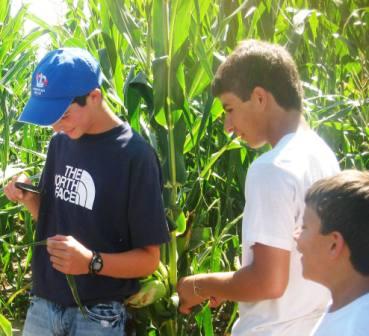
Youth in Crop Sciences Investigation (CSI) workshops learn about crop production and have the opportunity in investiage what pests might be present in the field.
Youth who attend Big Red Camp – Crop Science learn about crop production and have the opportunity in investigate what pests might be present in the field.

There are a variety of careers related to plant sciences such as: Agricultural Communicator; Agronomist; Crop Consultant; Crop Insurance Adjuster; Educator; Co-op Manager; Farmer or Rancher; Farm Credit Banker; Field or Lab Researcher; Plant Breeder; Soil or Water Conservationist; Seed, Fertilizer, or Chemical Sales; or Technical Representative.

This program was held two years and one participant said, “It (the camp) let me see all of what an agronomy career is made up of.” All youth said they would recommend this camp to their friends. As I write this, there are several spots already taken, so be sure and get your registration form in soon to ensure a spot at this year’s camp.

To register or download a camp brochure, visit BIGREDCAMPS.UNL.EDU. Final registration deadline of May 1st! Scholarships are available for crops camp. If you have questions about the camp or the required essays, please feel free to contact me at brandy.vandewalle@unl.edu or 402-759-3712.

Youth

Nebraska 4-H Month!

February is Nebraska 4-H Month, and Fillmore County is celebrating the 4-H youth who have made an impact on the community, and are stepping up to the challenges of a complex and changing world. On February 22nd from 5-7:00 p.m. at the Fillmore Co. Fairgrounds, 4-H youth will connect with the community by participating in the 4-H Kick Off Celebration.NE4hmonth15logo

This free event will showcase a few projects members can participate in addition to recognizing seniors who received a 4-H scholarship. This event is open to any youth and their families. If you’ve seen the 4-H Clover and wondered what it represents, this is a chance to stop by and find out more! All attendees are invited to participate in multiple mini projects including fishing, animal science, face painting and more. There will also be inflatables, a special visit by Lil’ Green and prizes galore. Concessions will also be available by Jill’s Sweet Shop.

Recent findings from Tufts University’s 4-H Study of Positive Youth Development indicate that young people in 4-H are three times more likely to contribute to their communities than youth not participating in 4-H. Notably, the Tufts research discovered that the structured learning, encouragement and adult mentoring that 4-H’ers receive play a vital role in helping them actively contribute to their communities. In Fillmore County, 219 4-H members and approximately 100 volunteers are involved in 4‑H.

4-H youth are a living breathing, culture-changing revolution for doing the right thing, breaking through obstacles and pushing our country forward by making a measurable difference right where they live. Learn how you can Join the Revolution of Responsibility, or contact the Nebraska Extension Office in Fillmore County at (402) 402-759-3712 or by visiting the website at fillmore.unl.edu. Check out our FaceBook .

Youth

Innovative Youth Corn Challenge

Those who know me probably know how much I enjoy working with youth. I’ve taken a statewide leadership role in Nebraska Extension engaging youth in the crop sciences and one of the programs that has came to life is the Innovative Youth Corn Challenge. This has been a very rewarding effort seeing the excitement and pride of the youth who have completed their project and the appreciation from their parents for offering this program. Recently, we held the Innovative Youth Corn Challenge (IYCC) banquet to recognize teams for the accomplishments, which I’ve decided to share in this week’s article.BanquetCollage15

Nebraska Extension and the Nebraska Corn Board teamed up to offer the third Innovative Youth Corn Challenge contest in 2014. This contest, open to 4-H members (age 10 & older as of Jan. 1st) or FFA members (in-school members), guided participants through all aspects of corn production, as well as agricultural careers related to corn production.

The 2014 winning team was from the Fillmore Central FFA chapter, consisting of Adam Hoarty,IMG_20140613_093836_936 Garrett Whitley, Tyler O’Conner, Logan Peppard and Aaron Poppert. The team with the highest percent yield increase over their local county average is the winner. In earning the $1,000 first-place award, Fillmore Central FFA tested corn-seeding rates on irrigated ground to determine the optimum rate. Their check plot of 32,000 seeds per acre yielded 253 bushels per acre, while their challenge plot, planted at 38,000, yielded 281 bushels per acre.

Second-place team overall was the Kornhusker Kids 4-H Club of Cuming County, earning $500 for their efforts. Team members tested two different sources of sulfur–gypsum (calcium sulfate) and ammonium sulfate. The check plot of 167 bushels per acre yielded the highest. The ammonium sulfate treatment produced 164 bushels per acre and gypsum 163 bushels per acre. The Kornhusker Kids 4-H Club included Kaleb Hasenkamp, Angela Rolf, Matthew Rolf, Levi Schiller and Payton Schiller.

Third-place team was the Eagle Hustlers 4-H Club in Holt County, which tested a product, called Pervaide, which was developed to reduce compaction. The challenge plot yielded 213 bushels per acre, while the check plot yielded 210 bushels per acre. The Eagle Hustlers 4-H Club consisted of Miles and Jace Stagemeyer of Page.

SueEllenAs a team, youth worked with an adult mentor throughout the process. Mentors can be extension faculty, ag teachers, or other qualified agronomy professionals. Other awards were handed out recently during the banquet in Lincoln:

  • The Data Completion Award, worth $200, went to the Kornhusker Kids 4-H Club.
  • The Innovation Award, worth $200, was presented to the Eagle Hustlers 4-H Club.
  • The Limited Resource Award went to both the Eagle Hustlers team and Fillmore Central FFA Chapter, which will split the $200 award.

To participate in 2015, youth must complete and return an entry form by March 15th to the Fillmore County Extension Office in Geneva, NE. Cash prizes and plaques will be given to the first, second, and third place teams. First place will receive $1,000, second place will receive $500, and third place will receive $250. Sustainability, crop scouting and “extra mile” awards will also be given, each worth $200.

Forms can be downloaded at UNL’s CropWatch-Youth webpages. For more information, contact myself at brandy.vandewalle@unl.edu, Aaron Nygren at anygren2@unl.edu or Amy Timmerman at atimmerman2@unl.edu.

Updates on the progress of the Corn Challenge can be found on FaceBook! Tweet about it using #IYCC!

Youth

Agriculture Outlook – Younger Generations

Engaging young producers in agriculture is increasingly more important. At a recent program by the Farmers & Ranchers College which hosted Dr. David Kohl, Professor Emeritus from Virginia Tech he provided some great strategies for millennials wanting to return to the farm which I’ve decided to summarize in this week’s column. For a young couple, each person should first sit down and write down their personal, business, health and other pertinent goals. Goals should be written for short term (one year) and mid to long term goals (5-10 year). Then the couple should examine to ensure they have somewhat similar goals or understand where each person is coming from.Logo

Then, as should any couple they should get their financials together, see how they compare with others and set benchmarks how to improve. Involve lenders and a team to function as an advisory board. Secondly, a couple should make critical decisions based on their financials and areas to cut costs. An advisory team made up of lenders, suppliers, consultants, etc. should challenge producers to improve efficiency, think outside the box and remain resilient in the future. Young producers should also have a conversation with the older generation(s) about their goals and where the younger couple will fit in the operation. Young producers also benefit greatly by leaving the farm for a few years to see different things and gain insight on new practices, etc.

Kohl also said, “Social media can make or break you.” Social media can provide a lot of misinformation so it is important to be on those social media platforms to know what misinformation is being communicated to the general public, provide the correct information and always be proactive with educating people about agriculture.

In conclusion, Kohl had some rules of thumb for all producers that will thrive even when commodity prices are low. Those characteristics of successful producers include:

  • Having a strong, productive asset base
  • Have records that talk to the business
  • Maintain a modest living expense (even in good times)
  • Maintain modest non-farm capital expenses.
  • Have a working capital (33% of revenue)
  • Have a burn rate of working capital above 3.5 years
  • Know cost of production via enterprise.
  • Have a clear strategy and alternatives when needed.
  • Work with those who have a history of handling adversity.

Other points to note when working through turbulent times are to focus on efficiency first, growth second. Know personality styles of those in your operation and respect those differences. Align yourself with a positive set of people. Document costs and keep records.

For more information from Dr. Kohl, you can go to his columns on cornandsoybeandigest.com.

Best wishes to you and your family during the Holiday season!

Crops, Uncategorized, Youth

Crop Scouting Contest- Engaging Youth in Agronomy

Developing youth as leaders in the agricultural industry is crucial to the success of agriculture and feeding our growing population. I like the quote, “Thank a farmer three times a day. ” It really gets the point across how important agriculture, most importantly famers areIMG_4445 in our society. Whether you prefer conventional, organic, or other labeled products, all of them are produced by a farmer or rancher and provide you with a delicious, safe and nutritious product. Growing up on a farm and being a farmer’s daughter, I appreciate the hard work, dedication and risk involved in production agriculture. While I am not a farmer I work with farmers and have a great appreciation for them. My husband is an agricultural education instructor and FFA adviser and was also a raised on a farm.

As an extension educator for the University Of Nebraska – Lincoln Extension, I have focused my area on educating youth and youth professionals on related agronomic topics. The overall goal is to encourage youth to pursue a degree in agronomy or related fields, since there is a tremendous career opportunity waiting for them. Whether they return back to the farm or work with farmers in production agriculture, the need for bright, talented and hard working people in agricultural careers is more important now then ever.

Sally Mackenzie, Ralph & Alice Raikes Chair for Plant Science in the Center for Plant Science Innovation provided insight on this challenge at a UNL Heuermann Lecture last year, where she said, “The continued debate over genetically modified crops is a “sociological and psychological discussion,” not a scientific one and it’s a distraction from the reality: The world’s population, now about 7 billion, is expected to top 9 billion by 2050. There’s not enough water or arable land to feed those people using current agronomic practices.” Mackenzie told UNL students “these challenges are your challenges.”

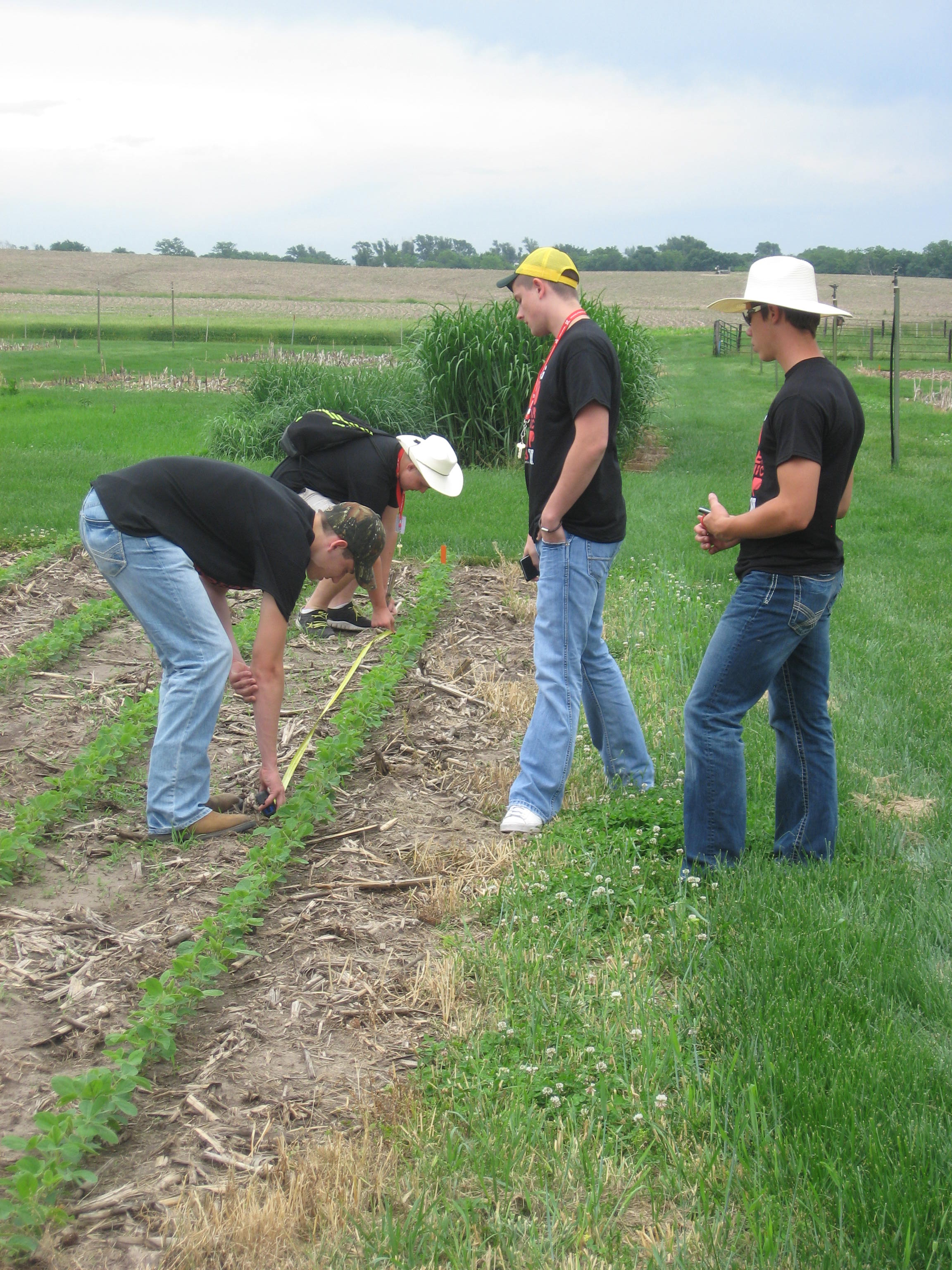
Recently I coordinated the first Nebraska Youth Crop Scouting Competition at the Ag Research & Development Center near Mead, NE. Six FFA and 4-H teams competed by taking a written test and completing eight crop-scouting exercises. The goal of this contest was to engage youth in agronomic principles, gain an interest in crop-related careers and ultimately pursue a career related to crop production. The 25-question exam tested their knowledge on basic integrated pest management strategies. Eight field exercises focused on general scouting procedures including topics in entomology, pathology, taking stand counts, weed resistaIMG_4473nce management, crop growth & development and soil residue management.
This contest was sponsored by DuPont Pioneer and provided cash prizes to the top performing teams. Plans are to continue this program for future years. More details about the program can be found on the CropWatch- Youth webpages.

Another program for youth interested in crops is the Innovative Youth Corn Challenge that is in its third year. In this program, youth work with a project advisor to test a novel management practice or product with the goal of increasing yield in an economic manner. Entry forms for this contest are due March 15th of each year.

Youth

Sportsmanship starts with Adults!

Webster’s Third International Dictionary defines sportsmanship as “conduct becoming to an individual involving fair and honest competition, courteous relations and graceful acceptance of results”.  Sportsmanship starts with parents teaching their youth how to accept a win or a loss, although in the 4-H youth development program, even if the youth receives a red ribbon, nothing is lost as long as some basic knowledge and skills were gained. Too often in our society we focus on the tangible results of a ribbon or trophy and don’t think about the process that youth went through to achieve the end results and what was learned from that process.

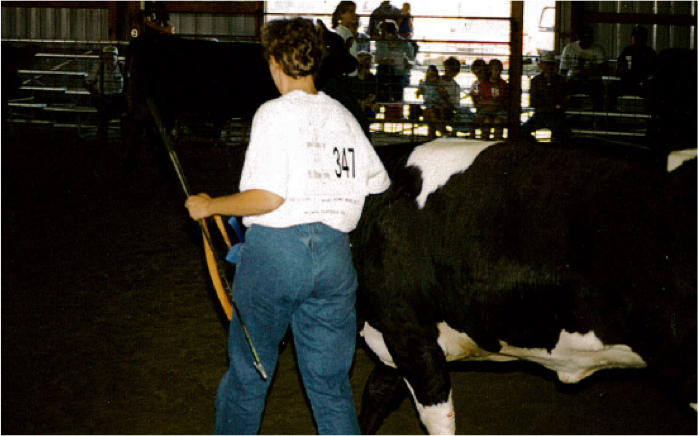
I enjoyed showing cattle and while purples were exciting to receive, the ribbon placing didn't matter; it was the learning experience and fun had with friends!
I enjoyed showing cattle and while purples were exciting to receive, the ribbon placing didn’t matter; it was the learning experience and fun had with friends!

I often use the example that as a youth, I’ll never forget receiving a red ribbon for a market heifer; I was frustrated, but will never forget my dad asking me, what the judge said in the comments.  After we talked it over, I realized his reasoning and was able to understand the type of animal I should select for the following year. That was a lesson I’ll never forget.  My dad and mom also told my sister and me that if we wanted a trophy that badly, instead of spending a large amount of money on an animal just to win or using unethical practices, they’d go out and buy us our own trophy.  For these reasons, it is really rewarding to work with youth who are happy with any ribbon placing.

Three reasons adults and teen leaders should be concerned with developing sportsmanship are:

1. Youth programs are easier to conduct and are more positive experiences for everyone involved if good sportsmanship is demonstrated.

2. The development of sportsmanship is an important part of youth development. Youth and adults who develop and show good sportsmanship get along better, and are much more successful on a long-term basis in becoming self-directing, productive, contributing, competent, caring, capable adults, than are those whose behavior is un-sportsmanship-like.

3. Sportsmanship is one of the key elements of civilized society. Those who think of the “big picture” know the reasons for developing sportsmanship extend beyond an individual, a community, or a program. When societies allow sportsmanship to decline, their civilizations also decline.

As we get ready for another Fillmore County Fair, let’s be reminded that the end result is not the ribbon placing, but the skills that each youth learned!

Source: Kathryn J. Cox, Ohio Extension 4-H Specialist, Youth Development, Developing Sportsmanship- A Resource For Preparing Youth And Their Families For Participation in Competitive Programs and Events, 2006

Crops, Youth

Youth Crop Scouting Competition

My extension focus has been engaging youth in plant sciences, especially agronomy. Last year I had the opportunity to attend the Iowa Youth Crop Scouting Competition where ISU Extension faculty worked with 4-H and FFA youth to not only compete in an agronomic principles contest, but most importantly learn about various pests which affect corn and soybeans in addition to other abiotic and biotic factors. It is my pleasure to bring this program to Nebraska with 2014 as the pilot year. Details for this new program are provided below.BRC13 094

The University Of Nebraska – Lincoln Extension is pleased to present the first annual Crop Scouting Competition for Nebraska youth. It will be held in at the ARDC near Mead, Nebraska on August 6, 2014. The event will include both indoor and outdoor events. Teams of junior high and high school students (those completing 7-12th grades) from across Nebraska are invited to participate.

The purpose of the competition is to provide students an opportunity to learn crop scouting and principles of integrated pest management (IPM) for corn and soybeans in Nebraska, to obtain knowledge and skills that will be helpful in future careers and to demonstrate newer crop scouting technologies.

Schools, clubs or other organizations may enter a team composed of three or four participants. An adult team leader must accompany each team of students. Team leaders could be FFA advisors, crop consultants, extension staff, coop employees, etc.

Top-scoring teams win prizes: $500 for first, $300 for second, $250 for third and $100 for fourth place.

Teams will be expected to know the basics of scouting corn and soybean fields. This includes crop staging; looking for patterns of crop injury; disease, insect and weed seedling identification; etc. Other topics many include but are not limited to, pesticide safety, nutrient disorders, and herbicide injury.

More information about the crop scouting competition and instructions on how to register a team are available online at cropwatch.unl.edu/youth. Click on the link that says, “Crop Scouting Competition”.

Teams must be registered by July 15. Registration is $50/team; the fee will be refunded when the team attends the competition. Payment by check is due along with the registration form by July 15. This program is sponsored by DuPont Pioneer and UNL Extension.