For those you receive the electronic Farm Service newsletter, the information below is just a reminder to:
CERTIFY YOUR PLANTED ACRES: If you do not have a certification appointment, call and get it scheduled. The deadline to complete 2017 acreage reporting is July 17.
ARC/PLC CONTRACT SIGNATURES DUE AUGUST 1: Producers are reminded that the deadline to return signatures for the 2017 ARC/PLC farm safety net program is August 1. All signatures must be returned by this date to ensure payment for the 2017 crop year.
FSA Loan Servicing, Other Organization Resources Available During Financial Stress
Credit: bubaone
There are options for Farm Service Agency loan customers during financial stress. If you are a borrower who is unable to make payments on a loan, contact Ben Herink, your local FSA Farm Loan Manager, to learn about the options available to you.
Farmers and ranchers also can access assistance through other entities in Nebraska that offer services during financially challenging times. The Rural Response Hotline provides referral and support services for farmers, ranchers and rural residents and their families. The number to call is (800) 464-0258.
The Nebraska Department of Agriculture manages the Negotiations Program, which offers mediation services for agricultural borrowers, creditors and USDA program participants. Through this program, participants also can access free one-on-one education on agricultural financial and legal matters. For information, call (800) 446-4071.
Credit: Alex Belomlinsky
Nebraska Extension has developed an initiative called “Strengthening Nebraska’s Agricultural Economy” that features a series of educational materials on the Extension Crop Watch and Beef websites. The materials are designed to provide producers with ideas for reducing input costs, increasing efficiencies and improving profitability. Find the materials at CropWatch.unl.edu and Beef.unl.edu.
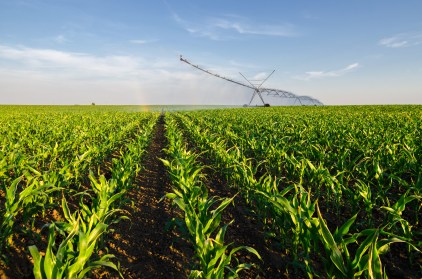
If you have irrigated ground and are looking for ways to save money, reduce nutrient loss and use less water, consider joining the Nebraska Agricultural Water Management Network, or NAWMN. Evaluation results have shown a one to two-inch savings of irrigation since it’s inception. The Network has been having significant impacts on both water and energy conservation due to farmers adopting information and implementing technologies in their irrigation management. The cost of applying an additional 2 inches of water is going to vary depending on your depth to water, system pressure, and equipment costs, but could easily run from $10 to $30 per acre.
To determine the actual cost, I recommend using the IrrigateCost app, developed by Nebraska Extension. The app, which is available for both Apple and Android products, allows users to input their specific information such as acres irrigated, pumping lift, system PSI, pump and pivot life, and inches applied as well as related costs such as for the well and engine, labor, energy, district fees, and taxes. The app then calculates total irrigation, total ownership, and total operating costs. It also breaks down costs by irrigation well, pump, gear head, pump base, diesel engine and tank and system and calculates per acre annual cost and per acre-inch annual cost.
A couple of the tools the NAWMN uses are ETgages® or Atmometers which mimic crop evapotranspiration or ET and Watermark soil matrix sensors which measure soil matric potential or the energy required to remove water from the soil. These two tools have really worked well and have made irrigation management much easier than those gut feelings. The more information you have the better decisions you can make!
If you are in the NAWMN, and have not already installed your equipment, be sure to remember to start the soaking/drying cycle on your Watermark sensors to be sure they work! It’s also important to replace the #54 alfalfa canvas covers and wafers on a regular basis at the start of each season. For more information, go to: http://water.unl.edu/web/cropswater/nawmdn.
Once you have your ETgage out, I hope you will post your weekly readings to the Nebraska Ag Water Management Network (NAWMN) website. As a reminder, once you are on the main screen, you can login to your site by entering your site name and password and clicking on “Login.” Once you have logged in, you will be taken to your weekly data from past weeks, including last year. To enter your weekly data, click on the “Add new ETgage reading” link which will take you to the data entry page where you can enter your growth stage, rainfall, and ETgage change.
If you’ve forgotten your site name or password, please contact Aaron Nygren at anygren2@unl.edu or 402-352-3821.
During the summer, our crops extension team has some great field days to share research and management strategies to farmers. One of those opportunities to learn more about weed management and cover crops will be on June 28 at the South Central Agricultural Laboratory near Clay Center. There is no charge for the field day with registration beginning at 8 a.m. and field day from 8:30 a.m.-12:15 p.m. Lunch will be served which will then be followed by a cover crop field day from 1-3 p.m. The weed management field day will include on-site demonstrations of herbicides for weed control in corn, popcorn, and soybean as well as a view of ongoing cover crop research. An early morning demonstration will focus on weed control in soybeans followed by a demonstration of projects for weed control in corn, popcorn and sorghum. Onsite demonstration of cover crop research will highlight the afternoon session.
Soybean demonstrations will include an unbiased comparison of herbicide programs of different companies for weed control in Roundup Ready, Liberty Link, and Xtend soybeans. Weed control and crop safety in Roundup Ready 2Xtend Soybean, Balance Bean, Bolt Soybean, and Conventional Soybean will also be discussed.
Corn demonstrations include an unbiased comparison of several herbicide programs by different companies for weed control in glyphosate- plus glufosinate-resistant corn. Effect of row spacing and herbicide on weed control in popcorn, DiFlexx DUO for weed control in corn, INZEN sorghum, and injury symptoms of dicamba or 2,4-D on a number of crops will also be discussed.
Afternoon demonstrations of cover crop research will include cover crops in corn and soybean systems including planting dates, plant populations, and maturities. Participants will walk cover crop experiments planted in corn and/or soybean. Cover crop pluses and minuses: Bio-mass, nitrogen for the following crop, nitrates, erosion, water use, and crop yields will also be discussed.
Certified Crop Advisor (CCA) continuing education units will be available. There is no cost to attend the field day, but participants are asked to register at http://agronomy.unl.edu/fieldday. The South Central Agricultural Laboratory is 4.5 miles west of the intersection of Highways 14 and 6, or 12.4 miles east of Hastings on Highway 6. GPS coordinates of the field day site are 40.57539, -98.13776.
Other programs relatively close to our area include: June 22: Cover Crop Conference, 2 p.m., Holthus Convention Center York. July 18: Crop Management Diagnostic Clinic: Soil Health, ARDC (now ENREC) near Mead
Emerald Ash Borer, EAB, is an invasive insect that was first found in Nebraska in the summer of 2016 when it was found in Omaha and in Greenwood Nebraska. Previous to this discovery, EAB was found in Missouri, Iowa, Kansas, and Colorado for the closest confirmed presence of this insect to Nebraska. Now that it has been found in Nebraska, there are more concerns for the residents.
One of the common calls I have received lately is determining if a poorly growing ash tree is infected by Emerald Ash Borer or if the insect on the tree is an Emerald Ash Borer beetle. It is hard to determine by looking at the tree if it is infected by EAB, but there are some signs to look for on your tree.
One of the many projects I have been working on this spring has been some lessons how plants and animals react to the sun, especially with regards to a total solar eclipse. You may or may not be aware, but over 200 Nebraska communities fall within path of totality, or the path of the shadow where observers will see the moon completely over the sun for roughly two and a half minutes. During the total solar eclipse, the moon’s umbral shadow will fly across the United States from Oregon to South Carolina, in a little over 90 minutes. This is the first eclipse through the contiguous United States since 1979, according to NASA records.
In response to this rare and unique opportunity, Nebraska Extension and Raising Nebraska are partnering with the Hastings Museum to offer solar eclipse training for teachers and youth professionals in advance of the total solar eclipse on Aug. 21. The training will provide participants with eclipse resources and lesson plans they can use in their classroom, after-school setting or organization.
The total solar eclipse is a remarkable phenomenon that not many have the opportunity to witness. Nebraska’s wide open spaces will be one of the best places to view the eclipse so we want to help youth professionals capitalize on this exciting teaching opportunity. The training will educate participants on exactly what the eclipse is and how they can take lessons from concept to application. The curriculum will also be applicable beyond the Aug. 21 event, covering topics such as nocturnal animals, how sundials work and why sunlight is critical for plants.
All trainings are free to attend and will be held from 2 – 4 p.m. Training dates and locations are:
Participants will have access to a variety of lessons specific to the eclipse, in addition to plant and animal science lessons as related to the sun.
June 1: Raising Nebraska, Nebraska State Fairgrounds, 501 E. Fonner Park Rd., Grand Island
June 15: Hastings Museum, 1330 N. Burlington Ave., Hastings
June 18: Raising Nebraska
July 27: Training via Zoom video conference
To register for the June 15 training at the Hastings museum, please call 402-461-2339. To register for all other trainings, visit go.unl.edu/solareclipse. Space is limited.
For more information contact Beth Janning, Science and Agriculture in Action Educator at Raising Nebraska at 308-385-3967 or raisingnebraska@unl.edu. Raising Nebraska is a joint effort of Nebraska Extension within the University of Nebraska–Lincoln’s Institute of Agriculture and Natural Resources, the Nebraska Department of Agriculture and the Nebraska State Fair.
One of the statewide programs I coordinate is the Youth Crop Scouting Competition which engages youth in the crop sciences. It provides youth with real-world scenarios in crop production as they diagnose plant diseases, crop disorders, identify insects and weeds and other challenges producers currently face.
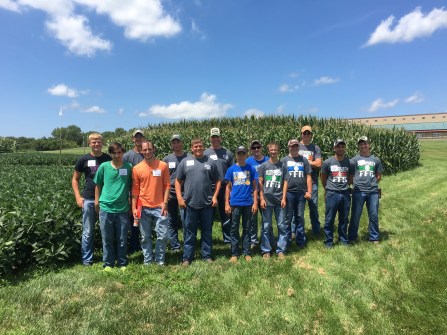
Registration is now open for the 2017 Youth Crop Scouting Competition to be held this August in eastern Nebraska. The contest is open to FFA and 4-H club members and will help those interested in crops test their skills and those new to crops better understand crop production.
To prepare for the contest youth are encouraged to learn about crop growth and development and basic crop scouting principles. If a group doesn’t know a lot about crops, they’re encouraged to ask a local agronomist to assist by providing a short lesson on crop production at regular meetings or outside of the meeting.
The crop scouting contest will be held at the Eastern Nebraska Research and Extension Center (ENREC, formerly ARDC) near Mead on Aug. 1. The event will include both indoor and outdoor events. Teams of three to five junior high or high school students (those completing 7-12th grades) from across Nebraska are invited to participate.
FFA Chapters or 4-H Clubs may enter a team composed of three or four participants. An adult team leader must accompany each team of students. Team leaders could be FFA advisors, crop consultants, extension staff, coop employees, etc.
Top-scoring teams win prizes: $500 for first, $250 for second, $100 for third place. The top two teams will be eligible for regional competition in August at Indiana.
Teams will be expected to know the basics of scouting corn and soybean fields. This includes crop staging; looking for patterns of crop injury; disease, insect and weed seedling identification; etc. Other topics may include but are not limited to pesticide safety, nutrient disorders, and herbicide injury.
More information about the crop scouting competition and instructions on how to register a team are available online in the Youth section of CropWatch under “Crop Scouting Competition” and in the contest flyer. The program is limited to 10 teams so be sure to register soon! Teams must be registered by July 20.
Attention wheat growers! Nebraska Extension is again hosting some wheat field days within the area in collaboration with various business and industry partners. There are 4 field days in the Panhandle area, 2 in west central Nebraska and 2 in the eastern part of the state with the closest one in our area located in Jefferson County.
Wednesday, June 7th at 6:30 p.m. at the farm of Mark Knoble will be a wheat field day. From Fairbury, head north on NE 15, turn west onto 721st Road, dive 1.9 miles and the destination is on the left. For more information, contact Randy Pryor, Extension Educator in Saline County at (402) 821-2151. For details on all of the field days and to see a list of sponsors, go to agronomy.unl.edu/wheatdays.
Mark your calendars for the Nebraska Grazing Lands Coalition (NGLC) –Nebraska Extension joint Summer Grazing Tour scheduled for June 13, 2017 in south central Nebraska. The tour will involve two Nebraska grazers with three stops including the Bruning Cow Camp near Reynolds, John Lange Land and Cattle near Belvidere and Bruning Family Farms Headquarters near Bruning.
Stop I — Reynolds, NE – Bruning Cow Camp
Started in the 1950’s with the first purchase.
Currently 2100 acres of native grass pastures with 60 acres of prairie hay grown. Cross fenced with 50 paddocks- none larger than 80 acres. All served by well water and tanks with 5 wire barb wire fences and corral systems.
Rotationally grazed from May 1-November 1 using approximately 6-7 aces per Spring cow/calf unit.
Reseeded farming area to Big and Little Bluestem, Side Oats Gramma, Indian Grass and Switch Grass. One area seeding with Intermediate Wheat Grass.
Stop 2 — Belvidere, NE -Lange Land & Cattle, LLC Angus
Larry and Rosalie Lange purchased this 320 acres in 1970.
In 2004, John Lange installed NRCS EQUIP water tanks and fencing.
In 2016, two small pivots were reseeded to grass and more cross fencing is planned to utilize the irrigated grass with the native pasture.
Stop 3 — Bruning, NE – Bruning Family Farms LLC Headquarters
Currently 300 acres of irrigated cool season grasses with approximately 20 paddocks- mostly 10-20 acres.
Figure approximately 1-2 acres per pair, mostly Fall calving cows.
Preregistration is $20 per person (pay at the door) and includes an evening steak fry provided by Bruning Family Farms. Preregistration is required for meal counts by contacting the Nebraska Extension Office in Furnas County (308 268 3105) by Tuesday, June 6. You can also contact Erin Laborie, Nebraska Extension Beef Systems Educator at erin.laborie@unl.edu. Tour starts with registration beginning at 7:30 AM at the Fairbury Livestock Auction (if coming from the east) and at 8:30 AM at the Bruning Cow Camp south of Reynolds (if coming from the west).
The Nebraska Grazing Lands Coalition is an independent organization of ranchers, interest groups, and agencies whose mission is to collaborate on projects that improve the management and health of Nebraska grazing lands and ensure long-term stability of rangeland resources. The NGLC is funded through grants from the USDA-Natural Resources Conservation Service, the Nebraska Environmental Trust, and the Beginning Farmer and Rancher Development Program of the National Institute of Food and Agriculture, USDA.
In an effort to promote the wide variety of programming Nebraska Extension offers, this week’s column features a brief summary from Kayla Colgrove, extension educator in the foods and nutrition area. Nebraska Extension is increasing its healthy lifestyle programming to combat childhood obesity across the state by implementing programs to improve healthy eating and physical activity patterns in youth. Extension professionals focused on food, nutrition, and health, Supplemental Nutrition Assistance Program, Expanded Food and Nutrition Education Program, 4-H and The Learning Child are teaming up to create healthier home, school and community environments to make healthy choices, the more desirable choice.
Image courtesy of USDA Ag Research Service
“There is a critical need to reduce childhood overweight and obesity rates by encouraging healthy habits,” said Nebraska Extension Educator Kayla Colgrove. “Extension programming not only improves eating patterns and increases physical activity in youth, but it also helps create those environments that support healthier living.”
Through statewide programming and dynamic partnerships, Extension team members reached over 63,000 Nebraskans with programs focused on healthy habits in 2016. The programs are designed to teach children and youth how to choose healthy food and beverages, prepare food safely, fun ways to be active, alternatives to screen time and more.
Along with the focus on community and home, Extension is also focused on helping to create a healthy environment in Nebraska schools. Recently, a collaboration between Extension, Tri County Public Schools, Nebraska Team Nutrition and several local businesses culminated in a farmers market at the school. During the lunch hour, nearly 400 Tri County students were able to sample a variety of locally grown food, including vegetables from the school’s new hydroponic garden system.
During the farmers market, Colgrove shared smoothie samples with the students that featured spinach as a main ingredient. Other samples included hummus, whole grain bread, local meats from Frank’s Smokehouse, cheese sticks from Classic Dairy and ice cream from Prairieland Dairy. The farmers market was a way to show students the different types of vegetables they could grow in their own garden. The school district’s goal is to grow vegetables that could be introduced into their school lunch program. Their hydroponic garden is soil-less, and feeds plants in water. They are currently growing heads of lettuce.
Extension is also helping Nebraska schools implement smarter lunchroom strategies. This effort is the result of a partnership between Extension, 4-H, SNAP-Ed, Nebraska Department of Education (NDE) Team Nutrition, and Nebraska Department of Health and Human Services (DHHS). The smarter lunchroom strategies provide low to no cost solutions to reduce food waste and increase the consumption of healthy foods. Extension staff provide technical assistance to schools by helping the food service staff identify and diagnose school lunchroom challenges, and develop strategies to promote healthy choices.
Additionally, school enrichment kits are available for elementary school teachers to assist in teaching nutrition and physical activity in their classrooms. The kits are designed to meet national health and state science standards. The kits include education on MyPlate food groups, basic nutrients, label reading, and planning a balanced meal. All materials needed to teach each lesson are included in the kits.
The goals of these efforts are for children and youth to increase consumption of healthy foods and beverages, engage in healthy levels of physical activity, and make the healthy choice, the more desirable choice. To learn more about Extension’s efforts in this area, watch a video at http://go.unl.edu/issue2.




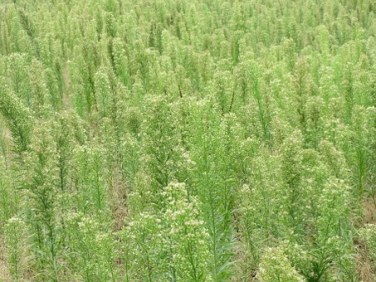 The weed management field day will include on-site demonstrations of herbicides for weed control in corn, popcorn, and soybean as well as a view of ongoing cover crop research. An early morning demonstration will focus on weed control in soybeans followed by a demonstration of projects for weed control in corn, popcorn and sorghum. Onsite demonstration of cover crop research will highlight the afternoon session.

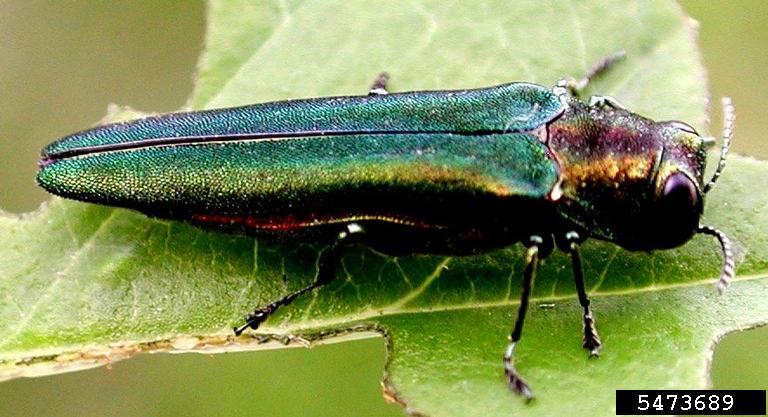 Photo by Leah Bauer, USDA Forest Service Northern Research Station, Bugwood.org – See more at:



 Views from VanDeWalle