Crops, Programming, Uncategorized

Precision Ag Workshop

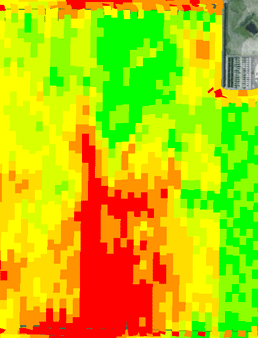
Learn how to extract more information from your precision agriculture data at the 2016 Nebraska Extension Precision Ag Data Management workshops this winter.  Presentations and hands-on exercises will cover yield data quality, geospatial data collection, multi-layer analysis and imagery analysis.prescipmap.png

Participants get hands-on training to learn how to get more use from their precision agriculture data. A two all-day workshop will be held at Clay Center with the first day addressing intermediate ag data management topics, while the second day will address more advanced ag data management. Individuals can register for one or both days. Workshops begin with check-in at 8:30 a.m. and sessions from 9 a.m. to 4:30 p.m.

Cost is $75 for one day or $130 for both. Registration includes printed learning guides, a jump drive with workshop tutorials attendees can reference at home, and data.

Day One, Intermediate Ag Data Management Topics:

  • Working with as-applied data, tracking product locations and rates
  • Creating templates to speed up the data import process
  • Terrain analysis diagnostic opportunities and working with LiDAR data
  • Georeferenced soil sample data input and prescription map development options
  • Setting up on farm research trials with precision ag data – case study from Project SENSE: Crop Canopy Sensors for In-Season Nitrogen Management

Day Two, Advanced Ag Data Management:

  • Generating maps from geo-referenced soil samples:  Map interpolation strategies
  • Improving Yield Monitor Data Accuracy with Yield Editor Software from USDA
  • Multi-layer geospatial analysis to determine hybrid performance across changing landscapes
  • Imagery analysis using data from active and passive sensors

On-line preregistration is required and class size is limited to 20 to facilitate the hands-on training. To register online, visit the program website.

Crops, Livestock, Programming, Uncategorized

Helping Farmers & Small Businesses with Employee Relations

HR 4 Ag & Main Street

Many farmers, ranchers and other small business owners often have little to no training in human resources or leadership related training. This can make it difficult to serve as an effective supervisor and can lead to employee-relation issues. Nebraska Extension has just created a new program, HR 4 Ag and Main Street to help those business owners.Blog graphic.png

The HR 4 Ag & Main Street workshop is a three-hour face-to-face session created by Nebraska Extension and designed for farmers/ranchers and other agriculture and main street business owners. The goal of the program is to provide education on human resource management and human risk mitigation strategies to increase your farm, ranch, or other business’ resiliency and stability. Topics to be covered include: recruiting and retaining the best employees, pay and benefits, motivating and engaging employees, communication, building and leading your team, managing conflict, and more.

The program will be presented at four locations across Nebraska this winter in Norfolk, York, North Platte, and Scottbluff.

  • NORFOLK

Tuesday, January 19th from 1:00 – 4:00 pm, at the Lifelong Learning Center. To register call: Northeast Research & Extension Center (402-379-4000)

  • YORK

Tuesday, January 26h from 1:00 – 4:00 pm, at the York County Extension Office. To register call: York County Extension Office (402-362-5508)

  • NORTH PLATTE

Thursday, January 28th from 1:00 – 4:00 pm, at the West Central Research & Extension Center. To register call: West Central Research & Extension Center (308-696-6740)

  • SCOTTSBLUFF

Tuesday, February 9th from 1:00 – 4:00 pm, at the Panhandle Research & Extension Center. To register call: Panhandle Research & Extension Center (308-632-1230)

This program is made possible through a grant by the North Central Risk Management Education Center. For more information contact a HR 4 Ag team member:

  • Ben Dutton, Extension Educator – Red Willow County (308-345-3390)
  • Jessica G. Jones, Extension Educator – Johnson County (402-335-3669)
  • Tim Lemmons, Extension Educator – Northeast Research & Extension Center (402-370-4061)
  • Marilyn Schlake, Extension Educator – UNL Ag Economics Dept. (402-472-4138)
  • Brandy VanDeWalle, Extension Educator – Fillmore County (402-759-3712)
  • Aaron Yoder, Assistant Professor – University of Nebraska Medical Center (402-552-7240)
Uncategorized

2015 in review

One of the cool things that the Word Press site does is to compile an annual report which I thought I’d share as a year in review of 2015. As always, thanks for reading my blog and your support of Nebraska Extension. Wishing you and yours a very Happy New Year and Best Wishes in 2016!

The WordPress.com stats helper monkeys prepared a 2015 annual report for this blog.

Here’s an excerpt:

A San Francisco cable car holds 60 people. This blog was viewed about 2,500 times in 2015. If it were a cable car, it would take about 42 trips to carry that many people.

Click here to see the complete report.

Programming, Uncategorized

Farm Women are Decision Makers – Annie’s Project Prepares Them Well

It’s been several years since I’ve had the privilege to teach an Annie’s Project class and I’m pleased to announce in January 2016 I will be offering another class. Farm and ranch women are generating a cultural tide in American agriculture that is moving management, assets and opportunities to a new wave of farmers across the country. At Annie’s Project courses, farmwomen become empowered to be better business partners or sole operators through netwAnnieLogoorks and by managing and organizing critical information.

Annie’s Project is a six-week course that is a discussion-based workshop bringing women together to learn from experts in production, financial management, human resources, marketing and the legal field. There’s plenty of time for questions, sharing, reacting and connecting with presenters and fellow participants. It’s a relaxed, fun and dynamic way to learn, grow and meet other farm and agricultural women.

Whether new or experienced, understanding the five areas of agricultural risk, knowing how to analyze agricultural spreadsheets and other necessary skills are vital. Learning them in a friendly environment where questions and discussion are welcomed, allow the learning process to flourish.

Annie’s Project courses have successfully reached more than 9,000 farm and ranch women in 33 states.

Locally, Annie’s Project will start January 25th and run through March 7th in Geneva, NE at the Extension Office on 1340 G Street. Statewide, Farm Credit Services assists in sponsorship of the program. Locally, Flint Hills Resources has generously sponsored nearly all costs making this 18-hour course only $30 per participant! The registration fee guarantees participants a workbook and support materials for all sessions. A light supper will be served before each class at 6 p.m. Course size is limited, so please register soon.

An Annie’s Project alumna says, “I took the class to gain a better understanding about agribusiness and how financial decisions impact our farm operation. I have a better understanding of balance sheets and the futures market…this class has improved communication with my spouse on concerns he works with on a daily basis.”

For more information contact Brandy VanDeWalle, Nebraska Extension Educator at 402-759-3712 or brandy.vandewalle@unl.edu. Registration forms are available at fillmore.unl.edu. More information can be found on the Annie’s Project website..

Programming, Uncategorized

Crop Production Clinics


The Annual Crop Production Clinics provide a variety of topics covering farm topics to help producers and agribusiness professionals remain current on research and other relevant topics to improve one’s profitability. A recent CropWatch article summarized what to expect at the Crop Production Clinics in January. Pre-register to guarantee you get a comprehensive pest management guide, meal, and other resources. Some topics covered include:CPCpic16

  • What does it take to produce 80 bu/ac soybean routinely?
  • How can you control glyphosate-resistant weeds?
  • What can you do to delay corn rootworm resistance on your farm?
  • Where is the safety in the farm income safety net?
  • What are the truths and the legends of cover crops?
  • How can you employ climate-resilient irrigation systems?

These are among the many topics to be covered at the 2016 Nebraska Extension Crop Production Clinics this January.  These one-day workshops will be held at nine sites, each featuring location-specific topics as well as timely research updates and recommendations for any farm. Pesticide applicator recertification for private applicators and for commercial/noncommercial ag plant, demonstration/research, and regulatory will also be available. This multi-disciplinary program is designed to help farmers and ag professionals learn about the latest topics with presenters on cropping systems; soil fertility; insect, disease, and weed management; irrigation; soil water management; and agribusiness management and marketing.

All programs start at 8:45 a.m. and end at 4 p.m. A meal and resource materials, including the 2016 Guide for Weed Management in Nebraska and the CPC Proceedings, will be available to those who preregister at agronomy.unl.edu/cpc. Preregistration is $65 or registration is $80 at the door. Preregistration closes 3 p.m. the day before the clinic.

The programs closest to us include:

  • Friday, Jan. 8 — Holthus Convention Center 3130 Holen Ave, York
  • Tuesday, Jan. 12 – Beatrice Country Club 1301 Oak St., Beatrice
  • Wednesday, Jan. 13 — Adams County Fairgrounds 947 S. Baltimore, Hastings
  • Thursday, Jan. 14 — Younes Conference Center 416 W. Talmadge Rd., Kearney
  • Thursday, Jan. 21 —Saunders County Extension Office ARDC (Mead) 1071 County Road G, Ithaca

A maximum of six CCA credits will be provided per day in the areas of crop production (2), nutrient management (1), integrated pest management (6), water management (1), or professional development (2).

For more information, go to agronomy.unl.edu/cpc, or call 402-472-5636. Online preregistration is currently available on the website and program information by site will be added soon.

Horticulture, Uncategorized

Holiday Tree Preparation

With the Holiday season approaching, I thought it was appropriate to include some pointers that Kelly Feehan, UNL Extension Horticulturist provided on selecting a real Christmas tree. If you plan to use a live cut tree, buy a fresh tree. The best way to ensure freshness is to buy from a local grower. To locate area Christmas trees growers, refer to the Nebraska Christmas Tree Growers at nebraskachristmastreegrowers.com. There are 25 Christmas tree farms in the state, located across different areas in 16 counties so it shouldn’t be difficult to find a tree farm. Most of these farms, you can also select the live and harvest it so freshness is nchristmastreeot a concern.

When buying an already cut tree, check the tree closely for freshness. Do not buy a tree with brittle or shedding needles. Tap the base of the trunk on the ground and comb your fingers through branches to look for shedding needles. Bend a few needles in half to check for brittleness. After bringing the tree home, make a clean cut across the base of the trunk to better allow the tree to take up water. Keep the tree in a sturdy stand that holds at least one gallon of water. Check the stand daily as a fresh tree can take up one or more gallons of water each day. Selecting Nebraska grown trees and checking for freshness will help increase safety during the holidays.

Kelly also has tips for cutting holiday greenery. Cutting holiday greenery from your own landscape can help ensure freshness. Pine, fir and cedar are good to use for indoor decoration as they dry out slowly and hold their needles best at warm indoor temperatures. For safety, be aware the red berries of Japanese Yew are poisonous, as are the green needles. Avoid the use of this greenery or be sure to keep Japanese Yew greenery out of reach of children and pets, and do not discard it where cattle or horses might eat it. Cutting greenery is pruning so use clean, sharp cutters and well placed, evenly distributed cuts. This is not the ideal time to prune, so don’t harvest too much greenery and make discreet cuts. Keep greenery in a cool location out of sunlight with the cut ends in water until ready to use the greens. Crush the ends of woody stems to allow the cuttings to take in more water. Immerse greenery in water overnight just before arranging it. This will allow it to absorb moisture and remain fresh longer.

Uncategorized

Thanksgiving Trivia

As we celebrate everything we are thankful for, remember to thank the farmers and ranchers for providing a safe and healthy food source for all of us to enjoy. Test your knowledge with this trivia about turkeys.thanksgiving-turkey-clipart-1

T or F? A turkey hen lays an egg and 28 days later a baby turkey is born.

T or F? The turkey female is known as a hen and male is known as a tom.

T or F? Turkeys are raised for 8-20 weeks depending on desired weights by consumers.


(All answers are true.)
Programming, Uncategorized

Positioning Your Business for Success

The agriculture industry is in a major economic transition. The great commodity super cycle that fueled much of the income statement and balance sheet growth in agriculture is in the rear view mirror. What will be the emerging trends impacting agriculture and rural America’s bottom line in the short and long run? What are the latest trends and views in agriculture? What can you to do position your business for this economic reset?

Dr. David Kohl, Professor Emeritus with the Dept. of AAEC, VA TECH will present his challenges & opportunities tool kit to give you some tools to help your business position for success so be sure to attend this information packed, high energy session, sponsored by the Farmers & Ranchers College. This educational program will be held December 15, 2016 starting at 1:00 p.m. at the Bruning Opera House with registration starting at 12:30 p.m. Due to the generous support of area businesses and organizations, this program is free, but arrive early to save yourself a seat!

Crops, Programming

Field Assessments To Improve Efficiency Workshops  

Nebraska Extension in Fillmore County announces that Geneva will be a host site for a new initiative that seeks to enhance the knowledge of Nebraska corn, soybean and wheat producers on their sustainability and operational efficiency measures. Participating farmers will use a new web based tool called the Fieldprint® Calculator. Calculating “Fieldprints” can help growers to establish benchmark data on a field and track improvements overtime, set energy saving and efficiency goals and compare performance against local, state and national benchmarks.FtoMkt1

The Fieldprint Calculator is simple to use, though the technology behind it is very complex.

The new field assessment initiative led by Nebraska Extension is a hands-on workshop and participating growers will take home documentation on eight sustainability and efficiency indicators. These measures are Land Use, Conservation, Soil Carbon, Irrigation Water Use, Water Quality, Energy Use, Greenhouse Gas Emissions and Water Quality. Participants will select a representative crop field for 2015 and complete a data input sheet in advance of the Fieldprint® Calculator workshops. Meals and workshop materials are sponsored thanks to a University of Nebraska Extension Innovation grant. Computer laptops are provided to participants or bring your own.

The workshop instructors include a core team of University of Nebraska Extension Educators and Specialists. They are Randy Pryor, Gary Zoubek, Gary Lesoing, John Hay and Charles Schapiro along with local facilitating Extension Educators.FtoMkt

For more information on the Geneva workshop and to pre-register by the December 3rd deadline, contact the Fillmore County Extension office at 402-759-3712 or email Brandy VanDeWalle at brandy.vandewalle@unl.edu.

Area Workshop Times And Locations:

Lincoln
Monday, December 7, 9 a.m. – 1 p.m.
UNL Extension Office in Lancaster County, 444 Cherrycreek Road
Contact: Tyler Williams, (402) 441-7180 or tyler.williams@unl.edu

Beatrice
Monday, December 7, 5:30 – 9 p.m.
UNL Extension Office in Gage County, 1115 West Scott St.
Contact: Paul Hay, (402) 223-1384 or paul.hay@unl.edu

Auburn
Tuesday, December 8, 9 a.m. – 1 p.m. Nemaha County Hospital Meeting Room, 2022 13th St.
Contact: Gary Lesoing, (402) 274-4755 or gary.lesoing@unl.edu 

Geneva
Tuesday, Dec. 8, 5:30 – 9 p.m. UNL Extension Office in Fillmore County, 1340 G St.
Contact: Brandy VanDeWalle, (402) 759-3712 or brandy.vandewalle@unl.edu

Clay Center
Wednesday, Dec. 9, 9 a.m. – 1 p.m.
UNL Extension Office in Clay County, 111 West Fairfield Contact: Jennifer Rees, (402) 762-3644 or jenny.rees@unl.edu

Central City
Wednesday, Dec. 9, 5:30 – 9 p.m.
UNL Extension Office in Merrick County, 1510 18th St.
Contact: Troy Ingram, (308) 946-3843 or troy.ingram@unl.edu

Fremont
Thursday, Dec. 10, 9 a.m. – 1 p.m. UNL Extension Office in Dodge County, 1206 West 23rd St.
Contact: Nathan Mueller, (402) 727-2775 or nathan.mueller@unl.edu

Mead
Friday, Dec. 11, 9 a.m. – 1 p.m.
UNL Extension Office in Saunders County, 1071 County Road G
Contact: Keith Glewen, (402) 624-8030 or kglewen1@unl.edu


Programming

Cornhusker Economics Outlook Meetings Planned

York will be the location for one of the series of Cornhusker Economics Outlook Meetings offered by Nebraska Extension and the University of Nebraska Lincoln Department of Agricultural Economics.

Topics will include:

  • Kate Brooks, Extension Livestock Economist at UNL will provide outlook and analysis for beef and other livestock producers.
  • Cory Walters, Extension Crop Economist at UNL will discuss the crop outlook and implications for producers.
  • Brad Lubben, Extension Policy Specialist at UNL will discuss the ag policy outlook. Beyond the current policy environment in Washington, Lubben will focus on the role of the farm income safety net and the projected support from farm programs and crop insurance for cash flow planning and risk management decision-making.agoutlook
  • Tina Barrett, Director of Nebraska Farm Business, Inc. will discuss the farm financial outlook and financial management decisions ahead for producers. Building on data from hundreds of farm cooperators in NFBI, Tina will focus on the current financial position and trends for Nebraska agriculture and the financial management challenges and decisions facing producers, with a focus on budgeting and cost control for the year ahead.
  • Jay Parsons, Extension Economist at UNL will discuss farm and ranch risk management issues and decisions. Jay will draw on his expertise in risk management to incorporate the marketing, production, policy, and financial discussion into risk management decisions and strategies for producers for 2016.

The agenda is packaged into a 3-hour format to provide producers the best available information and send them home to ready to make 2016 management and marketing decisions. Although there is no cost to participants, pre-registration is encouraged to plan for facilities, refreshments, and materials. The York session will be held Tuesday, November 17, 1:00 – 4:00 p.m. at the Holthus Convention Center, 3130 Holen Avenue, York, NE 68467.

To register for the York session, call our office at (402) 759-3712 or email Brandy VanDeWalle at brandy.vandewalle@unl.edu.

You can also contact Brad Lubben at 402-472-2235 or blubben2@unl.edu for more information. It should be a great workshop, so I hope we’ll have a large turnout for this meeting.