Crops, Livestock, Programming, Uncategorized

Passing the Farm to the Next Generation

At our final Farmers & Ranchers College program for the programming year, Dr. Ron Hanson from the University Of Nebraska – Lincoln Ag Economics Department spoke on the Importance of Family Farm Succession. This is never an easy task, yet essential for the farm to be passed on and able to financially operate. Most importantly, it is important to maintain relationships with family members and honor the wishes of the parents who intended for assets to be transferred a certain way.IMG_4969

Hanson had eleven challenges families face in order to being this process.

  1. First consider “Who is family” and is entitled to owning the farm. Are in-laws considered family? Usually excluding in-laws will backfire and cause hard feelings.
  2. It is difficult for parents to not play favorites with their adult kids. Parents should be fair and equitable, which is different than equal. Unfortunately, there are adult kids who are greedy and plan to retire on their parents’ assets, which is not an acceptable retirement plan. Parents should consider who has always taken care of them and which kids will care for them in end of life situations.
  3. Controlling parents need to give control of the farm/ranch to the adult kid who is farming. Serve as mentors and hand over responsibility to the future owner.
  4. Consider when farm ownership will happen. How will those changes occur?
  5. Think about if it is possible to keep the farm in the family. Are there kids who actually want to farm?
  6. Too often families don’t talk about the “what-ifs”. If a parent or adult kid were to tragically die tomorrow, are you prepared for that?
  7. If parents don’t agree on how to transfer assets, more than likely nothing will get done.
  8. Some children feel they are entitled. Children should RESPECT their parents and agree to their parents’ decision. Your parents don’t owe you anything.
  9. Greed has become a curse of family wealth and assets. Wealth can destroy family relationships and end a family legacy. No farm is worth losing family relationships!
  10. Families that don’t communicate openly about the parents plans are more likely to be unsuccessful with a succession plan. Parents must talk openly and honestly to all children – preferably at the same time. Parents should ask their children:
    1. Have we as parents done anything to make you not get along as a family when we are no longer here? If so, please tell me. Then apologize.
    2. Is there any reason you kids can’t get along as a family?
  11. Each family farm/ranch should have a vision. Family members should share this vision.

Family farm succession is time consuming, complicated and emotionally draining, but essential! After all, consider all of the hard work you have done to keep it going through rough economic times; why wouldn’t you put a plan together to protect it?

Programming, Uncategorized

Positioning Your Business for Success

The agriculture industry is in a major economic transition. The great commodity super cycle that fueled much of the income statement and balance sheet growth in agriculture is in the rear view mirror. What will be the emerging trends impacting agriculture and rural America’s bottom line in the short and long run? What are the latest trends and views in agriculture? What can you to do position your business for this economic reset?

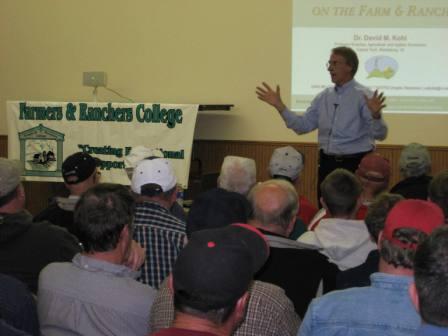
Dr. David Kohl, Professor Emeritus with the Dept. of AAEC, VA TECH will present his challenges & opportunities tool kit to give you some tools to help your business position for success so be sure to attend this information packed, high energy session, sponsored by the Farmers & Ranchers College. This educational program will be held December 15, 2016 starting at 1:00 p.m. at the Bruning Opera House with registration starting at 12:30 p.m. Due to the generous support of area businesses and organizations, this program is free, but arrive early to save yourself a seat!

Programming

Farmers & Ranchers College 2015-16 Programming

The Farmers & Ranchers College was formed in January 2000 with the purpose of providing high quality, dynamic, up to date educational workshops for area agricultural producers in south central Nebraska through a collaborative effort between business, industry and higher education leaders. Furthermore, the Farmers & Ranchers College will provide the tools necessary so that agricultural producers will be able to respond positively to these changes using a profitable decision making process.Logo

The Farmers and Ranchers College is a unique opportunity to educate agricultural producers in south central Nebraska. Approximately three hundred producers from fourteen counties and three states participated in the 2014-15 Farmers & Ranchers College programs. Producers attending these workshops managed over 205,000 acres. Participants (46%) surveyed indicated an average of $17.00/acre of knowledge gained from participating for a potential impact of $3 million.

The fourteenth annual Partners in Progress- Beef Seminar featured a variety of industry, University and agricultural organization presenters. Participants managed over 10,000 head of cattle and indicated that on average the information presented will increase their profitability $30/head with a total potential impact of over $300,000.

Contributions and support of area businesses allow participants to attend at no cost, however for programs that have meals, it is requested that people RSVP at least a week in advance for an accurate meal count by calling Fillmore County Extension at (402) 759-3712.Kohl2011 Web

The Farmers and Ranchers College Committee consists of Fred Bruning of Bruning, Bryan Dohrman of Grafton, Sarah Miller of Carleton, Jennifer Engle of Fairmont, Ryne Norton of York, Jim Donovan of Geneva, Bryce Kassik of Geneva, Eric Kamler of Geneva, and Brandy VanDeWalle of Ohiowa.

2015-16 Farmers & Ranchers College Programming

  • December 15, 2015 – “Positioning Your Business for Success” Featuring Dr. David Kohl Professor Emeritus, Dept. of AAEC, VA TECH at the Bruning Opera House – Bruning, NE at 1:00 p.m.
  • January 20, 2016 – “Partners In Progress – Beef Seminar” at the U.S. Meat Animal Research Center near Clay Center from 10:00 a.m. to 3:30 p.m., registration at 9:30 a.m. *
  • March 14, 2016 – Overcoming Challenges with Succession Planning for Families with Dr. Ron Hanson, Neal E. Harlan Professor of Agribusiness, Ag Economics Dept., UNL at Stone Creek in McCool Junction with meal starting at 6:00 p.m. and program to follow. Registration starting at 5:30 p.m. *

*Programs are provided at no cost to the public, but registration is appreciated for a meal count. Please call the Fillmore Co. Extension Office at (402) 759-3712 one-week prior to the program.

Programming

Damian Mason Coming to Fillmore County!

The last Farmers & Ranchers College workshop for the 2014-15 programming year will be held Wednesday, February 4, 2015 at the Fillmore County Fairgrounds in Geneva, NE with registration starting at 5:30 p.m., a meal at 6:00 p.m. and the program to follow. The program, “Ag: Trends, Topics & Tomorrow” will be high on content and very entertaining with “Agriculture’s Funny Man”, Damian Mason.Damian Mason headshot

Damian Mason is a professional speaker, entertainer, writer, businessman and farm owner. Long before Damian enjoyed professional success in business or on the speaking circuit, he was a farm boy. At age 8 he had his first job, bottle -feeding calves on the Indiana dairy farm where he was raised. Like many children of agriculture, he was involved in FFA and was a ten-year 4-H member. Damian has a degree in Agricultural Economics from Purdue University. He has also studied comedy writing and improvisation at The Second City in Chicago.

Few people are hilariously funny and farm knowledgeable. Damian is! He’s delivered his hit program “Humor for the Heart of Agriculture” to the most recognizable names and organizations in the agricultural industry. Since 1994, he’s made over 1400 appearances, entertaining crowds in 50 states and 7 foreign countries. Damian is passionate about the industry of feeding, fueling and clothing the world. His presentations are funny, smart, professional and, above all, respectful to the people of agriculture.

Damian is a member of the National Speakers Association, the Screen Actors Guild and the Indiana Farm Bureau.   He and his wife Lori live (and work!) on a 200-acre beef, grain and timber farm in Huntington, Indiana.

We are extremely fortunate to have Damian Mason come to Fillmore County as he will provide an informative but also hilarious presentation, perfect for any audience involved in the business of food, fuel & fiber. “Agriculture: Trends, Topics and Tomorrow” will provide a provocative, yet positive look at the issues impacting contemporary agriculture.

Contributions and support of area businesses allow participants to attend at no cost, however it is requested that people RSVP at least a week in advance for an accurate meal count by calling Fillmore County Extension at (402) 759-3712.

The Farmers and Ranchers College Committee consists of Fred Bruning of Bruning, Bryan Dohrman of Grafton, Sarah Miller of Carleton, Jennifer Engle of Fairmont, Ryne Norton of York, Jim Donovan of Geneva, Bryce Kassik of Geneva, Eric Kamler of Geneva, and Brandy VanDeWalle of Ohiowa.

Livestock

Cow Calf College Program

The second program for the Farmers & Ranchers College program is rapidly approaching. My colleague Dewey Lienemann has an excellent Cow/Calf College lined up for cattle producers, which I’ve decided to discuss this week. The annual Cow/Calf College “Partners in Progress – Beef Seminar” will be held at the U.S. Meat Animal Research Center and Great Plains Veterinary Education Center near Clay Center on January 27, 2015 with registration, coffee and donuts starting at 9:00 a.m. and going till 9:30 a.m.  The program will run from 9:35 a.m. until approximately 4:00 p.m. This program is sponsored by Nebraska Extension’s Farmers and Ranchers College and will feature several outstanding speakers discussing issues and management strategies that can affect the profitability of all beef producers. There is no cost for the event and the public is invited. It does include a noon meal that means early registration is necessary to reserve a meal.

The Cow/Calf College usually draws in over 100 people, so sign up to reserve your spot!

The “Cow/Calf College” will begin at 9:35 a.m. with a welcome by Dr. John Pollak, Director of USMARC and Dr. Dale Grotelueschen, Director of the Great Plains Veterinary Education Center. They will introduce former long-time GPVEC Director, Dr. Gary Rupp, who will give a short overview of “Twenty Five Years of Service – GPVEC”. He will be followed by the conference kick-off speaker, Dr. Ronnie Green, NU Vice President and IANR Harlan Vice Chancellor, who will present “Moving the Beef Industry to the Next Level”. Dr. Richard Randle, UNL Extension Beef Cattle Veterinarian, will then explain “Animal Health Issues & Considerations When Re-building the Herd”.

Lunch will be provided and will be handled with a rotation system during two noon sessions featuring South Central Nebraska Cattlemen member and Nebraska Beef Council Board – District 8 Director, Dawn Caldwell, who will provide split sessions on: “Issues, Questions and Answers – Nebraska Beef Council”. You will be able to learn about the check-off proposals as well as other issues that our Beef Council are addressing and have a chance to network and interact with fellow cattlemen from all across Nebraska and other states.

The afternoon session will start with a very timely presentation by Dr. Mary Drewnoski, Beef Systems Specialist at UNL Dept. of Animal Science who will give us an “Utilizing “Cover Crops” as Secondary Forage Crops for Cattle” that is a frequent topic with cattlemen all across the region as we face short acres of pasture and pursue a repopulation of our cattle herds. It may of interest that MARC and UNL Extension are collaborating on a research project on the effect on crop yields and soil by grazing stalks, and cover crops as supplemental feeds with grazing stalks. MARC will allow producers to go out to the field after the meeting and observe the fields and cattle as the study is under progress. It is not often we have an opportunity like this, so take advantage of this tour.

One of the most requested presenters, Dr. Rick Funston, UNL Beef Reproductive Physiology Specialist at West Central Research & Extension Center, who will present “Importance of Early Conception and Factors Influencing It”. This and other research he has done lends heavily towards management practices as we build our herds. Continuing on with the breeding side of the management equation: Dr. Matt Spangler, Beef Genetics Specialist with UNL Dept. of Animal Science will present the capstone presentation on: “Rebuilding Your Herd -Terminal and Maternal Breeding Programs”. As we look to recovering from the lowest numbers of cows since 1949 we must look at our breeding program and the direction we want to take our herd, and this is paramount to our decisions.

All presenters will then join on stage to pull everything together, give their final thoughts and considerations and then avail themselves for a coffee-shop style panel discussion during which cattlemen can ask questions and get answers on topic questions that came to them during the day’s sessions. A chance for door prizes will be awarded to those that stay for the entire event.  Please pre-register by Thursday, January 22th, 2015, by either calling Webster Co. Extension (402) 746-3417 or Fillmore Co. Extension at (402) 759-3712 to insure a seat and lunch. Walk-ins are accepted, but may not get a lunch. Further information may be found on the following website.

Programming

Agriculture Outlook

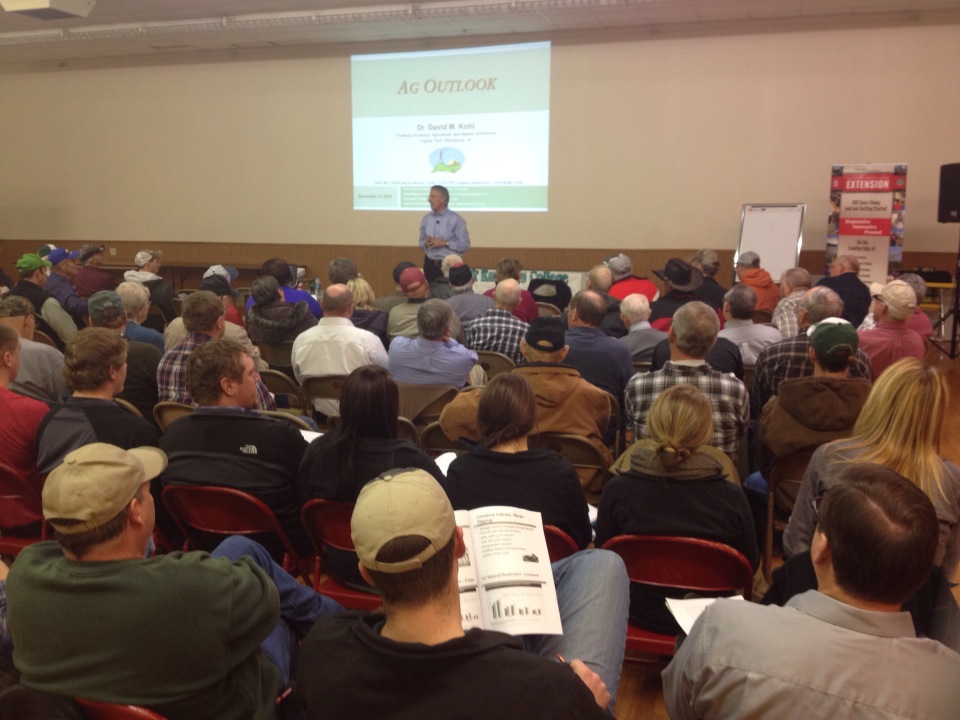
Those of us in agriculture are no stranger to risks involved with agriculture that are taken every day, whether it is financial, production, legal, price/market or human resource risks. While we can’t control everything, there are measures that can be taken to protect one’s operation and reduce risk. Each year the Farmers & Ranchers College hosts Dr. David Kohl, Professor Emeritus from Virginia Tech who does an excellent job describing global risks which affect us locally and how those risks will affect the agricultural industry.

Approximately 130-140 participants gathered for the first Farmers & Ranchers College program for the 2014-15 season.

Kohl reminded those in attendance that in order for there to be an economically viable crop industry, there must be an economically viable livestock industry. With lower crop commodity prices, producers must find ways to reduce their cost of production. The top farm managers will still earn a profit because they are aware of their costs and are resilient and agile. While prices are “hotter than a pepper sprout” for cattle producers, usually when a cattle cycle changes, it happens abruptly and warns on complacency.

Four factors globally to watch that will affect commodity prices are geopolitical factors, trade tensions, natural resources availability and economic reform. Back home in the U.S. concerns for higher interest rates will have an impact on operations based on the unemployment state, GDP growth and inflation. Kohl predicts that by spring or mid-summer interest rates will rise, so producers should be prepared.

In a survey Kohl conducted, he found that 72% of producers are complacent and either don’t use measurements to improve their farm or decision making or only track records to “get by” for taxes and crop yields. This is troubling, especially with lower commodity prices since cost of production has remained constant or higher. Producers need to have a solid handle on their cost of production and have some grain marketed. Land leases will be important and knowing your landlord beyond the finances can help when communicating with them. Those tenants who were fair to their landlords when prices were high will likely fare better than those who were not.

Those producers who surround themselves with “good people” will be successful. This includes a producer’s lender, supplier, etc. Have an advisory board to coach you along and help you make tough decisions and evaluate your financials. Ensure you have the right person “driving the bus” who helps you go the right direction, even though there might be an occasional detour. A well-organized plan with goals is essential. The increase in cost of living is also a huge concern, as it is very hard to cut the cost of living when a family has grown accustomed to certain things.

Tina Barrett with the Nebraska Farm Business, Inc. recently documented that the average cost of living in 1994 was $34,000 and held pretty steady through 2004. Since then, there has been a persistent increase each year. Not surprising that 2004 was the first of 10 years of a record high net farm income. When farm income went up, family living followed right behind. So as farm income declines, what will happen with family living costs? Also interesting to note that recreation was the largest increase, rising from $1,776 in 2004 to $9,081 in 2013, or a $7,305 increase, followed by a $5,550 increase in personal care and $5,339 increase in household supplies. Barrett says clients often bring up what their neighbors are doing and want to be able to afford that. For example, “The Jones went on a 3 week cruise and the Smiths built a new house and the Andersons bought a lake house and the Johnsons have a new Escalade.” The truth is sometimes we don’t know if those families were saving up for years to do some of those extra things. We can only control our own costs and allocate what we can afford for our own situation. This is very similar to Dr. Kohl mentioning that family living costs nationally have grown well over $100,00 and in some cases to $200,000, while the modest producers have only grown to $50-75,000. There will need to be a lot of belt tightening.

In summary, Kohl reminds us that goal setting, record keeping, an advisory board, having working capital and good relationships with those whom influence your management decisions are important golden rules for producers to follow. My next post will feature great information for millennials wanting to return to the farm or rural communities.

Crops, Programming

Extension Programming

This is the time of year for agricultural programs for agricultural producers and if one wanted, they could go to a program almost every day of the week! For the most current or up-to-date information, go to our website, call our office at (402) 759-3712 or email me at brandy.vandewalle@unl.edu and if we don’t have all of the details, we’ll look them up for you! In light of all the excellence UNL Extension, NRD and industry programs, I decided to give a brief recap of them.grainbin2.jpg

Field Assessments to Improve Efficiency – December 8th
This program seeks to enhance the knowledge of Nebraska corn, soybean and wheat producers on their sustainability and operational efficiency measures. Workshop participants will use a web based tool called Fieldprint® Calculator. We want growers in Nebraska to be better able to understand and communicate how management choices affect overall sustainability performance and operational efficiency of their farm operations. Locally, it will be held Monday, December 8th from 5:30 to 9:00 p.m. at the Geneva Public Library. My colleague in Saline County, Randy Pryor is the program coordinator and is offering this free program, sponsored by Nebraska Extension to 5-10 producers.

Farmers & Ranchers College– December 11th (1-4:00 p.m.) – Bruning Opera House
Ag Outlook will feature Dr. David Kohl, Professor Emeritus with the Dept. of AAEC, VA TECH and will discuss the wild world of global and domestic economics.  Dr. Kohl will discuss the major game changers influencing the agriculture landscape along with a quick tour of global economics and how it is influencing land values, commodities, and input costs.  Is agriculture in an asset or credit bubble?  What can you do financially in this business environment to capitalize on the economic volatility?  Dr. Kohl will give tips on management practices that will help you think globally but act locally in strategic and everyday decision-making.

Farm Bill Workshops – December 16th 9-Noon, Fillmore Co. Fairgrounds, Geneva
Farm Bill informational & meetings will be conducted in every county across Nebraska with each educational session running about 2-3 hours. Check with your local Farm Services Agency (FSA) or Nebraska Extension Service office for more details. These sessions are not required but may be helpful regarding long-term decisions.

Programming

Farmers & Ranchers College Programming

The Farmers & Ranchers College was formed in January, 2000 with the purpose of providing high quality, dynamic, up to date educational workshops for area agricultural producers in south central Nebraska through a collaborative effort between business, industry and higher education leaders. Furthermore, the Farmers & Ranchers College will provide the tools necessary so that agricultural producers will be able to respond positively to these changes using a profitable decision making process.

Logo

The Farmers and Ranchers College is a unique opportunity to educate agricultural producers in south central Nebraska. Nearly four hundred producers from fourteen Nebraska counties and two Kansas counties participated in the 2012-2013 Farmers & Ranchers College programs.

Producers attending these workshops managed over 263,000 acres. Participants surveyed (n=28%) indicated an average of $21.00/acre of knowledge gained from participating for a potential impact of $5.5 million.

Contributions and support of area businesses allow participants to attend at no cost, however for programs that have meals, it is requested that people RSVP at least a week in advance for an accurate meal count by calling Fillmore County Extension at (402) 759-3712.

The Farmers and Ranchers College Committee consists of Fred Bruning of Bruning, Bryan Dohrman of Grafton, Sarah Miller of Carleton, Jennifer Engle of Fairmont, Ryne Norton of York, Jim Donovan of Geneva, Bryce Kassik of Geneva, Gordy Nuss of Sutton, and Brandy VanDeWalle of Ohiowa.

2013 -2014 Farmers & Ranchers College Programming

  • November 20, 2013* – Land Leasing Workshop– Shickley Community Building, 9:00 a.m. – 3:00 p.m. with registration at 8:45 a.m. (Information for young or new farmers will follow the leasing discussion.)
  • December 9, 2013 – “Positioning Your Business for Agriculture’s Next DecadeFeaturing Dr. David Kohl Professor Emeritus, Dept. of AAEC, VA TECH at the Bruning Opera House – Bruning, NE at 1:00 p.m.
  • January 28, 2014* – “Partners In Progress – Beef Seminar” at the U.S. Meat Animal Research Center near Clay Center from 10:00 a.m. to 3:30 p.m., registration at 9:30 a.m.
  • March 18, 2013* – Agricultural Water Update at the Fillmore County Fairgrounds in Geneva from 10 a.m. – 3:00 p.m. with registration at 9:45 a.m.

* Programs are provided at no cost to the public, but registration is appreciated for a meal count. Please call the Fillmore Co. Extension Office at (402) 759-3712 one week prior to the program or email me at brandy.vandewalle@unl.edu.

Programming

Keeping Your Farm in the Family for the Next Generation

The final Farmers & Ranchers College program for the 2012-13 programming year will be held on March 14, 2013 starting at 6:00 p.m. with a meal and the program to follow. It will be held at Evening with Friends Restaurant in Milligan and will feature Dr. Ron Hanson, Neal E. Harlan Professor of Agribusiness, Ag Economics Dept., UNL. A description of Hanson’s program is provided below.Logo

The entire process for mapping out a succession plan to transfer the eventual ownership of a family farm from one generation (parents) to the next generation (their adult children) can be an overwhelming task for many families.  Where does this process even begin?  Who makes the final decisions?  Can you be fair to everyone involved?  What if there is not good communications within the family?  How do you keep emotions and personal jealousies from taking over and preventing good decision making?  These are the issues that confront any farm family in determining a succession plan which allows for this successful transfer of farm ownership.

Most farm families would agree that a succession plan needs to be implemented and that any “what if family issues” need to be discussed and eventually resolved.  But this seldom ever happens.  Often farm families never can get past the “family obstacles and personal fears” that can actually become road blocks which prevent a succession plan from being put in place to protect the family farm and to insure that their family farming legacy continues to the next generation.   These obstacles and fears will be identified and discussed with potential solutions so that farm families can move forward in their succession planning process.

This presentation will outline the necessary steps to implement as well as achieve a successful succession plan that hopefully avoids potential misunderstandings between various family members. This lack of clarity and failure to explain specifics by parents when communicating their wishes to their children is often a frequent cause of family conflict/disputes.  Ideas will be shared to work through these emotional and stressful issues in a positive manner.  Parents must embrace a vision for passing on their farm that is shared by all family members involved for this succession process to achieve a successful transition of ownership to their adult children and to insure the next generation of young farm producers.

The Farmers & Ranchers College was formed in January, 2000 with the purpose of providing high quality, dynamic, up to date educational workshops for area agricultural producers in south central Nebraska through a collaborative effort between business, industry and higher education leaders.  The Farmers and Ranchers College Committee consists of Fred Bruning of Bruning, Bryan Dohrman of Grafton, Sarah Miller of Carleton, Eric Milton of Milligan, Jim Donovan of Geneva, Bryce Kassik of Geneva, Gordy Nuss of Sutton, and Brandy VanDeWalle of Ohiowa.

For more information on the various Farmers & Ranchers College programs, please go to the Fillmore Co. Extension website  or call the Fillmore County Extension office at (402) 759-3712.

Programming

Cow/Calf College

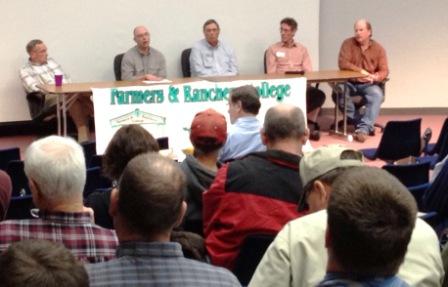
The annual Farmers and Ranchers Cow/Calf College “Partners in Progress – Beef Seminar” will be held at the U.S. Meat Animal Research Center and Great Plains Veterinary Education Center near Clay Center on Tuesday, January 22, 2013 with registration, coffee and donuts starting at 9:00 a.m. and going till 9:45 a.m.  The program will run from 9:50 a.m. until approximately 3:45 p.m. This program is sponsored by the University of Nebraska-Lincoln Extension’s Farmers and Ranchers College and will feature several outstanding speakers discussing issues and management strategies that can affect the profitability of all beef producers.

This year’s theme will center on recovering from the 2012 drought and preparing for the potential of a 2013 drought. There is no cost for the event and the public is invited. It does include a noon meal which means that early registration is necessary to reserve a plate. The seminar is packed with experts in climate, forages, animal nutrition and reproduction and will provide information that should help in planning for the upcoming year.

CowCalfHeading13

The “Cow/Calf College” will kick off at 9:50 a.m. with a welcome by Dr. John Pollak, Director of USMARC. He will also give a short overview on research that is happening at the Meat Animal Research Center. He will be followed by the first speaker, Allan Vyhnalek, UNL Extension Educator who will present: “Hay, Stalks, & Pastures: Costs & Considerations for 2013” which will give information on values, rental rates and considerations for coming out of a drought and possibly going into another. He will be followed by Dr. Bruce Anderson, UNL Extension Forage Specialist, who will give producers information on “Forage Planning for the Possible 2013 Drought”. This could be critical as beef producers face a shortage of pasture and now hay and other forages in 2012 and preparing for 2013.

The afternoon session will be kicked off by Dr. Rick Funston, UNL Beef Reproductive Physiology Specialist. In light of current feed costs many producers are looking at options and strategies for replacement heifer development in the months ahead. It may be advantageous to benefit from what he has learned in research on “Cost Effective Replacement Heifer Development”. He will be followed by Dr. Al Dutcher, UNL State Climatologist, who will give his take on the “Potential for 2013 Drought: Weather Update”. There is no doubt that most producers and especially beef producers are worried about what may be ahead for climate that will affect grass and forage production. We hope that he has good news for us, but must brace for the potential of bad news considering weather conditions ahead.Lunch will be provided and will be handled with a rotation system during two noon sessions featuring Aaron Stalker, UNL Beef Range Systems Specialist, who will provide two concurrent presentations on: “Corn Stalk Grazing: Values to Cattle Producers and Corn Farmers”. Also in the rotation will be a chance to see and hear about the new “New UNL Beef Body Condition Scoring App” developed by Dr. Rick Rasby and ready for distribution.

All presenters will then join on stage to pull everything together, give their final thoughts and considerations and then avail themselves for a coffee-shop style panel discussion during which cattlemen can ask questions and get answers on topic questions that came to them during the day’s sessions. A chance for door prizes will be awarded to those that stay for the entire event.

Any beef producer or other interested individual should pre-register by noon on Friday, January 18th, 2013, at the Webster County Extension Office at (402) 746-3417 to insure a seat, lunch, and proceedings for the day. You may also email your registration to Dewey Lienemann at:  dlienemann2@unl.edu.

Source: Dewey Lienemann, Extension Educator