Programming

Women in Agriculture

Last week I had the opportunity to participate in the 30th Annual Nebraska Women in Agriculture conference. This was only the second year I have participated and well worth the time! Discussions around advocating for agriculture were very powerful. Rebecca Long-Chaney was very inspirational and reminded us that no matter how busy we are in life; make time for family and friends. Her message and involvement with “agvocacy” is to be commended and wia-01her twin daughters also have shared their experiences in agriculture through children’s stories. With all of the anti-ag Chipotle ads, Meatrix videos and other false information out there, it is good to know there are some people sharing the factual information about modern agriculture. The bottom line is that even though farmers and ranchers shouldn’t have to defend their way of life and jobs, we need to because of the increasing disconnect consumers have with agriculture.

Simple ways of communicating the facts about modern agriculture include writing letters to the editor, educating youth in classrooms or programs, buying factual agricultural library books for your child’s schools/communities, having a 30 second elevator speech on agriculture ready and sharing it every opportunity you have (especially in urban areas), engaging in social media and inviting people to your farm or ranch to show them the great job you do!

There were so many other great sessions from crop insurance and marketing updates to emergency preparedness and water updates. One of the things that were emphasized was how women involved in agriculture (especially spouses of farmers/ranchers) are truly the “heart of agriculture”. Women play a key role in supporting agriculture through a variety of ways and it made me hope that someday, not only will I be able to work with ag producers and youth, but my husband and I will be able to have a small ag operation of our own so we can instill the hard work ethic and values into our daughters which were instilled in my husband and I.

If you are a female and involved in agriculture, I highly recommend you take time out of your busy schedules to participate in the Nebraska Women in Agriculture Conference next year!

Programming

Precision Ag Workshops

Learn how to extract more information from your precision ag data at one of several Nebraska Extension workshops this winter. Yield monitor data is one of the most valuable pieces of farm information that is gathered each year. Utilizing yield, soil, and input data to its fullest potential is the objective in developing an integrated agronomic management system. This workshop will help drive informed decisions and make the most of data you already have to drive future profitability.IMG_2639

The Precision Ag Data Management Workshops will offer lectures and hands-on activities using Ag Leaders SMS Advanced software.  (Laptops and data will be supplied.) Each site will be limited to 25 registrants.

Session topics will demonstrate strategies to: conduct multi-year yield data normalization analyses; analyze yield monitor data versus as-applied split planter hybrid data; quantify yield monitor data versus NRCS soil survey boundaries and soil electrical conductivity (EC) maps generated from Veris data; develop prescription maps for crop inputs under irrigated and dryland conditions and export to an in-cab monitor; and develop and evaluate the performance of management plans for corn seeding rates using on-farm research strategies.

Schedule

Programs are the same at each site and begin at 8:30 a.m. and end at 5 p.m.

  • Tuesday, Feb. 24 — York, 4-H Bldg., 2400 Nebraska Ave.; register by Feb. 20
    Contact: Gary Zoubek, (402) 362-5508 or zoubek@unl.edu
  • Wednesday, Feb. 25 — Clay Center, Clay County Activities Bldg.; register by Feb. 20   Contact: Jenny Rees, (402) 762-3644 or rees@unl.edu
  • Thursday, March 5 — Geneva, Public Library; register by Feb. 27
    Contact: Brandy VanDeWalle, (402) 759-3712 or vandewalle@unl.edu

Registration is $50. Add $15 for an additional registrant from the same farm operation who will share a computer and add $20 for anyone requesting CCA CEUs. CCA CEUs are currently pending approval. Six credits are anticipated for the successful completion of the workshop (one credit each for soil and water, soil fertility, and professional development and three credits for crop management). Registration includes learning guides, a jump drive with similar information, and lunch.

To register, contact the Extension office indicated in the schedule by the deadline listed. To contact our office, call 402-759-3712 or email me at brandy.vandewalle@unl.edu.

Uncategorized

When “sustainable” becomes unsustainable…Feedback Friday

Some “food” for thought from my colleague, Lindsay Chichester focused in beef and consumer education.

lindsaychichester's avatarAgricultural with Dr. Lindsay

This morning I saw the news article that Chipotle had announced they would now be sourcing all of their beef from Australia, instead of from Texas (or any other state that produces beef). I was confused and still am. So I thought I would throw it out for a Feedback Friday post.

Now before you think this is a personal attack on Chipotle, it is not. This is an attack on any USA based company that isn’t even giving the USA a chance to produce the product. I love that consumers (myself included) have choices on where they eat and they type of food they eat. We get choices on what to watch on tv, what to wear, who to spend time with, and of course with our food – a huge perk of living in America.

From what I understand, Chipotle sources its product from sustainable, humanely raised

View original post 240 more words

Crops

Pesticide Applicator Safety Trainings

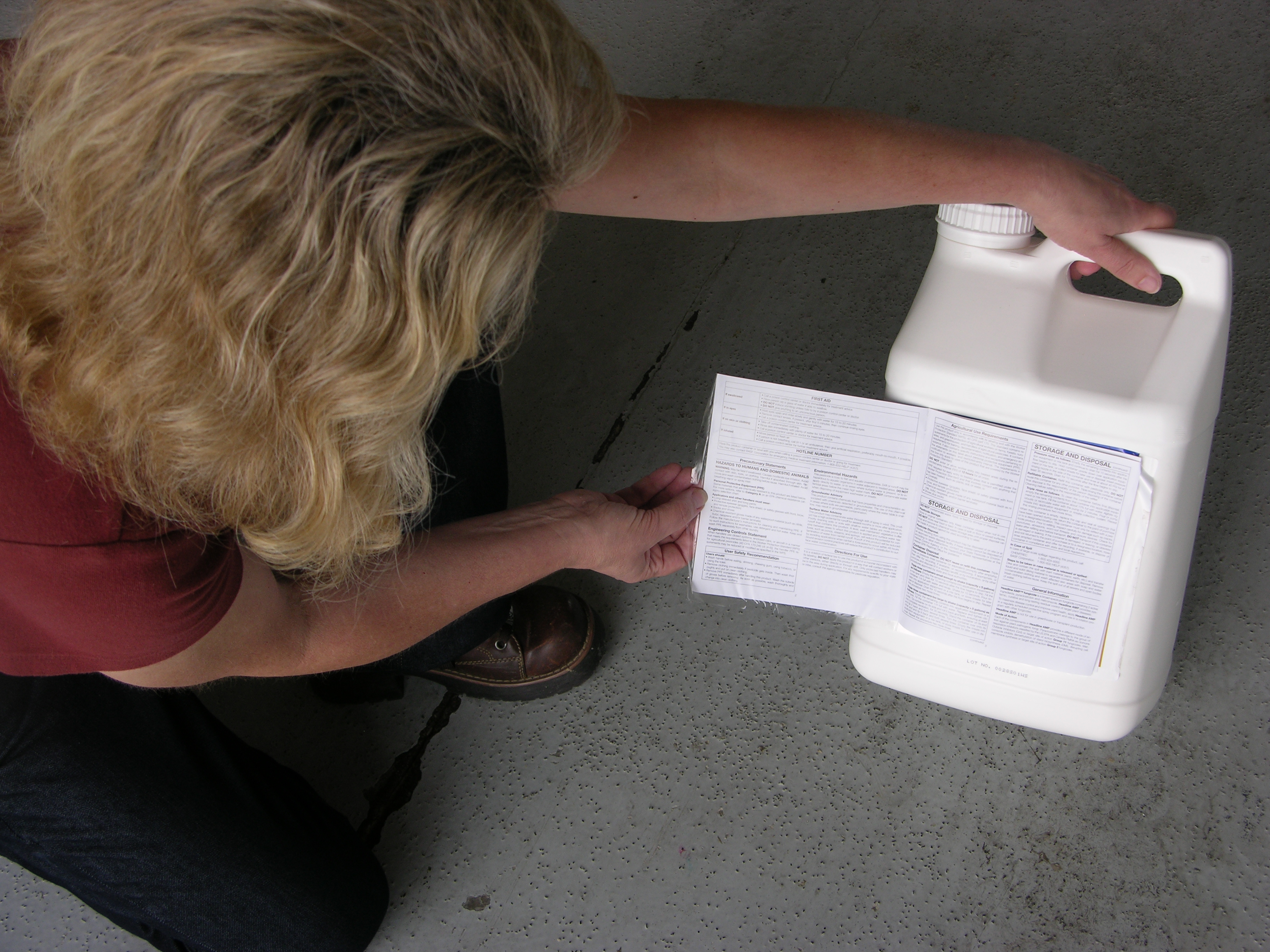
Nebraska pesticide safety education training and certification is required for restricted use pesticide product applications using label recommendations. Therefore, the Nebraska Department of Agriculture in cooperation with Nebraska Extension provides certification across the state. Certification requirements vary based on licensing classification.PestEd

For example, the Nebraska Pesticide Act allows anyone producing agricultural commodities on their own property or rented acres to purchase and apply restricted use pesticides on their managed acres through Private Applicator Pesticide Certification. Exceptions for Private Use licensing would be: “for hire” pesticide applications; controlling fish for recreation; termite control; mosquito control; residential lawn care; and weed control in aquatic sites or irrigation canals.

Private pesticide safety certification (group) training dates, times, and locations are listed on the PestEd website .Other Private licensing options include: completing the Nebraska Private Self-Study Manual and written exam; taking the online Private Pesticide Applicator exam; or attending a Nebraska Extension Crop Production Clinic.

New 2015 Private Applicator Training topics include: “Water Quality Testing for Pesticide Performance;” “Driftwatch website updates;” “Nozzle Drift Prevention Technology;” and “Safe Pesticide Disposal and Storage.”

In Fillmore County, private pesticide certification will be held twice on February 17th. The first session will be at 9:00 a.m. and the second at 1:30 p.m. The programs will be at the Fillmore County Fairgrounds in Geneva, NE.

Commercial applicator pesticide applicator licensing & certification is required for anyone applying restricted use pesticides on a contractual or “for hire” basis. This licensing is also required for any person applying a restricted or general use pesticide for lawn care or structural pest control to the land for another person “for hire” or compensation. A complete list of commercial testing dates, time, and locations is available.

Commercial certification requires passing a written General Standards exam plus each needed category. Based upon the applicator’s certification needs, there are several categories available. For specific categories details, contact the Nebraska Department of Agriculture as 402-471-2351 or toll-free at 877-800-4080.

More Nebraska Extension educational meetings and clinic information is available at: http://cropwatch.unl.edu; through our Nebraska Extension – Fillmore County office (402-759-3712); or through your local Nebraska Extension office.

Youth

Nebraska 4-H Month!

February is Nebraska 4-H Month, and Fillmore County is celebrating the 4-H youth who have made an impact on the community, and are stepping up to the challenges of a complex and changing world. On February 22nd from 5-7:00 p.m. at the Fillmore Co. Fairgrounds, 4-H youth will connect with the community by participating in the 4-H Kick Off Celebration.NE4hmonth15logo

This free event will showcase a few projects members can participate in addition to recognizing seniors who received a 4-H scholarship. This event is open to any youth and their families. If you’ve seen the 4-H Clover and wondered what it represents, this is a chance to stop by and find out more! All attendees are invited to participate in multiple mini projects including fishing, animal science, face painting and more. There will also be inflatables, a special visit by Lil’ Green and prizes galore. Concessions will also be available by Jill’s Sweet Shop.

Recent findings from Tufts University’s 4-H Study of Positive Youth Development indicate that young people in 4-H are three times more likely to contribute to their communities than youth not participating in 4-H. Notably, the Tufts research discovered that the structured learning, encouragement and adult mentoring that 4-H’ers receive play a vital role in helping them actively contribute to their communities. In Fillmore County, 219 4-H members and approximately 100 volunteers are involved in 4‑H.

4-H youth are a living breathing, culture-changing revolution for doing the right thing, breaking through obstacles and pushing our country forward by making a measurable difference right where they live. Learn how you can Join the Revolution of Responsibility, or contact the Nebraska Extension Office in Fillmore County at (402) 402-759-3712 or by visiting the website at fillmore.unl.edu. Check out our FaceBook .

Youth

Innovative Youth Corn Challenge

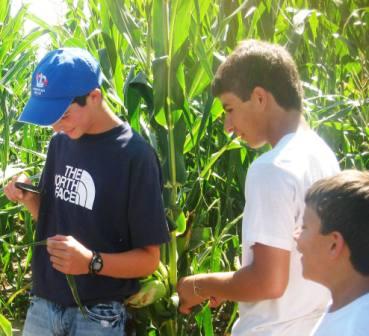
Those who know me probably know how much I enjoy working with youth. I’ve taken a statewide leadership role in Nebraska Extension engaging youth in the crop sciences and one of the programs that has came to life is the Innovative Youth Corn Challenge. This has been a very rewarding effort seeing the excitement and pride of the youth who have completed their project and the appreciation from their parents for offering this program. Recently, we held the Innovative Youth Corn Challenge (IYCC) banquet to recognize teams for the accomplishments, which I’ve decided to share in this week’s article.BanquetCollage15

Nebraska Extension and the Nebraska Corn Board teamed up to offer the third Innovative Youth Corn Challenge contest in 2014. This contest, open to 4-H members (age 10 & older as of Jan. 1st) or FFA members (in-school members), guided participants through all aspects of corn production, as well as agricultural careers related to corn production.

The 2014 winning team was from the Fillmore Central FFA chapter, consisting of Adam Hoarty,IMG_20140613_093836_936 Garrett Whitley, Tyler O’Conner, Logan Peppard and Aaron Poppert. The team with the highest percent yield increase over their local county average is the winner. In earning the $1,000 first-place award, Fillmore Central FFA tested corn-seeding rates on irrigated ground to determine the optimum rate. Their check plot of 32,000 seeds per acre yielded 253 bushels per acre, while their challenge plot, planted at 38,000, yielded 281 bushels per acre.

Second-place team overall was the Kornhusker Kids 4-H Club of Cuming County, earning $500 for their efforts. Team members tested two different sources of sulfur–gypsum (calcium sulfate) and ammonium sulfate. The check plot of 167 bushels per acre yielded the highest. The ammonium sulfate treatment produced 164 bushels per acre and gypsum 163 bushels per acre. The Kornhusker Kids 4-H Club included Kaleb Hasenkamp, Angela Rolf, Matthew Rolf, Levi Schiller and Payton Schiller.

Third-place team was the Eagle Hustlers 4-H Club in Holt County, which tested a product, called Pervaide, which was developed to reduce compaction. The challenge plot yielded 213 bushels per acre, while the check plot yielded 210 bushels per acre. The Eagle Hustlers 4-H Club consisted of Miles and Jace Stagemeyer of Page.

SueEllenAs a team, youth worked with an adult mentor throughout the process. Mentors can be extension faculty, ag teachers, or other qualified agronomy professionals. Other awards were handed out recently during the banquet in Lincoln:

  • The Data Completion Award, worth $200, went to the Kornhusker Kids 4-H Club.
  • The Innovation Award, worth $200, was presented to the Eagle Hustlers 4-H Club.
  • The Limited Resource Award went to both the Eagle Hustlers team and Fillmore Central FFA Chapter, which will split the $200 award.

To participate in 2015, youth must complete and return an entry form by March 15th to the Fillmore County Extension Office in Geneva, NE. Cash prizes and plaques will be given to the first, second, and third place teams. First place will receive $1,000, second place will receive $500, and third place will receive $250. Sustainability, crop scouting and “extra mile” awards will also be given, each worth $200.

Forms can be downloaded at UNL’s CropWatch-Youth webpages. For more information, contact myself at brandy.vandewalle@unl.edu, Aaron Nygren at anygren2@unl.edu or Amy Timmerman at atimmerman2@unl.edu.

Updates on the progress of the Corn Challenge can be found on FaceBook! Tweet about it using #IYCC!
Uncategorized

THE DAY THAT COULD START YOUR STORY IN CASNR….

Thinking about college but not sure what to do? Experience the power of red at this program!

kimmelteam1's avatarKimmel Education & Research Center

students2shortExperience the Power of Red — Spring Edition

Thursday, April 2, 8:30am-12:00p.m.

An event where you’ll learn how the College of Agricultural Sciences and Natural Resources (CASNR) prepares students for careers in everything from animals to plants, soil to climate, golf to business, mechanization to leadership, and food to forensic science.

You’ll meet faculty, staff and current students to get the scoop on what life at UNL is really like. Explore campus in person and get a true sense of the UNL CASNR experience.

Schedule:
  • 8:30 a.m. Registration/Browsing Session
  • 9:15 a.m. Welcome and Overview
  • 9:45 a.m. Move to First Session
  • 10:00 a.m. First Session
  • 10:30 a.m. Move to Second Session
  • 10:45 a.m. Second Session
  • 11:15 a.m. Lunch/Wrap-Up/Scholarship Drawing
  • 12:00 p.m. East Campus Tour (optional)
  • 1:00 p.m. City Campus Experience/Tour (optional)
Register:

Please register by March 26 at http://go.unl.edu/springday

Questions:

For more information contact us at (800) 742-8800, ext. 2541 or lfrey2@unl.edu.

View original post

Programming

Damian Mason Coming to Fillmore County!

The last Farmers & Ranchers College workshop for the 2014-15 programming year will be held Wednesday, February 4, 2015 at the Fillmore County Fairgrounds in Geneva, NE with registration starting at 5:30 p.m., a meal at 6:00 p.m. and the program to follow. The program, “Ag: Trends, Topics & Tomorrow” will be high on content and very entertaining with “Agriculture’s Funny Man”, Damian Mason.Damian Mason headshot

Damian Mason is a professional speaker, entertainer, writer, businessman and farm owner. Long before Damian enjoyed professional success in business or on the speaking circuit, he was a farm boy. At age 8 he had his first job, bottle -feeding calves on the Indiana dairy farm where he was raised. Like many children of agriculture, he was involved in FFA and was a ten-year 4-H member. Damian has a degree in Agricultural Economics from Purdue University. He has also studied comedy writing and improvisation at The Second City in Chicago.

Few people are hilariously funny and farm knowledgeable. Damian is! He’s delivered his hit program “Humor for the Heart of Agriculture” to the most recognizable names and organizations in the agricultural industry. Since 1994, he’s made over 1400 appearances, entertaining crowds in 50 states and 7 foreign countries. Damian is passionate about the industry of feeding, fueling and clothing the world. His presentations are funny, smart, professional and, above all, respectful to the people of agriculture.

Damian is a member of the National Speakers Association, the Screen Actors Guild and the Indiana Farm Bureau.   He and his wife Lori live (and work!) on a 200-acre beef, grain and timber farm in Huntington, Indiana.

We are extremely fortunate to have Damian Mason come to Fillmore County as he will provide an informative but also hilarious presentation, perfect for any audience involved in the business of food, fuel & fiber. “Agriculture: Trends, Topics and Tomorrow” will provide a provocative, yet positive look at the issues impacting contemporary agriculture.

Contributions and support of area businesses allow participants to attend at no cost, however it is requested that people RSVP at least a week in advance for an accurate meal count by calling Fillmore County Extension at (402) 759-3712.

The Farmers and Ranchers College Committee consists of Fred Bruning of Bruning, Bryan Dohrman of Grafton, Sarah Miller of Carleton, Jennifer Engle of Fairmont, Ryne Norton of York, Jim Donovan of Geneva, Bryce Kassik of Geneva, Eric Kamler of Geneva, and Brandy VanDeWalle of Ohiowa.

Livestock

Cow Calf College Program

The second program for the Farmers & Ranchers College program is rapidly approaching. My colleague Dewey Lienemann has an excellent Cow/Calf College lined up for cattle producers, which I’ve decided to discuss this week. The annual Cow/Calf College “Partners in Progress – Beef Seminar” will be held at the U.S. Meat Animal Research Center and Great Plains Veterinary Education Center near Clay Center on January 27, 2015 with registration, coffee and donuts starting at 9:00 a.m. and going till 9:30 a.m.  The program will run from 9:35 a.m. until approximately 4:00 p.m. This program is sponsored by Nebraska Extension’s Farmers and Ranchers College and will feature several outstanding speakers discussing issues and management strategies that can affect the profitability of all beef producers. There is no cost for the event and the public is invited. It does include a noon meal that means early registration is necessary to reserve a meal.

The Cow/Calf College usually draws in over 100 people, so sign up to reserve your spot!

The “Cow/Calf College” will begin at 9:35 a.m. with a welcome by Dr. John Pollak, Director of USMARC and Dr. Dale Grotelueschen, Director of the Great Plains Veterinary Education Center. They will introduce former long-time GPVEC Director, Dr. Gary Rupp, who will give a short overview of “Twenty Five Years of Service – GPVEC”. He will be followed by the conference kick-off speaker, Dr. Ronnie Green, NU Vice President and IANR Harlan Vice Chancellor, who will present “Moving the Beef Industry to the Next Level”. Dr. Richard Randle, UNL Extension Beef Cattle Veterinarian, will then explain “Animal Health Issues & Considerations When Re-building the Herd”.

Lunch will be provided and will be handled with a rotation system during two noon sessions featuring South Central Nebraska Cattlemen member and Nebraska Beef Council Board – District 8 Director, Dawn Caldwell, who will provide split sessions on: “Issues, Questions and Answers – Nebraska Beef Council”. You will be able to learn about the check-off proposals as well as other issues that our Beef Council are addressing and have a chance to network and interact with fellow cattlemen from all across Nebraska and other states.

The afternoon session will start with a very timely presentation by Dr. Mary Drewnoski, Beef Systems Specialist at UNL Dept. of Animal Science who will give us an “Utilizing “Cover Crops” as Secondary Forage Crops for Cattle” that is a frequent topic with cattlemen all across the region as we face short acres of pasture and pursue a repopulation of our cattle herds. It may of interest that MARC and UNL Extension are collaborating on a research project on the effect on crop yields and soil by grazing stalks, and cover crops as supplemental feeds with grazing stalks. MARC will allow producers to go out to the field after the meeting and observe the fields and cattle as the study is under progress. It is not often we have an opportunity like this, so take advantage of this tour.

One of the most requested presenters, Dr. Rick Funston, UNL Beef Reproductive Physiology Specialist at West Central Research & Extension Center, who will present “Importance of Early Conception and Factors Influencing It”. This and other research he has done lends heavily towards management practices as we build our herds. Continuing on with the breeding side of the management equation: Dr. Matt Spangler, Beef Genetics Specialist with UNL Dept. of Animal Science will present the capstone presentation on: “Rebuilding Your Herd -Terminal and Maternal Breeding Programs”. As we look to recovering from the lowest numbers of cows since 1949 we must look at our breeding program and the direction we want to take our herd, and this is paramount to our decisions.

All presenters will then join on stage to pull everything together, give their final thoughts and considerations and then avail themselves for a coffee-shop style panel discussion during which cattlemen can ask questions and get answers on topic questions that came to them during the day’s sessions. A chance for door prizes will be awarded to those that stay for the entire event.  Please pre-register by Thursday, January 22th, 2015, by either calling Webster Co. Extension (402) 746-3417 or Fillmore Co. Extension at (402) 759-3712 to insure a seat and lunch. Walk-ins are accepted, but may not get a lunch. Further information may be found on the following website.