Programming

Consider “LEAD”ing Others

As we close out other year and set new goals for 2015, remember it is important to “agvocate” for agriculture, even if its simply informing others what you do and how you are an environmental steward of the land, etc. One program which empowers individuals to become more educated on agricultural issues and improve their leadership skills is the Nebraska LEAD program.

My LEAD group XXVII went to China, South Korea and Hong Kong for our International Study Travel Seminar.

Several years ago I met twenty-nine talented individuals with a passion of agriculture through the Nebraska LEAD program. To date, I remain friends with many of them and the networking opportunities have been tremendous. The in-state seminars challenged me to think outside of the box and remain an advocate for agriculture. I could go on and on about the excellent opportunities the LEAD program has provided, but I challenge you to experience it yourself!

Today’s pressing issues demand strong, able, informed leaders who not only excel in their chosen professions, but also in the areas of communications, political savvy and issues management. The Nebraska LEAD Program prepares leaders to face challenges with confidence. If you would like to be a part of the leadership necessary to chart the course now and in the future, and you are presently involved in production agriculture or agribusiness, there will never be a better time to apply to participate in the Nebraska LEAD Program.

Fellowship applications for Nebraska LEAD (Leadership Education/Action Development) Group 35 are now available for men and women involved in production agriculture or agribusiness and will be accepted until June 15. “Up to 30 motivated men and women with demonstrated leadership potential will be selected from five geographic regions across our state,” said Terry Hejny, Nebraska LEAD Program director.

In addition to monthly three-day seminars throughout Nebraska from mid-September through late March each year, Nebraska LEAD Fellows also participate in a 10-day National Study/Travel Seminar during the first year and a two week International Study/Travel Seminar during the second year. Content essential to leadership focuses on public policy, natural resources, community and economic development, communications, education, economics, and social and cultural understanding.

Soon beginning its 35th year, the program is operated by the Nebraska Agricultural Leadership Council, a nonprofit organization in collaboration with the University of Nebraska-Lincoln’s Institute of Agriculture and Natural Resources and in cooperation with Nebraska colleges and universities, business and industry, and individuals throughout the state.

Applications will be accepted until June 15 and are available via e-mail from the Nebraska LEAD Program office by contacting Lauren at lszalkiewicz2@unl.edu   You may also request application materials by writing to Room 318 Biochemistry Hall, University of Nebraska-Lincoln, 68583-0763 or by calling (402) 472-6810.

Nebraska LEAD Program offices are in the Institute of Agriculture and Natural Resources at the University of Nebraska-Lincoln.
Programming

Agriculture Outlook

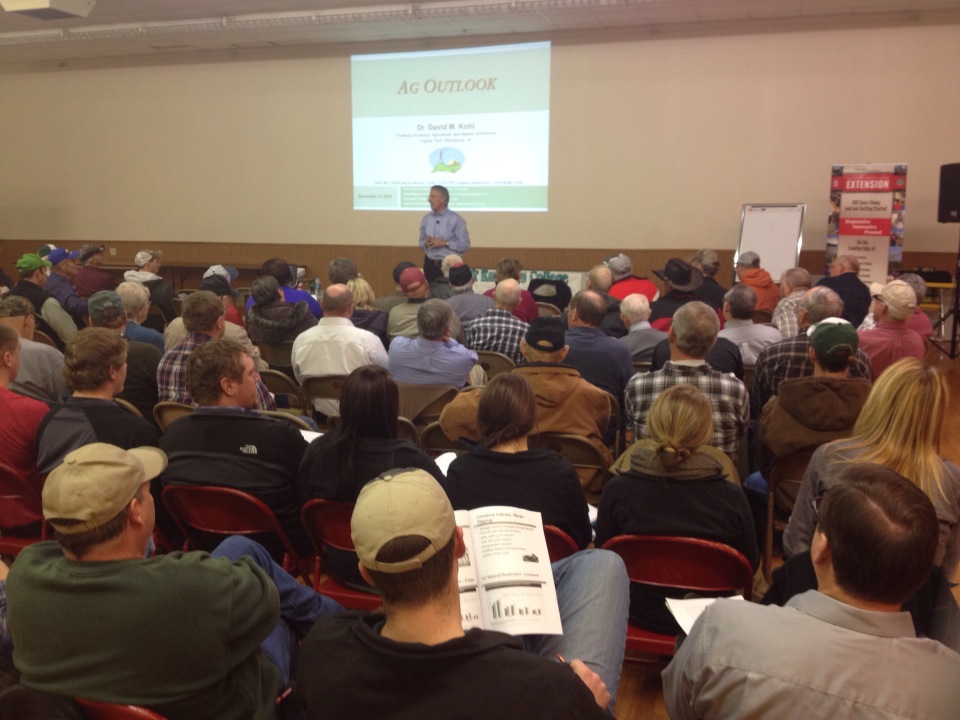
Those of us in agriculture are no stranger to risks involved with agriculture that are taken every day, whether it is financial, production, legal, price/market or human resource risks. While we can’t control everything, there are measures that can be taken to protect one’s operation and reduce risk. Each year the Farmers & Ranchers College hosts Dr. David Kohl, Professor Emeritus from Virginia Tech who does an excellent job describing global risks which affect us locally and how those risks will affect the agricultural industry.

Approximately 130-140 participants gathered for the first Farmers & Ranchers College program for the 2014-15 season.

Kohl reminded those in attendance that in order for there to be an economically viable crop industry, there must be an economically viable livestock industry. With lower crop commodity prices, producers must find ways to reduce their cost of production. The top farm managers will still earn a profit because they are aware of their costs and are resilient and agile. While prices are “hotter than a pepper sprout” for cattle producers, usually when a cattle cycle changes, it happens abruptly and warns on complacency.

Four factors globally to watch that will affect commodity prices are geopolitical factors, trade tensions, natural resources availability and economic reform. Back home in the U.S. concerns for higher interest rates will have an impact on operations based on the unemployment state, GDP growth and inflation. Kohl predicts that by spring or mid-summer interest rates will rise, so producers should be prepared.

In a survey Kohl conducted, he found that 72% of producers are complacent and either don’t use measurements to improve their farm or decision making or only track records to “get by” for taxes and crop yields. This is troubling, especially with lower commodity prices since cost of production has remained constant or higher. Producers need to have a solid handle on their cost of production and have some grain marketed. Land leases will be important and knowing your landlord beyond the finances can help when communicating with them. Those tenants who were fair to their landlords when prices were high will likely fare better than those who were not.

Those producers who surround themselves with “good people” will be successful. This includes a producer’s lender, supplier, etc. Have an advisory board to coach you along and help you make tough decisions and evaluate your financials. Ensure you have the right person “driving the bus” who helps you go the right direction, even though there might be an occasional detour. A well-organized plan with goals is essential. The increase in cost of living is also a huge concern, as it is very hard to cut the cost of living when a family has grown accustomed to certain things.

Tina Barrett with the Nebraska Farm Business, Inc. recently documented that the average cost of living in 1994 was $34,000 and held pretty steady through 2004. Since then, there has been a persistent increase each year. Not surprising that 2004 was the first of 10 years of a record high net farm income. When farm income went up, family living followed right behind. So as farm income declines, what will happen with family living costs? Also interesting to note that recreation was the largest increase, rising from $1,776 in 2004 to $9,081 in 2013, or a $7,305 increase, followed by a $5,550 increase in personal care and $5,339 increase in household supplies. Barrett says clients often bring up what their neighbors are doing and want to be able to afford that. For example, “The Jones went on a 3 week cruise and the Smiths built a new house and the Andersons bought a lake house and the Johnsons have a new Escalade.” The truth is sometimes we don’t know if those families were saving up for years to do some of those extra things. We can only control our own costs and allocate what we can afford for our own situation. This is very similar to Dr. Kohl mentioning that family living costs nationally have grown well over $100,00 and in some cases to $200,000, while the modest producers have only grown to $50-75,000. There will need to be a lot of belt tightening.

In summary, Kohl reminds us that goal setting, record keeping, an advisory board, having working capital and good relationships with those whom influence your management decisions are important golden rules for producers to follow. My next post will feature great information for millennials wanting to return to the farm or rural communities.

Crops, Programming

Extension Programming

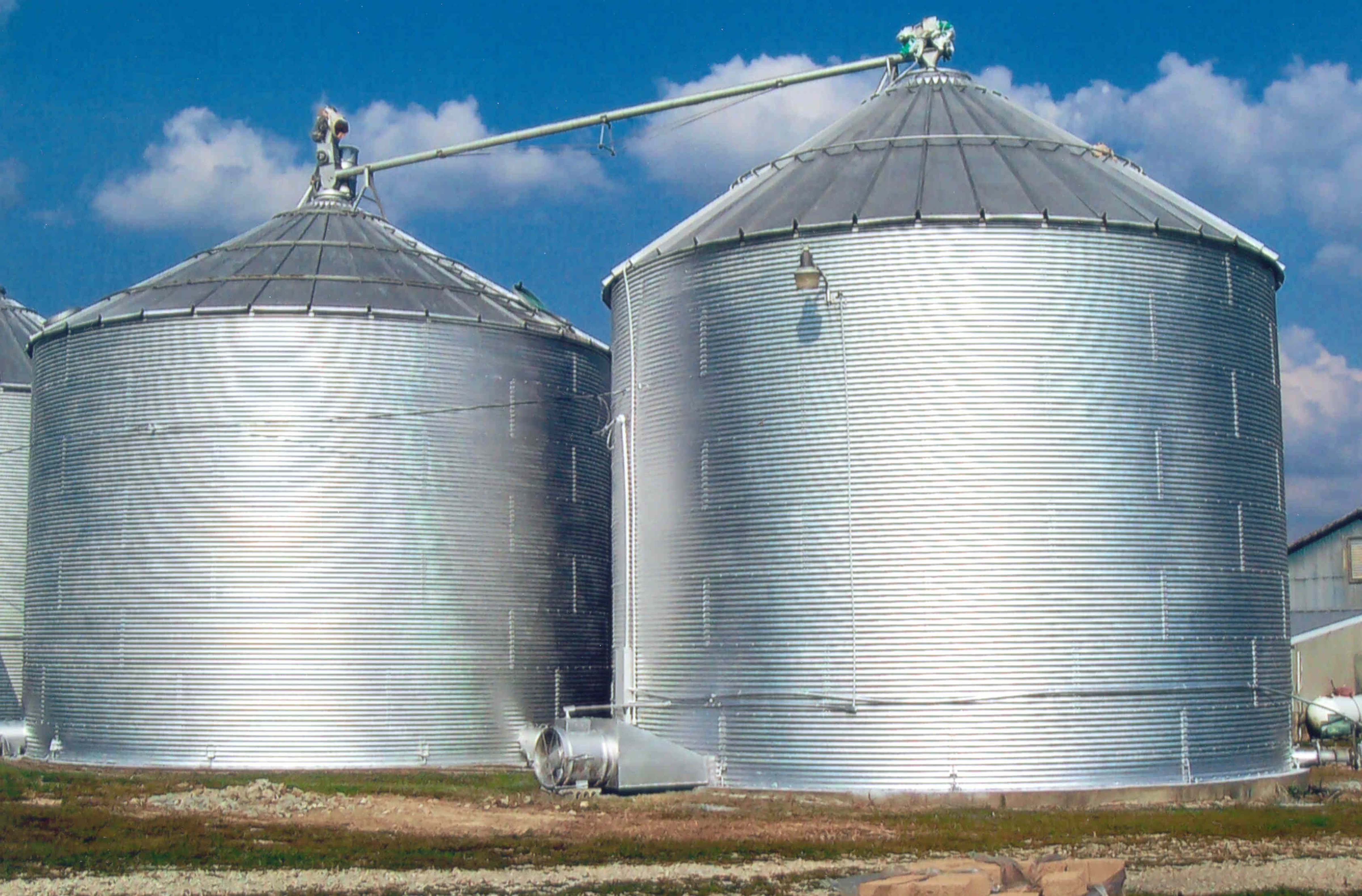
This is the time of year for agricultural programs for agricultural producers and if one wanted, they could go to a program almost every day of the week! For the most current or up-to-date information, go to our website, call our office at (402) 759-3712 or email me at brandy.vandewalle@unl.edu and if we don’t have all of the details, we’ll look them up for you! In light of all the excellence UNL Extension, NRD and industry programs, I decided to give a brief recap of them.grainbin2.jpg

Field Assessments to Improve Efficiency – December 8th
This program seeks to enhance the knowledge of Nebraska corn, soybean and wheat producers on their sustainability and operational efficiency measures. Workshop participants will use a web based tool called Fieldprint® Calculator. We want growers in Nebraska to be better able to understand and communicate how management choices affect overall sustainability performance and operational efficiency of their farm operations. Locally, it will be held Monday, December 8th from 5:30 to 9:00 p.m. at the Geneva Public Library. My colleague in Saline County, Randy Pryor is the program coordinator and is offering this free program, sponsored by Nebraska Extension to 5-10 producers.

Farmers & Ranchers College– December 11th (1-4:00 p.m.) – Bruning Opera House
Ag Outlook will feature Dr. David Kohl, Professor Emeritus with the Dept. of AAEC, VA TECH and will discuss the wild world of global and domestic economics.  Dr. Kohl will discuss the major game changers influencing the agriculture landscape along with a quick tour of global economics and how it is influencing land values, commodities, and input costs.  Is agriculture in an asset or credit bubble?  What can you do financially in this business environment to capitalize on the economic volatility?  Dr. Kohl will give tips on management practices that will help you think globally but act locally in strategic and everyday decision-making.

Farm Bill Workshops – December 16th 9-Noon, Fillmore Co. Fairgrounds, Geneva
Farm Bill informational & meetings will be conducted in every county across Nebraska with each educational session running about 2-3 hours. Check with your local Farm Services Agency (FSA) or Nebraska Extension Service office for more details. These sessions are not required but may be helpful regarding long-term decisions.

Uncategorized

Cold Weather Animal Care

I had an FFA market steer I named Blizzard because part of his ear froze off in a winter storm and we found him and had to warm him up!

lindsaychichester's avatarAgricultural with Dr. Lindsay

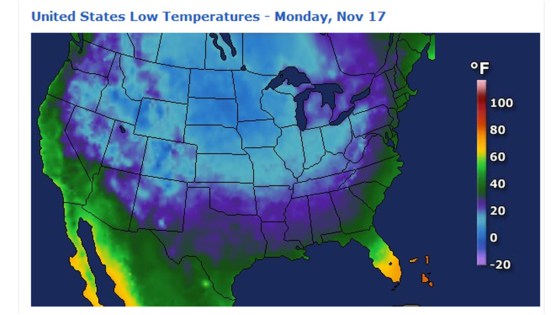
A large majority of the U.S. and Canada are experiencing extremely cold temperatures as a polar vortex comes in from the north (will a repeat of the 2014 winter be in store?)

Weather map Extremely cold temperatures hit most of the U.S. and Canada. Source: accuweather.com

While many of us can get chilled to the bone, find “normal” day-to-day activities to be a challenge, and complain about escalating heating bills, let’s not forget about those who care for livestock on these days. The folks who have chosen to be livestock farmers and ranchers as their livelihood seldomly get a day off and they certainly can’t skip a day of livestock care just because it is too cold.

I have blogged about care for animals in cold weather before, and I think it is good to highlight these two blog posts again.

Caring for Livestock in Cold Temperatures – highlights some of the…

View original post 87 more words

Crops, Programming

Field Assessments To Improve Efficiency Workshops

This week I’m including a press release on an educational program coming to Geneva on Monday, December 8th from 5:30 to 9:00 p.m. at the Geneva Public Library. My colleague in Saline County, Randy Pryor is the program coordinator and is offering this free program, sponsored by Nebraska Extension to 5-10 producers.FieldtoMarket

This new educational effort by University of Nebraska-Lincoln Extension seeks to enhance the knowledge of Nebraska corn, soybean and wheat producers on their sustainability and operational efficiency measures. Workshop participants will use a web based tool called Fieldprint® Calculator. We want growers in Nebraska to be better able to understand and communicate how management choices affect overall sustainability performance and operational efficiency of their farm operations said Extension Educator Randy Pryor.

Pryor said the inspiration of the new workshops came from a similar effort in 2011 led by Bunge and Kellogg with assistance from UNL Extension and other partners at Crete, NE. The project included 23 corn producers that delivered grain to the Crete Mill. As a result, growers could compare efficiency measures. Farmers were excited to see their efficiency and sustainability in this manner and lessons learned led to an updated version of the Fieldprint® Calculator.

Calculating “Fieldprints” can help growers to establish benchmark data on a field and track improvements over time, set energy saving and efficiency goals and compare performance against local, state and national benchmarks.

The new Field Assessment workshops in Nebraska are hands-on and will show growers how to document eight sustainability and efficiency indicators. They are Land Use, Conservation, Soil Carbon, Irrigation Water Use, Water Quality, Energy Use, Greenhouse Gas Emissions and Water Quality.

Participants will select a representative crop field for 2014 and complete a data input sheet in advance of the Fieldprint® Calculator workshops. Meals and workshop materials are sponsored through a Nebraska Extension Innovation grant. Computer laptops are provided or bring your own. Pre-registration is required by Friday, December 5, 2014, by contacting a host Extension office.

Workshop Times And Locations:

  • CLAY CENTER: Monday, December 8, 9:00 AM – 1:00 PM, UNL Extension in Clay County, 111 West Fairfield, Clay Center
  • GENEVA: Monday, December 8, 5:30 PM – 9:00 PM, Geneva Public Library, 1043 G Street, Geneva (Call our office at 402-759-3712 to register.)
  • AUBURN: Tuesday, December 9, 9:00 AM – 1:00 PM, Nemaha County Hospital Meeting Room, 2022 13th Street, Auburn
  • FAIRBURY: Tuesday, December 9, 5:30 PM – 9:00 PM, UNL Extension in Jefferson County, 517 F Street, Fairbury
  • CENTRAL CITY: Wednesday, December 10, 9:00 AM – 1:00 PM, UNL Extension in Merrick County, 1510 18th Street, Central City
  • AURORA: Wednesday, December 10, 5:30 PM – 9:00 PM, Leadership Center, 2211 Q Street, Aurora
  • FREMONT: Thursday, December 11, 9:00 AM – 1:00 PM, UNL Extension in Dodge County, 1206 West 23rd, Fremont
  • SCHUYLER: Thursday, December 11, 5:30 PM – 9:00 PM, UNL Extension in Colfax County, 466 Road 10, Schuyler
Uncategorized

AgChat Foundation National Collegiate Congress

Some of you might remember my August article on my experience with the AgChat Foundation Conference in Austin, TX. It was a phenomenal experience and I hope to attend more in the future. Recently Jenny Schweigert from AgChat Foundation put out a press release on the 2015 AgChat Foundation National Collegiate Congress so I’ve decided to share some of that information in this week’s column as I hope area youth will take advantage of this great opportunity!AgChat

On January 17, 2015 at Dow AgroSciences’ headquarters a training workshop will “challenge passionate, agriculture, college-students across the U.S. to expand their social media experiences and shorten the bridge between consumers and their food.” An optional day on January 18th will provide touring at Fair Oaks Farms. This event will focus on providing college students and new graduates with tools to transform how they use both social media and in person interactions when engaging agriculture and food conversations”, according to Jenny Schweigert, AgChat Foundation’s Executive Director.

With support from Dow AgroSciences, National FFA and Animal Agriculture Alliance, the National Collegiate Congress will bring together 165 students to learn about extending their abilities to connecting with consumers. The event will include sessions on what consumers see and hear, how social media can be improved to tell a story when you are living on campus and away from the farm, how to use blogging, and what it means to make a consumer connection, both on and offline. Attendees can expect a strong focus on networking with other students and exchanging ideas on how to connect with fellow non-agriculture students on their campuses.

If you would like additional information about the AgChat Foundation or to schedule an interview, contact Jenny Schweigert at 309-241-8803 or email execdir@agchat.org.

Uncategorized

Farm Bill Education

Crop producers are faced with a complex Farm Bill and important decisions to make. My colleague in Hamilton County, Todd Whitney wrote a good article on this so I’ve decided to share it in this week’s column. Landowners and producers should verify that their FSA Farm Numbers are correct for 2014 base acres and 2014 CC (counter-cyclical) program yields. Then, one-time farm program option decisions will need to be determined which will last for the next five years; following sign-ups.FarmBillPic

As a result, Farm Bill informational & meetings will be conducted in every county across Nebraska with each educational session running about 2½ hours. Check with your local Farm Services Agency (FSA) or Nebraska Extension Service (UNL) office for more details. These sessions are not required but may be helpful regarding long-term decisions.

Close training dates are as follows: Nov. 21 – Saline county (Saline Center) – 9 am, Nov. 25 – Hamilton county – Leadership Center (Aurora) – 9:00 am; Dec. 8 – Hamilton county – Leadership Center (Aurora) – 1:30 pm; Dec. 9 – York County Fairgrounds (York) – 1:30 pm; Dec. 15 – Adams County Fairgrounds (Hastings) (time TBA); Dec. 16 – Fillmore County Fairgrounds (Geneva) – 9:00 am; and Dec. 16 – Clay County Fairgrounds (Clay Center) – 1:30 pm.

Although this farm bill has many details, there are several key points. First, this new farm bill requires that each FSA Farm have an unanimous decision regarding sign-up options for all landlord owners, tenants and producers involved in any share leases on the designated “FSA Farm Number.” (Note that “if” landowners are using cash leases or variable/flexible leases, then the sign-up options become the tenants’ decision). Therefore, unless landowners receive a “share” of the farm production, the one-time option decision(s) sign-up will be the responsibility of the cash-leasing tenants for the upcoming year; and their sign-up decisions will stay with the FSA farm for the next five years; even if the lease is terminated during the next five years.

Second, each FSA Farm will have the option to update payment yields and reallocate base acres prior to the February 27, 2015 sign-up deadline. This decision will allow landowners and tenants to either keep their current yields or update their yields based on 2008 – 2012 yields (90% of the average). Managers may choose not to update yields if these updated yields are less than their commodity current yield. They may also choose to use current yields if they may not be able to document their updated yields such as not owning the farm in 2008 & 2009; or if grain production was fed to livestock without documentation. FSA Farm base acre decisions will also need to be determined by the Feb. 27th deadline. The “total” current base acres can’t be increased, but the FSA Farm managers will have the freedom to choose their allocations based on previous years’ base acres. This one-time sign-up decision will then set the base commodity acres for the next five years for potential payment calculations regardless of what crops are grown on the FSA Farm(s) during the next five years.

The last sign-up is the “program choice” deadline prior to March 31, 2015; although there is a possibility that this deadline could be extended. Farm managers will need to choose among the Agricultural Risk Coverage – county (ARC-CO); Price Loss Coverage (PLC); and Agricultural Risk Coverage (ARC-IC) options for each FSA farm. These decisions may best be determined using a computer farm bill options comparison.

More information regarding the new farm bill options is also available through our UNL Extension website http://cropwatch.unl.edu. Locally, the Fillmore County Farm Bill workshop on December 16th is being sponsored by Heartland Bank, Walter Insurance, Cornerstone Bank and Generations Bank; a light meal will be provided following the Farm Bill program. This program is also in collaboration with the Fillmore County Farm Service Agency. To register for a meal, please call our office at (402) 759-3712.

Uncategorized

Halloween Safety Tips

Some safety tips in time for next week with Halloween to consider from the Progressive Agriculture Safety Day blog.

Progressive Agriculture Foundation's avatarSafety Day Corner

By: Jana L. Davidson, Education Content Specialist for the Progressive Agriculture Foundation

From dressing up like pirates and princesses to ghosts and goblins, Halloween is a fun and exciting time for many children. Each year, children look forward to parties, haunted houses & hayrides, and of course adventuring through the neighborhood, door-to-door in search of candy. Trick or treat dates and times may be different in each town, but one thing that should remain constant is making safety a priority!  Here are some safety tips to ensure your child continues to have good memories and enjoy Halloween for years to come.

  1. Young children should never go trick or treating alone! They should always be accompanied by a parent or a responsible and trusted adult.
  2. For older children, they should always go trick or treating in groups and stick together at all times. If your child would happen to get lost…

View original post 439 more words

Uncategorized

Farmers & Ranchers College 2014-15 Programming Year

The Farmers & Ranchers College was formed in January, 2000 with the purpose of providing high quality, dynamic, up to date educational workshops for area agricultural producers in south central Nebraska Logothrough a collaborative effort between business, industry and higher education leaders. Furthermore, the Farmers & Ranchers College will provide the tools necessary so that agricultural producers will be able to respond positively to these changes using a profitable decision making process.

The Farmers and Ranchers College is a unique opportunity to educate agricultural producers in south central Nebraska. Approximately three hundred producers from fourteen counties and three states participated in the 2013-2014 Farmers & Ranchers College programs. Producers attending these workshops managed over 184,000 acres. Participants (21%) surveyed indicated an average of $11.00/acre of knowledge gained from participating for a potential impact of $2 million.

The thirteenth annual Partners in Progress- Beef Seminar featured a variety of industry, University and agricultural organization presenters. Participants managed over 32,000 head of cattle and indicated that on average the information presented will increase their profitability $12.25/head with a total potential impact of over $500,000.

Contributions and support of area businesses allow participants to attend at no cost, however for programs that have meals, it is requested that people RSVP at least a week in advance for an accurate meal count by calling Fillmore County Extension at (402) 759-3712.

The Farmers and Ranchers College Committee consists of Fred Bruning of Bruning, Bryan Dohrman of Grafton, Sarah Miller of Carleton, Jennifer Engle of Fairmont, Ryne Norton of York, Jim Donovan of Geneva, Bryce Kassik of Geneva, Eric Kamler of Geneva, and Brandy VanDeWalle of Ohiowa.

2014 -2015 Farmers & Ranchers College Programming

  • December 11, 2014 – “Ag OutlookFeaturing Dr. David Kohl Professor Emeritus, Dept. of AAEC, VA TECH at the Bruning Opera House – Bruning, NE at 1:00 p.m.
  • January 27, 2015 – “Partners In Progress – Beef Seminar”* at the U.S. Meat Animal Research Center near Clay Center from 10:00 a.m. to 3:30 p.m., registration at 9:30 a.m.
  • February 4, 2015 – Ag: Trends, Topics & Tomorrow (High Content & Very Entertaining) with Damian Mason: “Agriculture’s Professional Funny Man”* at the Fillmore County Fairgrounds in Geneva with meal starting at 6:00 p.m. and program to follow. Registration starting at 5:30 p.m.

Programs are provided at no cost to the public, but registration is appreciated for a meal count. Please call the Fillmore Co. Extension Office at (402) 759-3712 one week prior to the program.

Uncategorized

Chemical safety activities for you! – That’s right, YOU!

I work with a local Progressive Agriculture Safety Day each year and therefore am passionate about getting the word out to people about being safe on the farm or in rural communities. Take a look at this Farm Safety For Just Kids blog post with some safety activities.

Farm Safety For Just Kids's avatarThe Next Generation: Farm Safety and Health

Extra, extra read all about it! We have plenty of chemical safety activities for the kids in your life. Teach them to be safe around chemicals. Download and print today, at no cost to you.

View original post